
Musk Escalates Starlink India Row, Calls Ambani 'Prime Minister Ambani'
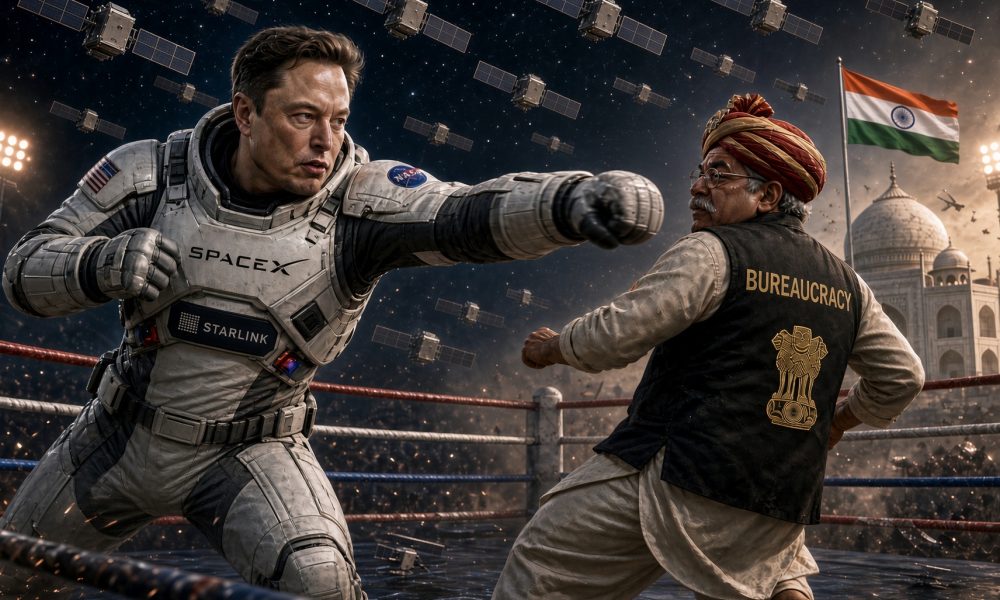
Elon Musk has turned up the heat in his long-running dispute over Starlink’s entry into India, sarcastically addressing Reliance chairman Mukesh Ambani as “Prime Minister Ambani” in a post on X. In the same message, Musk apologized for not recognizing Ambani as “the real boss of India,” accused him of what he called monopolistic exploitation, and asked whether Ambani would consider letting Starlink compete. Follow-up posts argued the satellite service has proven vital during natural disasters and could connect parts of India that currently have no internet access.
The escalation followed Musk’s earlier claim that Starlink was being blocked by unnamed oligarchs protecting a chokehold on Indian consumers, a situation he described as a crime against the Indian people. His remarks point squarely at a market where Jio and Airtel together control more than 80% of telecom subscribers. Musk also noted that Starlink has spent five years working to comply with Indian laws and requirements, framing the delay as a regulatory and competitive issue rather than a technological one.
New Delhi has rejected the suggestion that its framework is unfair. The Communications Ministry called the characterization baseless and misconceived, while Communications Minister Jyotiraditya Scindia pointed out that three companies now hold satcom licenses: Starlink, Jio Satellite Communications and Bharti-backed Eutelsat OneWeb. Amazon’s Kuiper effort, now known as Amazon Leo, is still working through the process. None of the licensed players can begin commercial service until regulators settle satellite spectrum pricing and the Home Ministry clears each company’s security compliance. Scindia indicated the telecom regulator and the Department of Telecommunications are nearing a decision on pricing, while Bharti chairman Sunil Mittal said OneWeb is likewise waiting on approvals.
Starlink secured its operator license in 2025 after a three-year wait, and the space regulator IN-SPACe granted what industry executives described as the final approval needed in July. Since then, the bottleneck has centered on security concerns, particularly fears that foreign operators could route traffic around Indian gateways, a sensitive issue for national security planners.
The two billionaires have clashed over this ground before. In late 2024, Ambani pushed for satellite spectrum to be auctioned, a position Musk criticized as out of step with global practice; India ultimately chose administrative allocation instead. By March 2025 the rivals had signed a deal to sell Starlink devices through Reliance stores, and Starlink obtained its telecom license that June, turning a former partner into a competitor. Jio is now reportedly weighing its own constellation of roughly 1,600 to 1,650 satellites at an estimated cost of $10 billion to $15 billion, while Akash Ambani has told shareholders the company plans to lease capacity from global providers to move faster. The standoff matters well beyond India’s borders, since it tests how regulators balance incumbent telecom power against satellite broadband upstarts.
What do you think?