
Musk Draws a Hard Line: Tesla and SpaceX Will Own and Operate Terafab
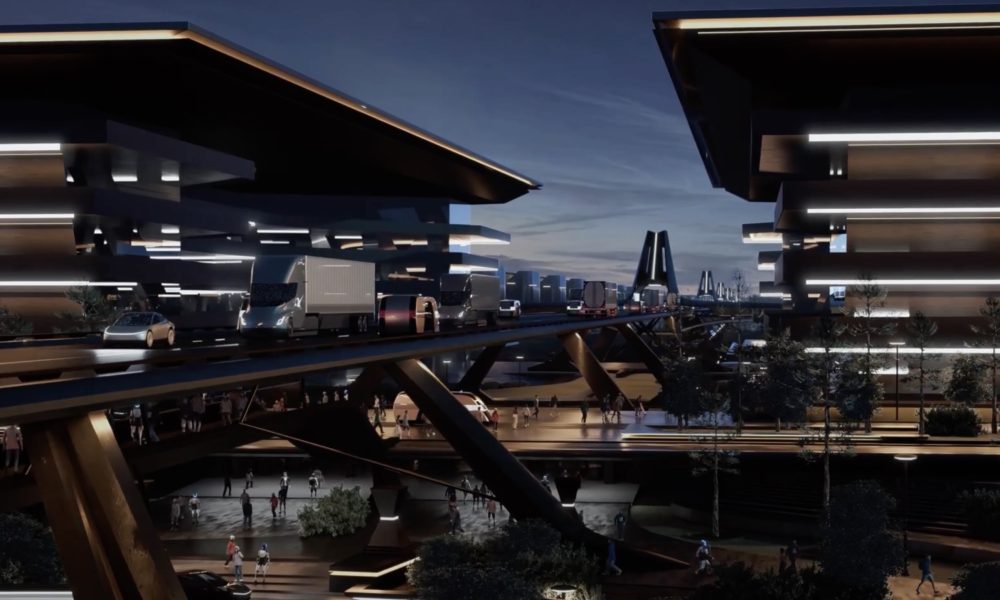
Elon Musk has ended any ambiguity about who controls Terafab, the sprawling chip manufacturing complex Tesla and SpaceX are developing in Texas. Responding on X to a user who predicted that Taiwan Semiconductor Manufacturing Company would eventually take ownership and run the site, Musk rejected the idea outright, stating that his companies will build and operate the fab themselves. TSMC, he added, might at most sublease a portion of the facility — nothing more.
The distinction matters. A sublease would make TSMC a tenant within the complex rather than its owner, leaving Tesla and SpaceX in charge of construction, equipment choices and day-to-day operations. The exchange followed reporting from tech journalist Tim Culpan on October 2 that TSMC was weighing ways to assist with running Terafab’s lines. Musk’s initial response described those talks as preliminary discussions that might lead somewhere. His follow-up removed that possibility from the table.
Context explains the sensitivity. Tesla develops its own AI silicon but currently relies on foundries such as TSMC and Samsung to actually fabricate it. When Musk introduced Terafab in March as a joint effort involving Tesla, SpaceX and xAI, he argued that existing suppliers simply cannot scale quickly enough to serve his companies’ projected needs. The stated ambition is to produce enough chips annually to support one terawatt of computing capacity — a figure roughly 50 times larger than today’s entire global AI chip output. The output is earmarked for Optimus humanoid robots, the Cybercab, Full Self-Driving hardware and processors destined for SpaceX data centers in orbit. Ownership of the plant would free Musk’s firms from queuing behind other customers for capacity.
Intel remains involved as well. The company agreed in April to contribute to chip design, construction and packaging for the project, and CEO Lip-Bu Tan told Bloomberg this week that Intel will continue its Terafab work regardless of the TSMC speculation. Progress has been tangible: in August, SpaceX confirmed the Grimes County location roughly an hour outside Houston, delivered a $10 million payment tied to a tax abatement agreement and said site preparation would start soon. Phase one alone is budgeted at $16.8 billion, with total spending potentially climbing toward $119 billion.
TSMC chairman C.C. Wei has previously noted that a new fab generally requires two to three years to build and another one to two years to reach full production — expertise that explains why outside help drew attention in the first place. Musk’s message suggests he would rather absorb that learning curve internally than hand over control of infrastructure that sits at the heart of Tesla’s robotics and autonomy roadmap. The exact timeline for Terafab has not been disclosed.
What do you think?