
Moya Aero's MOYA 256 Cargo eVTOL Nails Its First Full Transition Flight
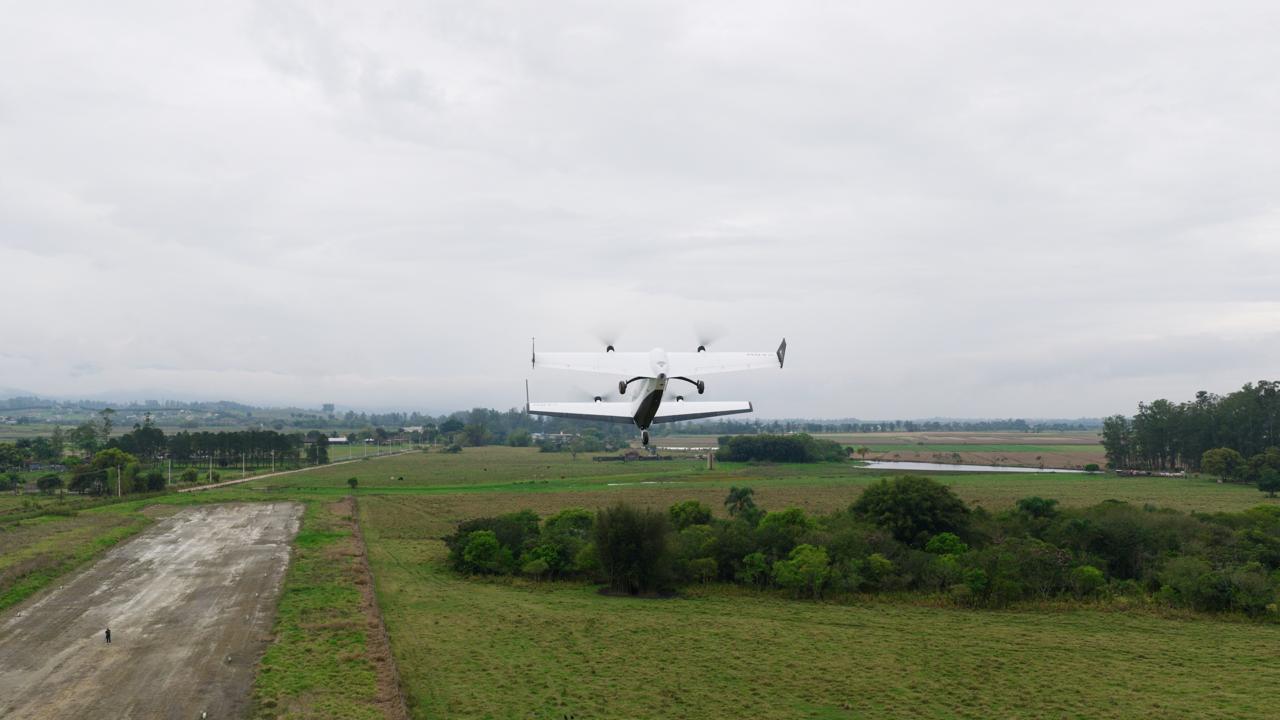
Brazilian outfit Moya Aero has pulled off its first complete transition flight with the full-scale MOYA 256, an autonomous electric cargo aircraft. The machine lifted off vertically, shifted into wing-borne forward cruise, then came back around to a vertical landing. Nothing exotic on paper — until you remember how few cargo eVTOL makers have actually flown the full envelope with a full-scale airframe.
The milestone was announced on 21 October and sits inside a test campaign backed by Brazilian innovation agency FINEP. Moya says the programme has now logged close to 200 flights with the MOYA 256 itself, plus around 500 more spread across its sub-scale and special-purpose aircraft.
What the flight actually proved
Transition is the moment a VTOL design stops being a helicopter and starts being a wing. Moya says the sortie generated validation data on the propulsion, aerodynamic and flight-control systems across each phase of flight — vertical, cruise and the handover in between.
The aircraft runs the same propulsion system for both vertical and forward flight, which simplifies the hardware but puts more demand on the control laws. It is designed to work out of tight spaces with no runway at all while still cruising efficiently on the wing. Moya floats football fields as a possible operating site; real-world deployment, of course, hinges on operational requirements and regulatory sign-off.
The numbers and the roadmap
The MOYA 256 is fully electric and uncrewed. Cargo is the core mission, but Moya also lists medical and humanitarian deliveries, industrial logistics, e-commerce and agribusiness as target uses.
Key Specs: 30 kg planned payload · 160 km range · fully electric, autonomous cargo eVTOL
The 256 is one half of a planned cargo-drone family. The larger MOYA 760 is aimed at heavier loads, and Moya reports it has started building a production-conforming prototype of that aircraft. The two are meant to share chunks of their architecture and systems, which should help on the manufacturing side.
Moya also says it has collected 119 letters of intent for its aircraft. Worth keeping in perspective — LOIs are expressions of interest, not firm orders, and certainly not confirmed delivery slots.
Certification is still the long pole
Clearing transition pushes the MOYA 256 past pure vertical-flight demonstrations and gives engineers a base for expanding the flight envelope and refining the control systems. What Moya has not published is a timeline for certification or entry into service.
That gap matters. Plenty of eVTOL programmes can hover. Far fewer have flown a full transition with a full-scale vehicle, and fewer still have walked an aircraft through a regulator. Until that happens, routine commercial operations remain a future chapter — further testing and approvals come first.
Source: eVTOL Insights
What do you think?