
Mercedes-AMG GT 4-Door EV First Drive: Three Axial-Flux Motors Rewrite the Playbook
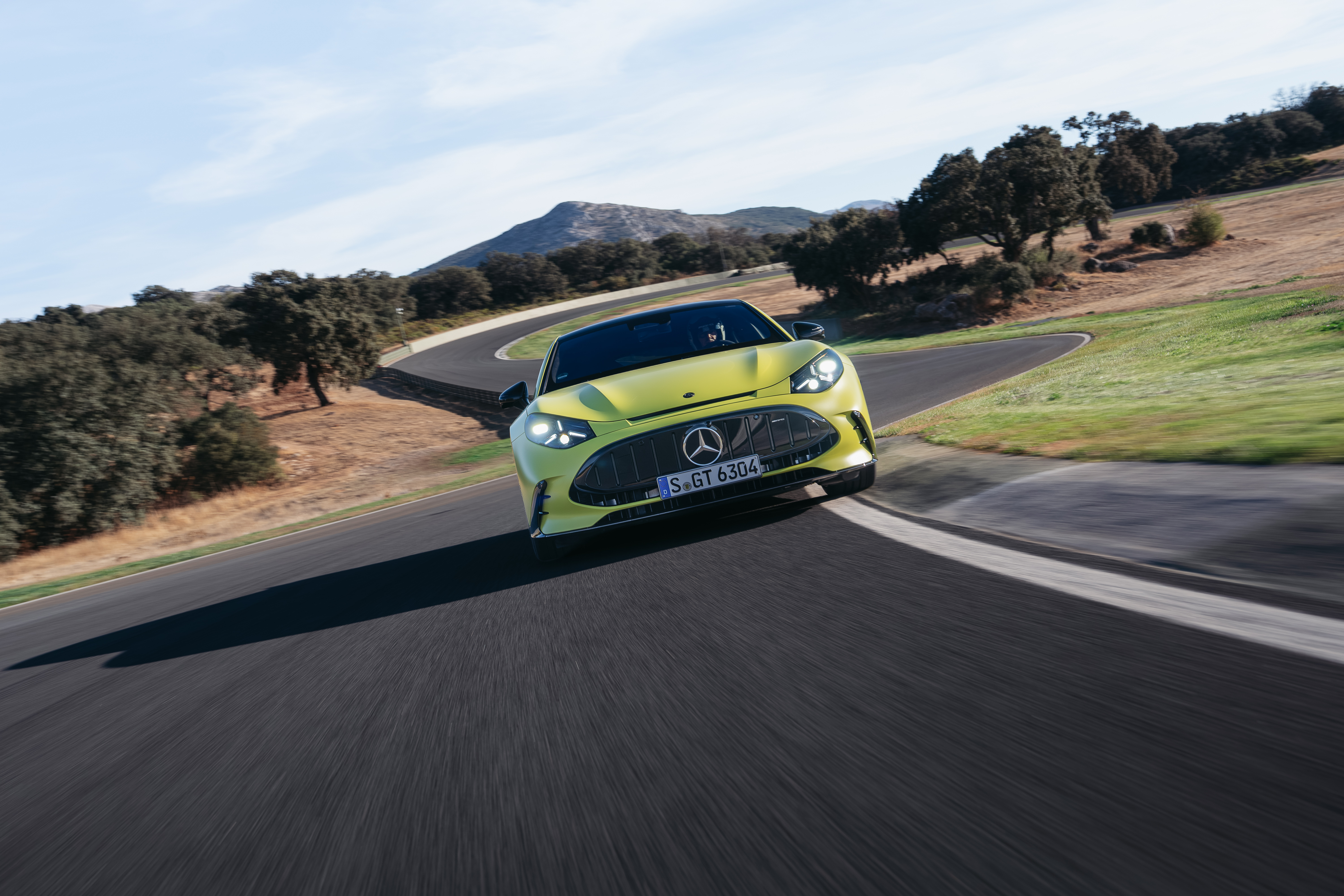
Mercedes-AMG has built its first battery-only performance car, and the early verdict from the road is blunt: the Affalterbach badge still means something. The AMG GT 4-Door Coupe, tested across two days in southern Spain, leans on three axial-flux electric motors to attack the weight problem that has long blunted fast EVs.
Three motors, one mission
Weight is the oldest enemy of an electric performance car. Batteries are heavy, and a heavy car tends to keep going where you point it — which makes nimble cornering a hard engineering ask. Mercedes went after that tax directly.
The AMG.EA sports-car architecture does the heavy lifting, continuously juggling power delivery between the three motors while coordinating the Active Ride Control suspension, steering (including up to 6 degrees of rear-axle steer) and active aero. The result, on both public roads and a circuit, is a car that feels planted rather than merely fast.
The core of the story: three axial-flux motors, all-wheel torque management, rear-axle steering and active aerodynamics working as one system.
What AMG got right
- Weight management: the battery-weight penalty that drags down most performance EVs is largely offset by how the chassis puts power down.
- Track composure: the car is described as genuinely good on a circuit, not just tolerable.
- Street manners: comfort on the road appears to have survived the performance brief.
- Character: the car delivers the personality AMG buyers expect from the badge.
The bigger picture for Mercedes
The GT 4-Door lands after a glitzy Los Angeles launch, but the meaningful news is under the skin. For years, the argument against electric performance cars was that they could be quick without being interesting. Mercedes appears to have taken that criticism personally.
The axial-flux motor choice is the technical heart of it. These units are lighter and more power-dense than the radial-flux motors most automakers use, and packing three of them into one car gives the software a lot of authority over how the vehicle behaves corner to corner.
It is also a signal about where AMG is heading. The brand built its reputation on V8 thunder; now it has to prove that electrons can carry the same weight — literally and emotionally. On the evidence of this first drive, the transition looks less like a compromise than expected.
One caveat worth keeping in mind: a launch drive on Spanish roads and a track is not the same as living with the car. Real-world range, charging behavior and long-term durability remain open questions. Still, as a statement of intent, the GT 4-Door makes a strong case that fast electric cars no longer have to feel numb.
Photo: Mercedes-AMG / Ars Technica - Cars · Official Press Kit / Editorial (Editorial / Press Kit)
Source: Ars Technica - Cars
Curious how this compares to other EVs? Try our comparison tool →What do you think?