
Luxeed Steps Out of Chery's Shadow With Its Own Production License — and an IPO on the Horizon
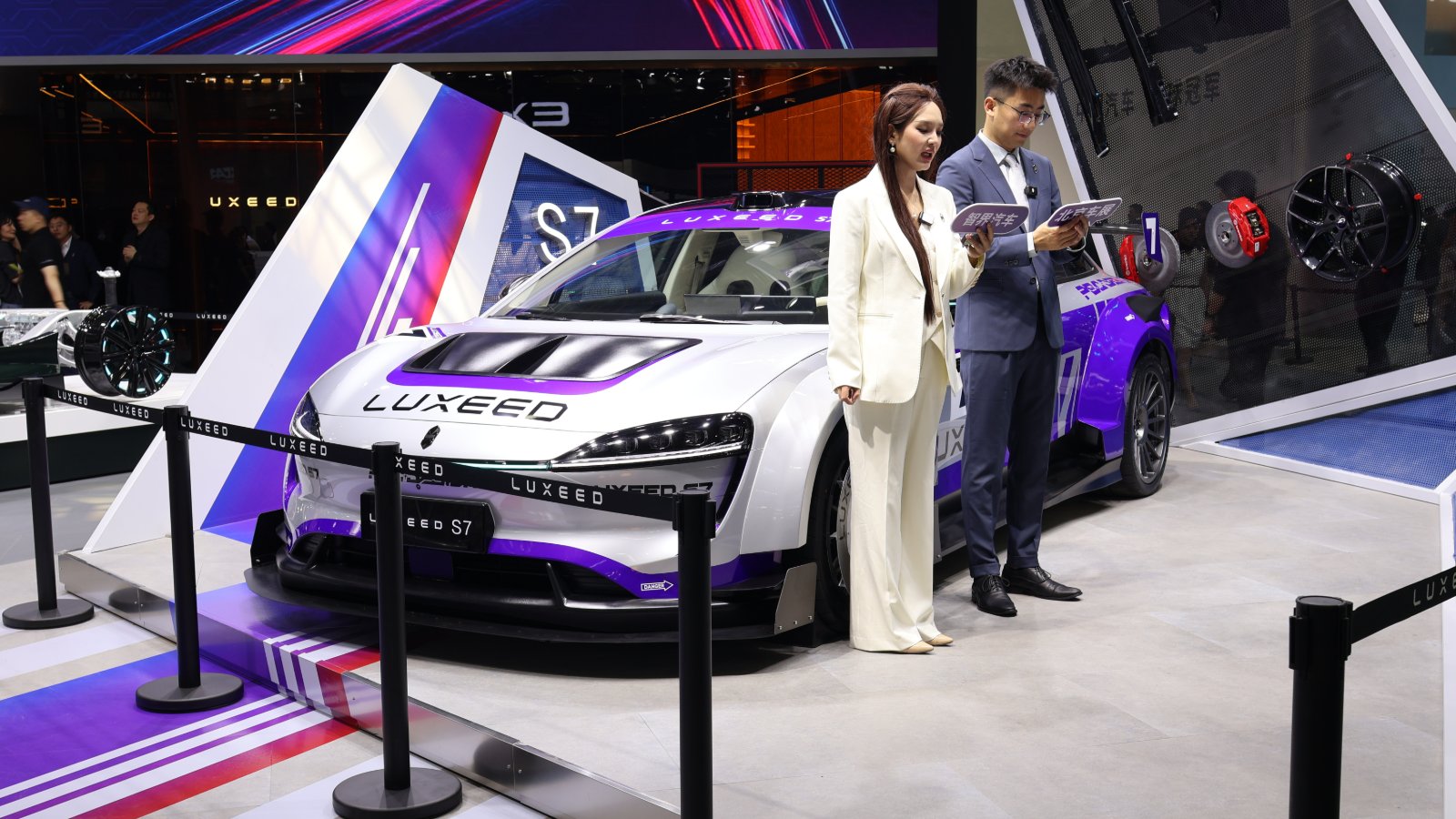
Luxeed, the electric vehicle brand that Huawei and Chery built together, is close to standing on its own two feet. China’s Ministry of Industry and Information Technology (MIIT) published its 412th batch of motor vehicle manufacturer and product filings on Friday, and Luxeed appears on the list of proposed new vehicle manufacturers. The public comment window stays open until October 23.
The filing lists Luxeed’s production site at No. 8 Wanjiang Avenue in the Wuhu Economic and Technological Development Zone, Anhui province, with a note identifying it as a member company of Chery Group. In the same document, Chery asked to deregister that exact address — which tells you most of what you need to know. This isn’t a fresh factory breaking ground. Chery is handing over an existing plant, along with its status as a production entity, to Luxeed.
“It is Chery’s plant that was given to Luxeed,” a Luxeed insider told Yicai, adding that the brand secures its independent license once the comment period closes and approval comes through.
The Badge Finally Changes
Once the paperwork clears, the Chery emblem on Luxeed vehicles should give way to the Luxeed name — a shift Chinese EV watchers have seen before. Nio went through the same rite of passage, moving its badge from JAC to its own name after landing a production license.
Luxeed isn’t the only brand making this move in batch 412. Voyah, part of Dongfeng Motor Group, also picked up new production addresses including No. 8 Yunfeng Avenue in Wuhan, while Dongfeng deregistered that same site. The pattern is becoming familiar across China’s state-linked auto sector.
The brand itself dates back to a November 2023 debut with the S7 sedan, followed by the R7 in September 2024. Its current range now spans the V9 MPV and the RX all-electric coupe SUV, which arrived on September 28.
From Division to Independent Company
The organizational groundwork has been in place for a while. Chery spun Luxeed out as a standalone business unit with its own accounting in 2024, handing it responsibility for R&D, production and sales end to end. Anhui Luxeed New Energy Vehicle Co Ltd was incorporated in Wuhu on January 23, 2025, with registered capital of 1 billion yuan (about $149 million) and Chery as sole shareholder.
Then came the Luxeed brand strategy 2.0 agreement, signed by Chery and Huawei in Shenzhen on August 7, 2025. The plan called for more than 10 billion yuan in R&D spending, an engineering team scaled up to 5,000 people, and fully integrated independent operations across development, manufacturing, sales and service.
Leadership has been reshuffled too. Zhao Changjiang, previously general manager of BYD’s Denza sales division, came aboard in January as executive director and executive vice president.
In April, Guo Rui — formerly CMO of Huawei’s consumer business for Greater China and global CMO of Honor — took over as chairman and CEO, with Yu Jiufeng stepping down from the chairmanship. By late June, registration changes showed Chery’s stake trimmed from 100% to 85%, with two Wuhu equity investment partnerships each holding 7.5%. Trace the structure and Guo indirectly owns roughly 6%, Zhao about 4.5%.
Sales Tell a More Complicated Story
The numbers are a mixed bag. Luxeed moved 90,493 vehicles in 2025, a 56% jump year-on-year. But the first nine months of 2026 brought 43,623 units — down 24.50% compared with the same stretch last year, even with the RX now in the lineup.
Going public independently would give Luxeed its own access to capital rather than leaning on Chery’s balance sheet, and it would sharpen the brand’s identity as something more than a Huawei-Chery joint venture. For buyers, the practical change is simpler: a car that says Luxeed on the back instead of Chery.
Source: CnEVPost - Huawei
What do you think?