
Lancia Gamma Debuts in Paris With Three Electric Options, But Skips Germany
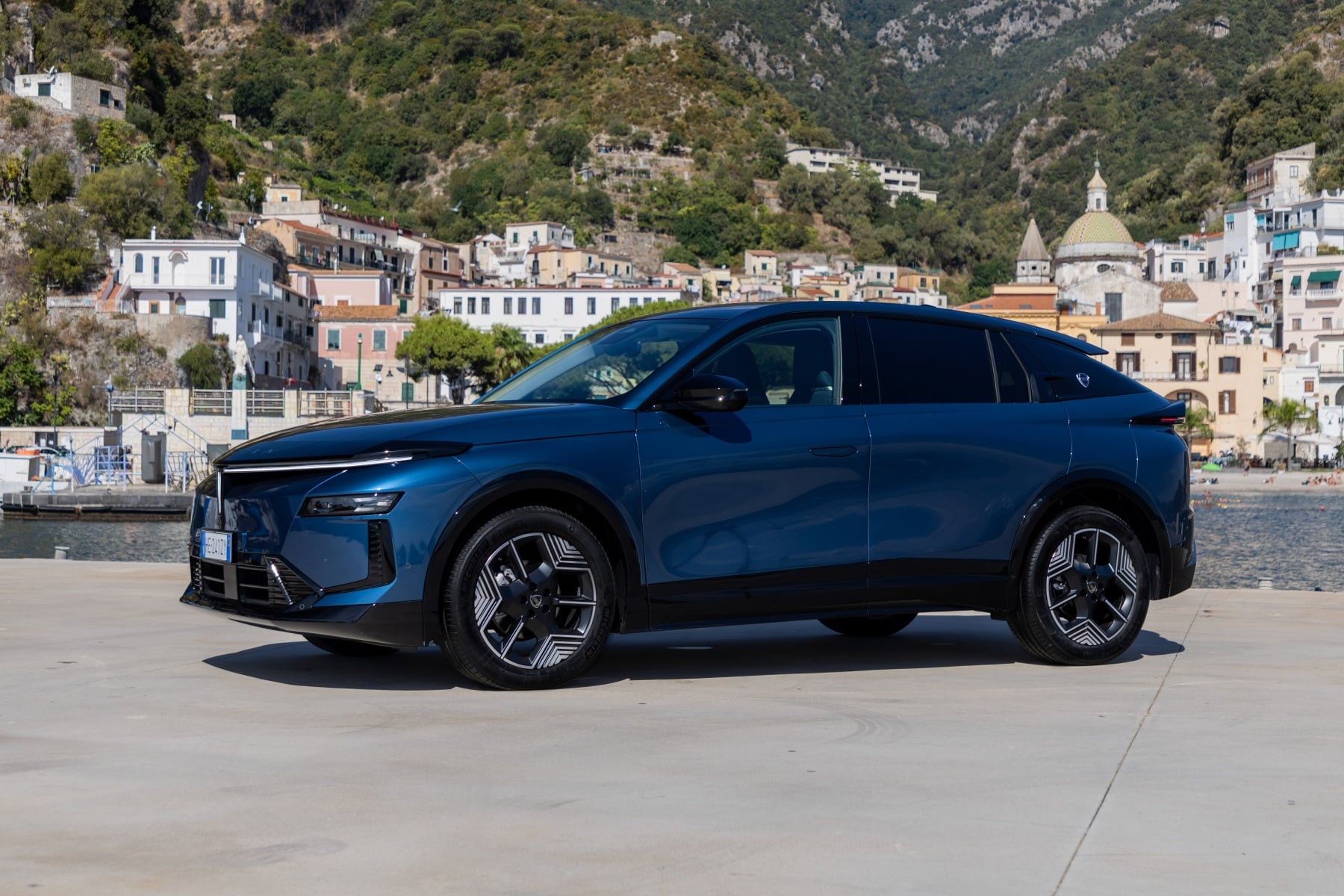
Lancia has pulled the wraps off its new Gamma at the 2026 Paris Motor Show, reviving a nameplate that first appeared half a century ago. The Italian marque, now part of Stellantis, is positioning the compact crossover as a bridge between its storied past and the group’s modern multi-energy technology. The timing is deliberate: the original Gamma arrived in 1976, and this rebirth coincides with Lancia’s 120th anniversary.
One market that will not see the Gamma, however, is Germany. Lancia has confirmed the model is off the table there for the foreseeable future, with the brand’s commercial energies directed at Italy, France, Spain and the Benelux countries. That decision reflects Lancia’s narrow but committed European footprint rather than any technical limitation.
Measuring 4.67 metres long, 1.89 metres wide and 1.63 metres tall, the Gamma slots into the compact crossover class. Its tapered roofline, split rear spoiler and carefully managed airflow help it achieve a drag coefficient of 0.25, while the boot swallows 560 litres. Electric versions tip the scales at up to 2,276 kilogrammes in all-wheel-drive form. Inside, Lancia has leaned on sustainable materials: recycled textile fibres, bio-based synthetic foam and mineral-treated faux leather. A distinctive round surface between driver and passenger doubles as a storage table and houses a wireless charging pad. The cabin pairs a 10.25-inch instrument cluster with a 12-inch head-up display and a 16-inch central touchscreen, and it supports voice control through ChatGPT. Level 2 assistance includes turn-signal-activated lane changing and adaptive cruise control.
Underneath sits Stellantis’s STLA Medium Multi-Energy platform, which accommodates both combustion and electric drivetrains. Alongside a 1.2-litre three-cylinder mild-hybrid entry model, Lancia offers three battery-electric variants. The base EV drives the front wheels with 169 kW and 343 Nm, drawing from a 73.7 kWh net NMC pack that delivers a WLTP range of just over 540 kilometres; top speed is limited to 190 km/h. A Long-Range version swaps in a 97.2 kWh battery for roughly 740 kilometres between charges.
At the top of the range, the HF Integrale badge returns after a 30-year absence, now as an electric performance model. Its dual-motor all-wheel-drive setup produces a continuous 257 kW, rising to 276 kW and 509 Nm when the battery is above 90 per cent charge, enough for a 0–100 km/h run in 5.1 seconds. Even so, the 97.2 kWh pack still returns up to 676 kilometres of WLTP range. Adaptive suspension is standard, and the battery can go from 20 to 80 per cent in 27 minutes on DC power, gaining around 100 kilometres in six minutes. Automatic charging-stop planning with pre-conditioning, one-pedal driving and vehicle-to-load capability round out the package.
What do you think?