
Hyundai Slashes Inster Pricing, Trims Lineup and Drops Heat Pump
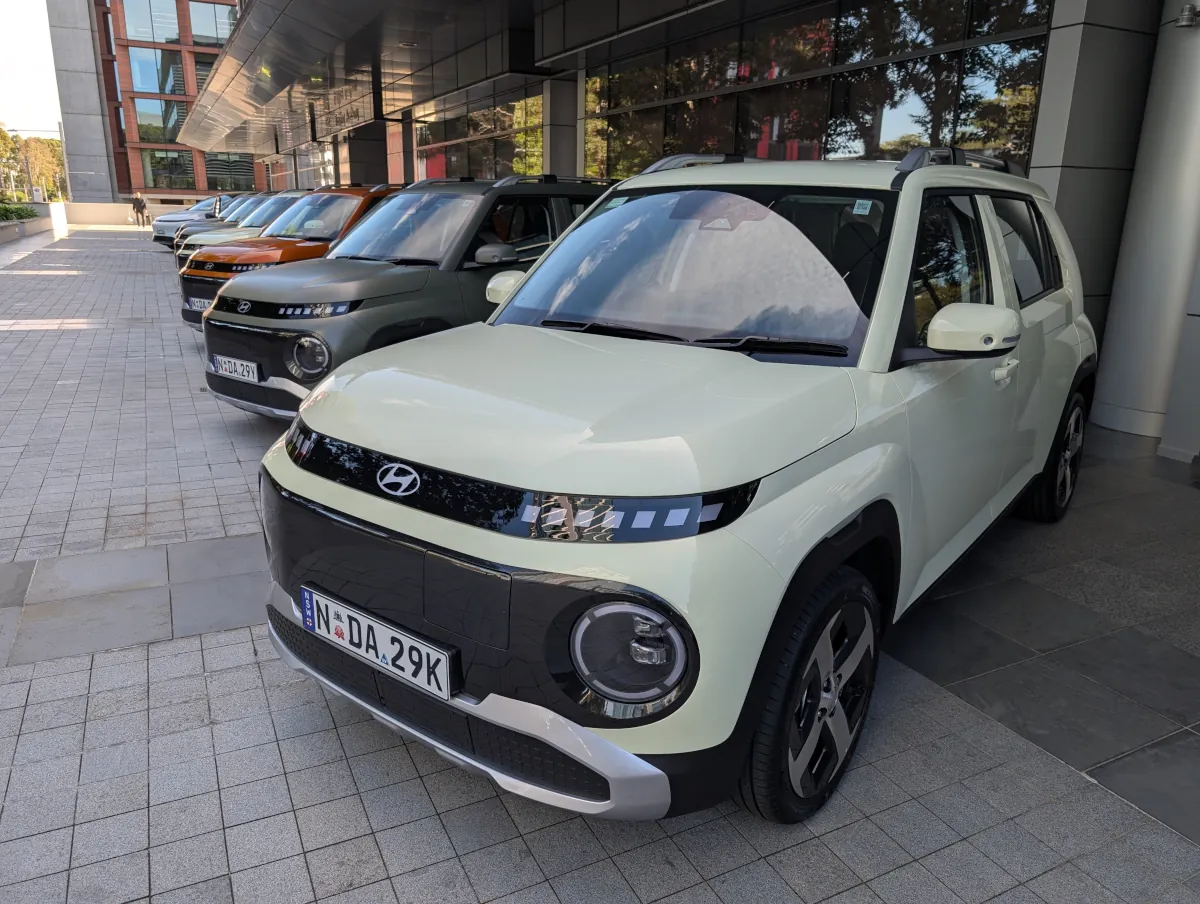
Hyundai has revised its 2027 Inster small electric SUV lineup for the Australian market, applying a $1,500 price reduction while simultaneously cutting the number of available variants from four down to two. The Korean automaker confirmed the changes apply to vehicles built from July onward, which are now landing at dealers.
The entry-level Inster now starts at $37,500 before on-road costs, pairing a 42.5 kWh battery with 327 km of claimed range. Hyundai has discontinued the Extended range model, which carried a larger 49 kWh pack, as well as the Inster Cross basket variant — a roof-rack-equipped version whose added cargo accessory reportedly took a heavy toll on driving range. The remaining Inster Cross, which uses the 49 kWh battery and offers 360 km of range, is now priced at $43,500 before on-road costs.
The price cuts come bundled with what Hyundai describes as “minor specification changes.” Notably, the heat pump has been removed, along with the internal V2L (vehicle-to-load) connection and the ICCB emergency charging cable. These deletions matter for buyers who rely on the car’s ability to power external devices or who want the efficiency benefits a heat pump provides in colder conditions.
The Inster has been well received since its April 2025 launch, accumulating 604 sales so far this year, which places it 42nd in the EV sales rankings. That mirrors its 2025 ranking, when it moved 467 units. The latest adjustments suggest Hyundai is streamlining the Inster range to focus on core variants while keeping the entry price competitive in an increasingly crowded small EV segment.
The removal of the Extended range option narrows buyer choice but simplifies production and inventory. Whether the feature deletions will offset the appeal of the lower price remains an open question for shoppers weighing value against equipment.
What do you think?