
Hyundai's IONIQ 3 Electric Hatch Hits UK Order Books at Around $25,000 With Up to 308 Miles of Range
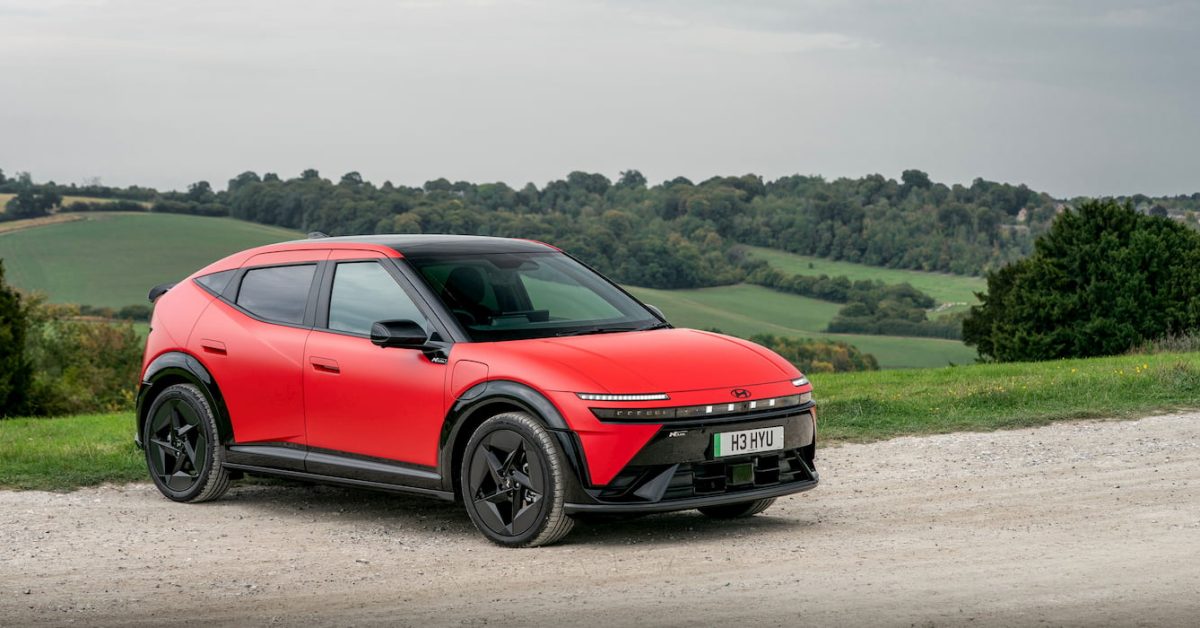
Hyundai has officially opened the order books for its smallest IONIQ model yet, and early demand suggests the gamble is paying off. The IONIQ 3, the brand’s first compact EV to carry the IONIQ badge, launched in the UK and Europe this week with a starting price of £18,495 (about $25,000) once the UK government’s £3,750 Electric Car Grant is applied. According to Hyundai Motor UK president Ashley Andrew, the car drew more pre-launch interest registrations than any new Hyundai ever introduced in Britain.
Two battery options define the lineup. Entry-level Advance models carry a 42 kWh pack delivering up to 213 miles of WLTP range, while stepping up to the 61 kWh battery pushes that figure to a class-leading 308 miles for £21,995 (roughly $29,000) — again including the grant. Lease deals start at £355 a month for the extended-range version with a matching deposit and 8.9% APR. That pricing places the IONIQ 3 below key rivals: the Renault 5 E-Tech starts at £21,495 in the UK, and BYD’s plug-in Dolphin G DM-i comes in at £23,990. Buyers who already reserved a car can now convert to a full order and claim the full £3,750 grant in place of the earlier £1,500 reservation saving.
Dimensionally, the IONIQ 3 sits at 4,155 mm long, 1,800 mm wide and 1,505 mm tall, with a 2,680 mm wheelbase — slightly more compact than both the Kia EV3 and Volkswagen ID.3. Its distinctive “Aero Hatch” profile keeps the drag coefficient down to 0.263, and Hyundai claims a segment-benchmark 441 liters of boot space. Inside, it becomes the first Hyundai in Europe to run the new Pleos Connect infotainment system, built on Android Automotive OS and available with either a 12.9-inch or 14.6-inch central display. Standard equipment includes SmartSense driver assistance, Digital Key 2, Plug & Charge, an integrated EV route planner and vehicle-to-load functionality.
Charging runs on a 400V architecture rather than the 800V setup found in the larger IONIQ 5. Even so, the 42 kWh version can go from 10% to 80% in about 29 minutes on a DC fast charger; the 61 kWh pack needs roughly a minute more. UK trims span Advance, Premium, Ultimate and N-Line Evo, with the top 61 kWh models priced up to £28,195 after the grant.
European buyers can order now as well, with German pricing starting around €28,950 (about $33,000) and leases from €209 a month. American customers, however, will have to sit this one out — Hyundai has confirmed no US plans for the IONIQ 3, which was designed and built in Europe for European roads. The car’s arrival adds pressure to a compact EV segment that is rapidly filling with affordable, long-range options, even as Hyundai’s larger IONIQ 5 continues to rank among the top-selling EVs in the United States.
What do you think?