
Henkel Pushes Adhesives That Let EV Battery Packs Come Apart on Command
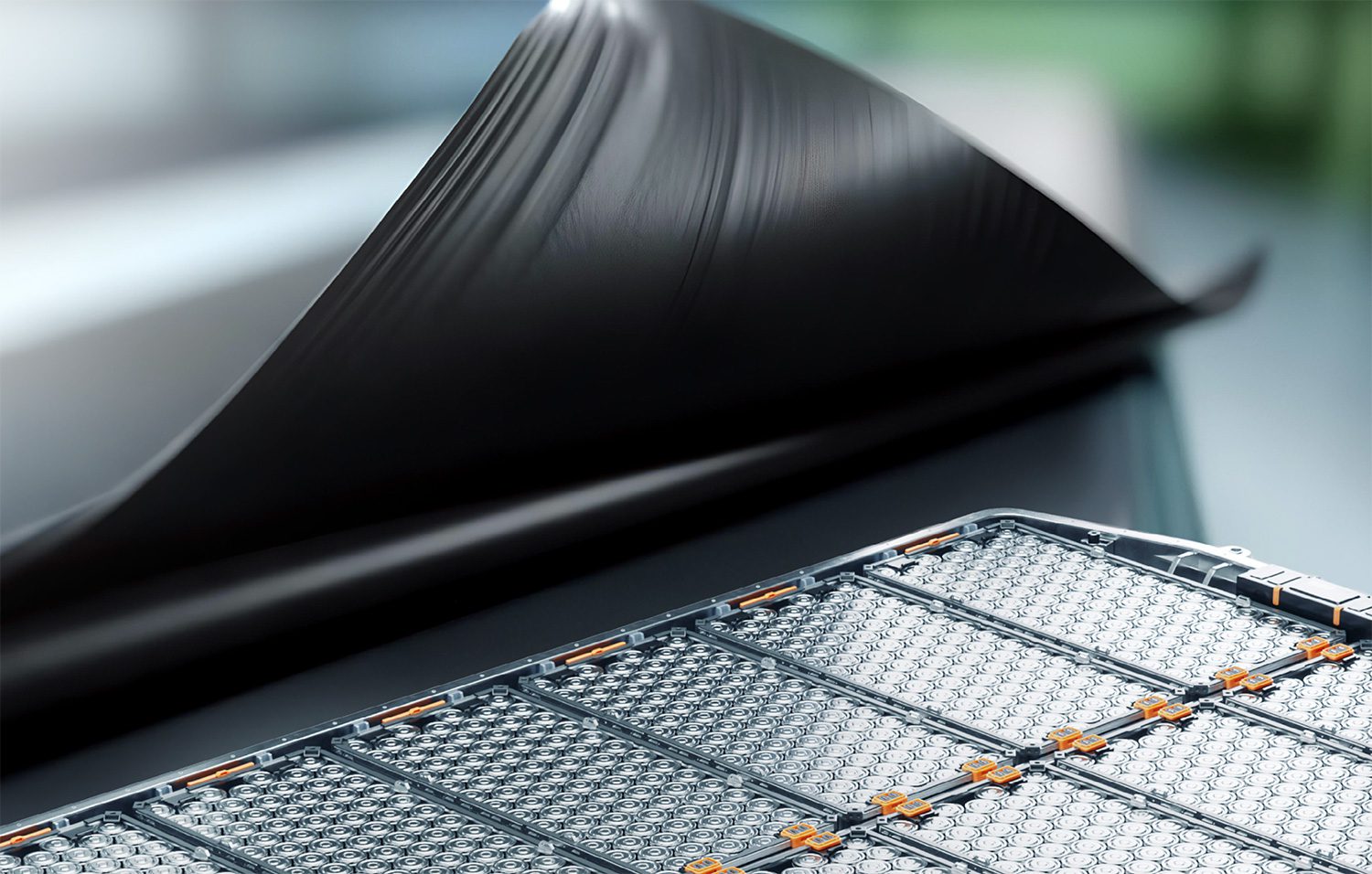
Getting an EV battery apart is still harder than putting one together — and with packs becoming more integrated, that problem is only growing. Henkel is betting a class of adhesives it calls debonding-on-demand can change that: strong enough to hold cells and modules in place for a decade, yet releasable on cue when the pack needs service or recycling.
The German chemicals and adhesives group has published a whitepaper on the concept, framing it as a missing piece of the circular battery puzzle.
Why bonded packs are a headache
Automakers keep tightening pack designs — cell-to-pack, structural housings, more glue, fewer fasteners — because that saves weight and cost. The trade-off shows up later. A joint that was never meant to open is a joint that resists repair, and at end of life it can send otherwise valuable materials to the shredder mixed together.
The whitepaper’s argument runs like this: if a bond can be broken on purpose, without cutting, prying or destroying the parts around it, then battery components can be taken apart cleanly and sorted for reuse rather than downcycled.
The core idea: an adhesive that behaves like a permanent structural bond during service, then releases safely under a controlled trigger — no mechanical force, no damaged materials.
Thermal and electrical release
Henkel points to two trigger routes. One is thermal, using heat to activate separation once the pack reaches a defined condition. The other is electrical — a signal-driven release that would fit neatly into automated disassembly lines.
Both are described as predictable and precise, meaning the goal is not just softer glue but a controlled process a recycler or service technician can repeat the same way every time. That is the difference between a lab demo and something a plant can plan around.
- Next-gen architectures: increasingly integrated packs need bonding that also allows disassembly
- Circularity pressure: automakers are being pushed on repairability, reuse and high-value recycling
- Trigger mechanisms: thermal and electrical routes for clean, damage-free separation
- Automation angle: designed to slot into automated repair and end-of-life processes
What it means for the industry
Battery regulation in Europe and elsewhere is steadily raising the bar on recycled content and material recovery, so how a pack is fastened is no longer purely an engineering detail — it is a compliance question. Adhesives that can be un-bonded could let manufacturers keep the structural performance they want while retaining an exit route for the materials inside.
Nothing here happens overnight. Trigger-based debonding needs to prove itself in real packs, under real thermal cycling and crash loads, before any automaker rewrites a join schedule around it. Henkel is making its case in a whitepaper rather than a production announcement, and the data behind real-world durability is what the industry will want to see.
Still, the direction is clear. The battery pack of the next decade has to be designed for its second life from the first sketch — and the glue matters as much as the cells.
Photo: Henkel / Charged EVs · Official Press Kit / Editorial (Editorial / Press Kit)
Source: Charged EVs
Curious how this compares to other EVs? Try our comparison tool →What do you think?