
Helsingborg Port Adds Two Electric Reach Stackers from Kalmar
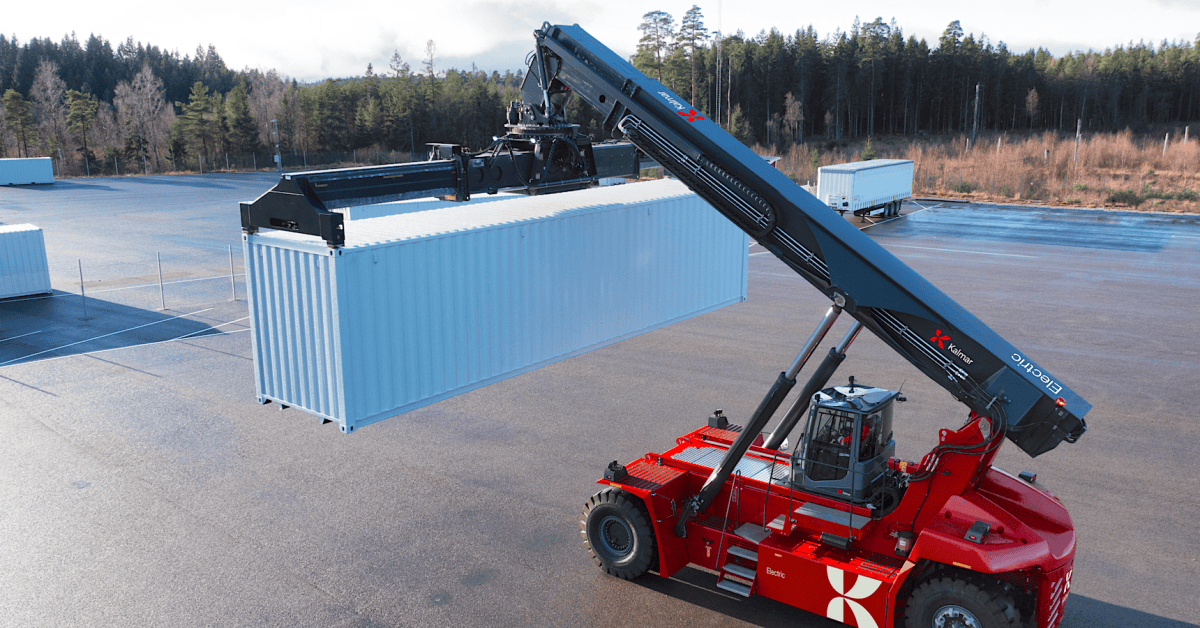
Container terminals operate under constant pressure: tight quarters, enormous loads, and safety margins measured in centimeters. That combination has made electric cargo-handling equipment an increasingly practical choice, and Sweden’s Port of Helsingborg has now joined the shift by ordering two Kalmar reach stackers.
The units are ERG450 electric reach stackers, a model Kalmar rates for up to 45 tons of lifting capacity. Compared with equivalent diesel machines, the electric version cuts noise and tailpipe emissions while spending less time in the workshop for maintenance. For a port that runs around the clock, those gains matter as much as the environmental ones.
The order is the first placed under a new framework agreement between the port and Kalmar, and Helsingborg’s Chief Technical Officer, Christina Argelius, framed it as part of a deliberate, long-term effort to phase out diesel equipment from terminal operations. She described the investment as a way for the port to set an industry benchmark.
Fuel economics are reinforcing that decision. Diesel prices have swung widely enough in recent years that terminals struggle to forecast their operating budgets, and electrifying heavy equipment removes much of that uncertainty. Kalmar’s Eric Wass noted that moving away from diesel gives terminals more cost security, and credited Helsingborg’s team with matching his company’s own commitment to sustainable operations.
Helsingborg sits on Sweden’s Öresund coast and ranks as the country’s second-largest container port. It is also the first Swedish port to order a fully electric reach stacker from Kalmar, whose machines will serve both the company’s home market and a growing list of overseas terminals making the same transition. The two new units are expected to take over duties previously handled by diesel-powered equipment, extending the port’s electrification push beyond road vehicles into the heavy machinery that keeps freight moving.
What do you think?