
Google's Gemini Gets Personal in the Car, Pulling From Gmail, Calendar and Photos
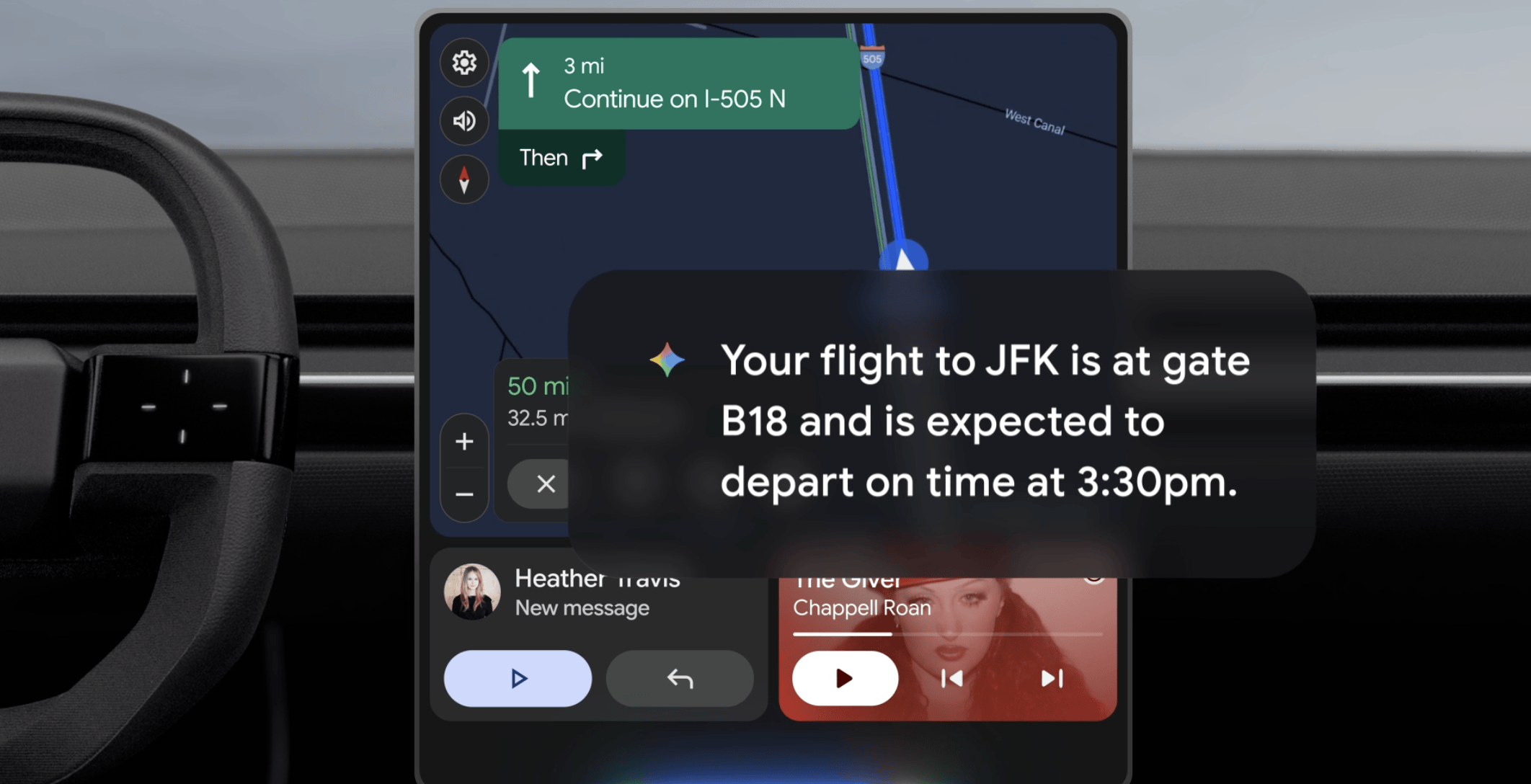
Google is giving Gemini access to your personal data behind the wheel. The company’s Personal Intelligence feature is now rolling out to Android Auto, letting the assistant pull context from Gmail, Calendar, Maps, Photos, YouTube and Search while you drive.
The idea is simple enough. Instead of tapping through apps or typing an address, you just ask. Heading to the airport? Gemini can dig a flight confirmation out of Gmail and check whether it’s on time. Need directions to a doctor’s appointment? Say so and the route appears. Google even floats the example of asking it to locate a car wash you photographed last week and navigate straight there.
That’s a notable jump from the fairly narrow voice commands drivers are used to. Gemini landed on Android Auto last year, then reached cars with Google built-in this April — the native-Android setup already used by Ford, GM, Honda, Nissan, Volvo and Polestar. Personal Intelligence goes a step further by linking those apps into a single, conversation-driven experience.
Opt-in Only — and Your Phone Has to Be in the Car
Privacy is the obvious question, and Google has built in two guardrails. Personal Intelligence stays off unless you switch it on yourself, and tailored answers only appear when your phone is connected to the vehicle. Leave the handset at home and the car won’t suddenly start reciting your inbox.
Google is also keen to stress that nothing breaks if you decline. Navigation, music, calls and general questions all keep working as before — the replies just won’t be shaped around you.
The rollout starts with Android Auto right away. Vehicles with Google built-in will get the same capability over the coming months, so owners of newer Ford, GM, Honda, Nissan, Volvo and Polestar models should expect it in a software update rather than overnight.
Why Automakers Are Watching Closely
For carmakers, this is another reminder that the dashboard is becoming a software battleground. Brands that hand over their infotainment to Google get polished, constantly updated assistants for free — but they also cede a direct relationship with the driver. Every personalized answer Gemini gives is a moment the manufacturer isn’t the one talking to its customer.
For drivers, the trade-off is convenience against data access, and the opt-in structure puts that choice squarely in their hands. Whether people actually flip the switch will say a lot about how much friction they’re willing to trade for a smarter co-pilot.
Source: The Verge - Transportation
What do you think?