
Google Overhauls Play Store Experience for Cars With Built-In Google
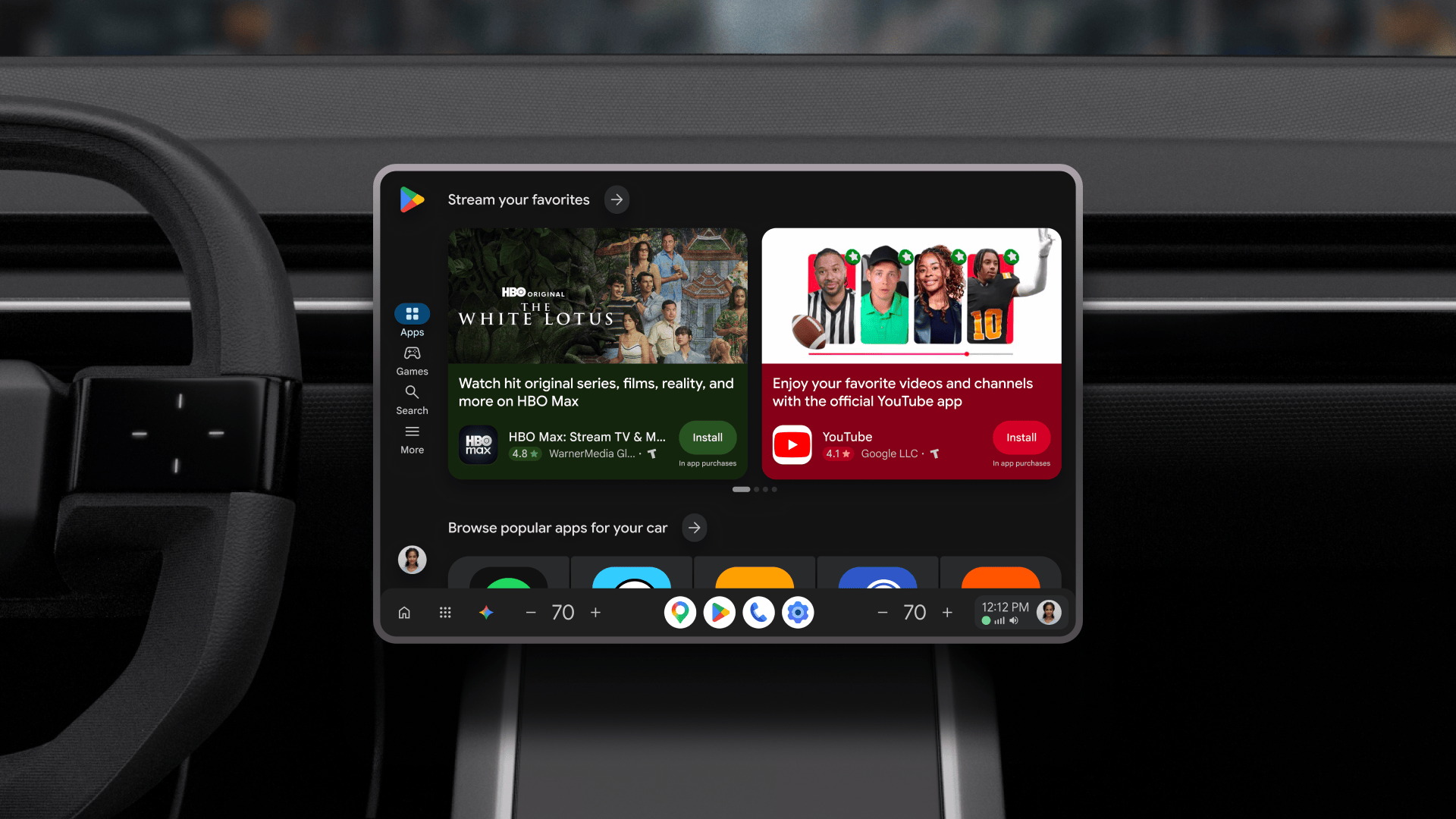
Google is preparing a substantial redesign of the Play Store for vehicles that run its built-in automotive software, aiming to make in-car app discovery and downloads far more intuitive. According to the company, the refreshed interface will automatically resize and reflow itself to match whatever display shape and dimensions a particular car uses, so the storefront remains legible whether the screen is wide, tall, or unusually proportioned. The rollout is scheduled to begin over the next several weeks.
The most noticeable change is a reworked home screen that spotlights curated, featured applications and allows drivers or passengers to install them with just one tap. Google has also simplified the navigation layer: a menu placed along the left edge of the display gathers categories such as Apps, Games, Search, and More, and it shifts to the top of the screen in vehicles that use a portrait-oriented, vertically aligned panel. This orientation-aware behavior is a first for the Play Store in cars, addressing a long-standing complaint that phone-designed storefronts rarely suit dashboard hardware.
Beyond the cosmetic overhaul, Google is broadening the catalog of software that can run when the vehicle is stationary. New arrivals include the streaming service Starz, the Firefox browser, the casual game Ludo King, and the Indian streaming platform JioHotstar. In addition, YouTube playback is coming to the dashboard while parked, and YouTube Premium members will be able to keep listening to a video’s audio track once they resume driving, turning video content into a drive-time audio companion.
It is worth clarifying what “cars with Google built-in” actually means, since the phrase is often confused with Android Automotive, Google’s broader in-car operating system. The built-in program lets automakers bake Google services, along with native support for Android apps, directly into their vehicles, rather than relying on a phone-tethered projection layer. The approach began with an early deployment in the Polestar 2 and expanded to the Honda Accord Touring in 2023, and it has since spread across a widening roster of manufacturers.
This app-store refresh is the latest step in Google’s steady build-out of its in-car ecosystem. The company recently swapped out Google Assistant for its Gemini AI assistant across a swath of supported vehicles from brands including Ford, GM, Honda, Nissan, and Volvo. Taken together, the changes suggest Google views the dashboard as an increasingly important software platform in its own right, one that competes less on horsepower and more on how pleasant and capable the digital experience feels behind the wheel. For drivers whose cars fall under the built-in umbrella, the practical payoff arrives gradually, as the update reaches vehicles in phases.
What do you think?