
GAC Aion's Ray 7 Pre-Sales Open at 128,800 Yuan, a Sedan Built to Court Younger Drivers
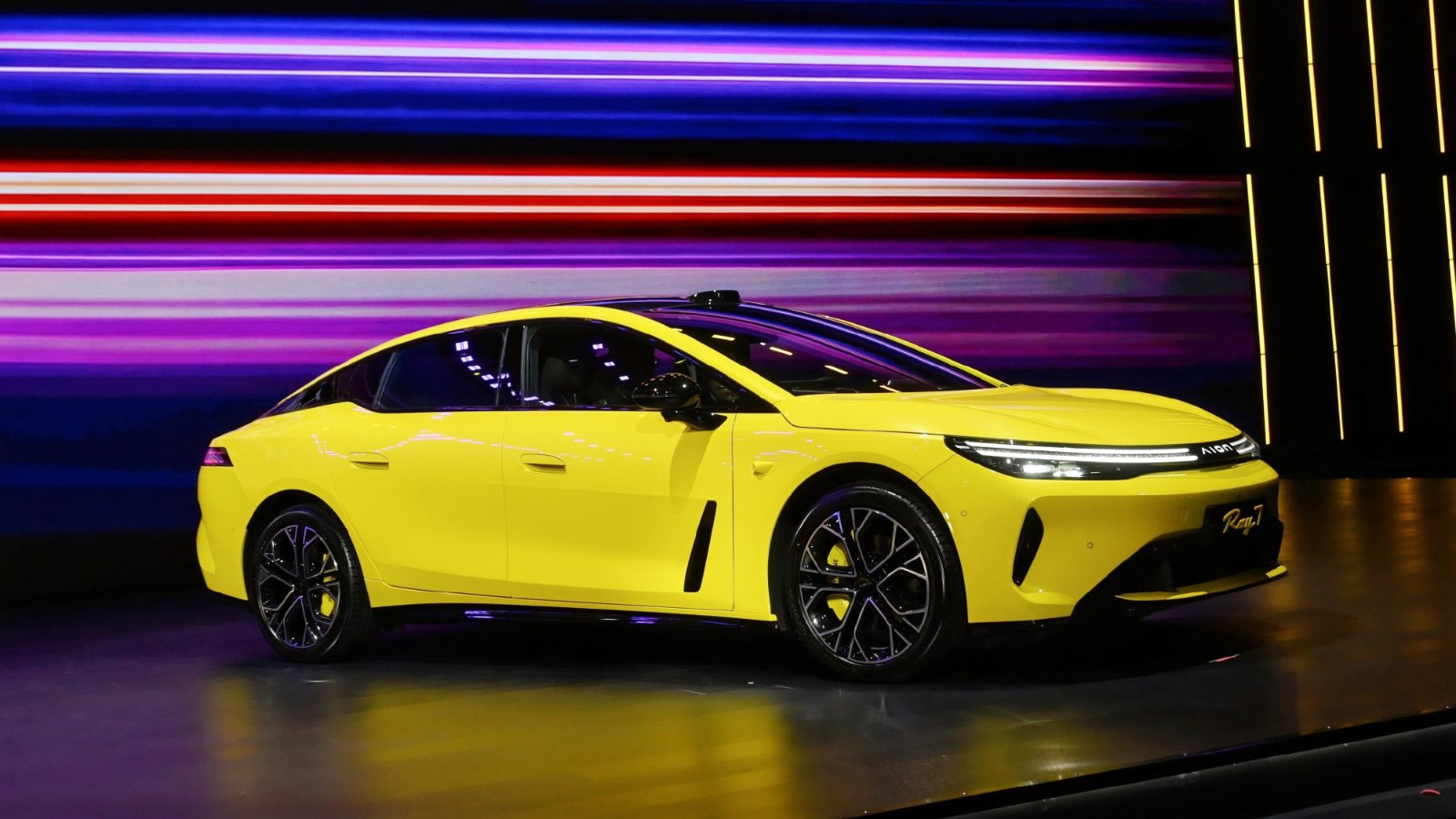
GAC Aion kicked off pre-sales for its Ray 7 sedan on October 17, and the pricing makes the brand’s intentions fairly obvious. Entry money is 128,800 yuan (roughly $19,160), and the range tops out at 158,800 yuan across five variants.
This is the first entry in Aion’s new Ray line, and the first car to wear the brand’s reworked badge. GAC’s electric arm unveiled the Ray family back in July and put the Ray 7 on display in August. Now it has a product to actually sell to the demographic it has been chasing.
What the Money Buys
The Ray 7 is a five-seat fastback measuring 4,960 mm long, 1,900 mm wide and 1,455 mm tall, with a 2,920 mm wheelbase. Semi-concealed door handles and the sloping roofline are clearly aimed at buyers who care how the car looks in a parking lot. Inside, Aion fits a digital gauge cluster, a floating center touchscreen, wireless charging and sport seats up front.
Two battery packs define the lineup. The 530 km CLTC versions run a 45.58 kWh lithium iron phosphate pack supplied by Aion’s own Yinpai Battery unit, while the 702 km cars step up to a 62.98 kWh LFP pack from CATL that carries Aion’s magazine battery safety design. Energy consumption lands at 9.7 kWh per 100 km for the shorter-range car and 9.8 kWh for the standard 702 km configuration.
Every variant uses Huawei’s DriveONE integrated drive system with a single motor on the rear axle, good for 180 kW (241 hp) and 235 Nm. Aion quotes 7.4 seconds to 100 km/h for the 530 km car and 6.9 seconds for the 702 km version. Opt for the high-performance package on the long-range models and CLTC range drops to 600 km.
Driver Assistance and the Top Trim
Three of the five variants carry LiDAR, and those start at 138,800 yuan. Aion says the assistance software shares its technical roots with the Level 4 robotaxis run by WeRide. The sensor suite on those cars counts 27 pieces of hardware: one 192-channel LiDAR, three 4D millimeter-wave radars, eleven cameras and twelve ultrasonic sensors. Navigation-assisted driving works on both city streets and highways.
The 158,800 yuan flagship gets something the others don’t — Huawei’s chip-level integrated drive-and-brake architecture paired with an EMB fully electric brake-by-wire setup. The remaining four variants make do with a Onebox integrated braking controller.
Aion needed a car like this. September volume came in at 39,667 units, a 45.32% jump year-on-year and the seventh straight month of growth. Through the first nine months of 2026 the brand moved 283,747 vehicles, up 56.41% on the same stretch last year. Whether a fastback sedan with Huawei hardware underneath can pull in the younger crowd is the open question — but the price ladder suggests Aion is willing to find out the hard way.
Source: CnEVPost
Curious how this compares to other EVs? Try our comparison tool →What do you think?