
Fraunhofer's LIMAC Project Takes On Lithium-Metal's Weakest Link
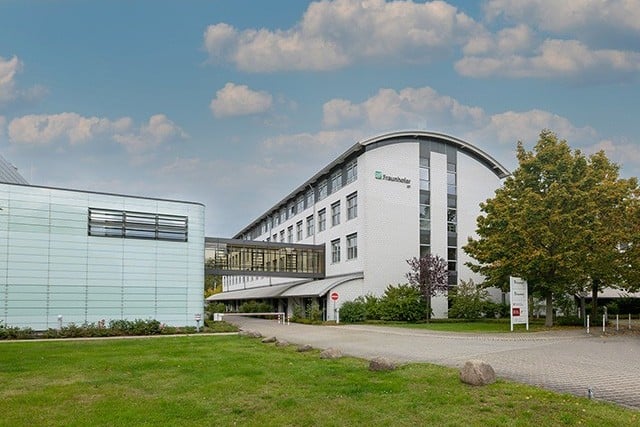
Lithium-metal anodes have long promised more energy per kilogram than today’s graphite-based cells, but they have also refused to behave. Two Fraunhofer institutes are now betting that a nanometre-thin carbon coating can fix the part of the chemistry that keeps failing.
The Fraunhofer Institute for Surface Engineering and Thin Films (IST) in Braunschweig is running the work alongside the Fraunhofer USA Center Midwest. Their effort carries the name LIMAC — shorthand for Amorphous Carbon Interlayers for Reliable Lithium-Metal Battery Cells — and it has been underway since September 2025, with a scheduled finish in August 2028.
Why the interface decides everything
The team’s focus is narrow and technical: the boundary where the lithium-metal anode meets the electrolyte. That contact zone governs how evenly lithium deposits and strips away during cycling, and it is where dendrite growth, parasitic reactions and premature capacity loss usually begin. Get it stable, and the rest of the cell has a chance.
Fraunhofer’s answer is a set of extremely thin amorphous carbon layers, laid down on copper current collectors with a Laser-Arc PVD process. Coated samples then go into test cells, where they are measured against uncoated reference builds. The aim is to work out which specific properties of the interlayer actually matter for a stable interface — and, in turn, let the lithium inside the cell act as the active anode material itself rather than sitting passively alongside a host structure.
Beyond the lab bench
The project is not purely electrochemical. A life cycle assessment will map the material and energy flows behind the approach and flag its environmental footprint. Running in parallel, the partners plan to sketch out how the technology could be scaled from small test cells to larger pouch formats.
That second strand matters as much as the first. Plenty of promising electrode concepts have died somewhere between a coin cell and a production line.
Project at a glance: LIMAC · Fraunhofer IST + Fraunhofer USA Center Midwest · Sept 2025 – Aug 2028 · amorphous carbon interlayers via Laser-Arc PVD · LCA and pouch-cell scaling included
For carmakers, the payoff would be straightforward. A lithium-metal cell that holds up over thousands of cycles could trim weight from an EV pack without giving up energy density — a combination that has kept the chemistry on wish lists for years.
But the honest status is early. LIMAC sits firmly in basic research, and no performance figures, cycle-life targets or commercial timelines have been published. The next three years will show whether a thin carbon film can tame one of battery chemistry’s more stubborn interfaces.
Source: electrive.com
Curious how this compares to other EVs? Try our comparison tool →What do you think?