
F1's 2026 Rules Carry a Tire Lesson for Every EV Owner
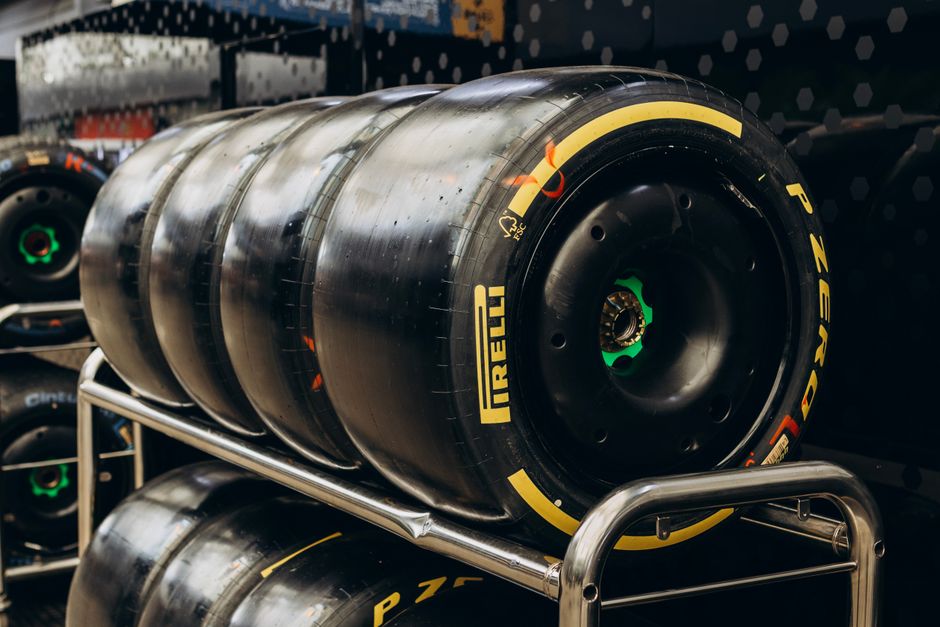
Formula 1 isn’t going electric, but its 2026 rulebook is being written with electrification front and center — and the way engineers are chasing lap time holds a few practical pointers for anyone shopping wheels and tires for a battery-powered car.
The hybrid units keep the 1.6-liter turbo V-6, yet the electrical share of total output climbs from roughly 20 percent to about 50 percent. The MGU-K motor alone now produces up to 350 kW, nearly triple the 120 kW allowed before.
What makes the package interesting is that it comes alongside a diet. Minimum car weight drops by 30 kg, and Pirelli has trimmed its 2026 tires by 25 mm at the front and 30 mm at the rear. The four tires together weigh some 1.6 kg less than the outgoing set.
More power, less mass, less drag. That combination is the takeaway Saleh Taebi, founder and CEO of USAWheels and CanadaWheels, draws for road cars: the powertrain, wheels, tires, aero, suspension and software have to be tuned as one system rather than a list of separate parts.
Two Series, Two Very Different Briefs
It’s easy to confuse Formula 1 with Formula E, but they are separate championships with separate suppliers. Pirelli builds F1’s rubber; it has nothing to do with Formula E, where Hankook has supplied the grid through the 2025/26 GEN3 Evo season before Bridgestone takes over with GEN4 in 2026/27.
The numbers still make for a useful comparison. The outgoing GEN3 Evo car carried a minimum weight of 859 kg with the driver aboard, against 768 kg for the 2026 F1 car. Different rulebooks, different goals, yet the electric series shows how far EV performance has come.
- Acceleration: GEN3 Evo hit 60 mph in 1.82 seconds, quicker off the line than a current F1 car
- Top speed: around 200 mph, still short of F1
- Noise: roughly 80 decibels, far quieter than combustion racers
The silence matters more than it sounds. With the engine note gone, tire roar, drivetrain whine and wind noise move to the front of the cabin — which is exactly what drivers of quiet EVs notice after a wheel or tire swap.
Why Wheel Weight Matters More on an EV
A wheel carries two kinds of mass. There’s rotational mass, which has to be spun up every time the car accelerates, and unsprung mass, which sits below the suspension and shapes how well the tire stays planted on the road.
Add weight at the corners and you pay on several fronts at once: energy use, steering feel, braking and ride quality. Bigger-diameter rims usually bring extra mass and low-profile tires. Steering may sharpen and the stance may look better, but comfort and efficiency can suffer. Wider packages can raise drag and rolling resistance too, depending on how they’re shaped.
Lighter isn’t automatically better, either. EV wheels still need the structural strength, load rating, brake clearance and durability to handle cars that often outweigh comparable gasoline models. Taebi’s teams have sold more than a million wheels and tires across USAWheels and CanadaWheels, and he says picking rims by looks alone is one of the most common mistakes EV owners make.
System check: rotational mass drives efficiency · unsprung mass shapes grip and ride · offset and overall diameter affect speedometer and stability software
The Tire Is a Package Deal
Low rolling resistance helps range, but not at the cost of wet braking, cornering grip or load capacity. EV tires also have to cope with battery weight, instant torque and the tug of regenerative braking.
Fitment deserves just as much attention as compound. A wheel that bolts on isn’t necessarily right for the car. Width, diameter, bolt pattern, offset, center bore, brake clearance and load rating all have to line up, and the tire needs the correct size, overall diameter, load index, speed rating and TPMS compatibility. Small offset changes can alter suspension clearance and steering geometry; meaningful diameter changes can throw off the speedometer and the data fed to traction and stability systems.
Before swapping anything, owners should confirm load ratings, keep overall diameter close to stock, check offset and brake clearance, choose a tire for their climate and driving habits, and stay on top of pressures and alignment.
The racing analogy lands here. The lightest wheel isn’t automatically the safest, and the lowest-rolling-resistance tire isn’t automatically the best. A strong EV setup balances fitment, weight, efficiency, grip, braking, comfort, durability and safety — as one system.
Source: Green Car Journal
What do you think?