
F-150 PowerBoost Owner Tows 278 Miles and Arrives With a Fuller Camper Battery
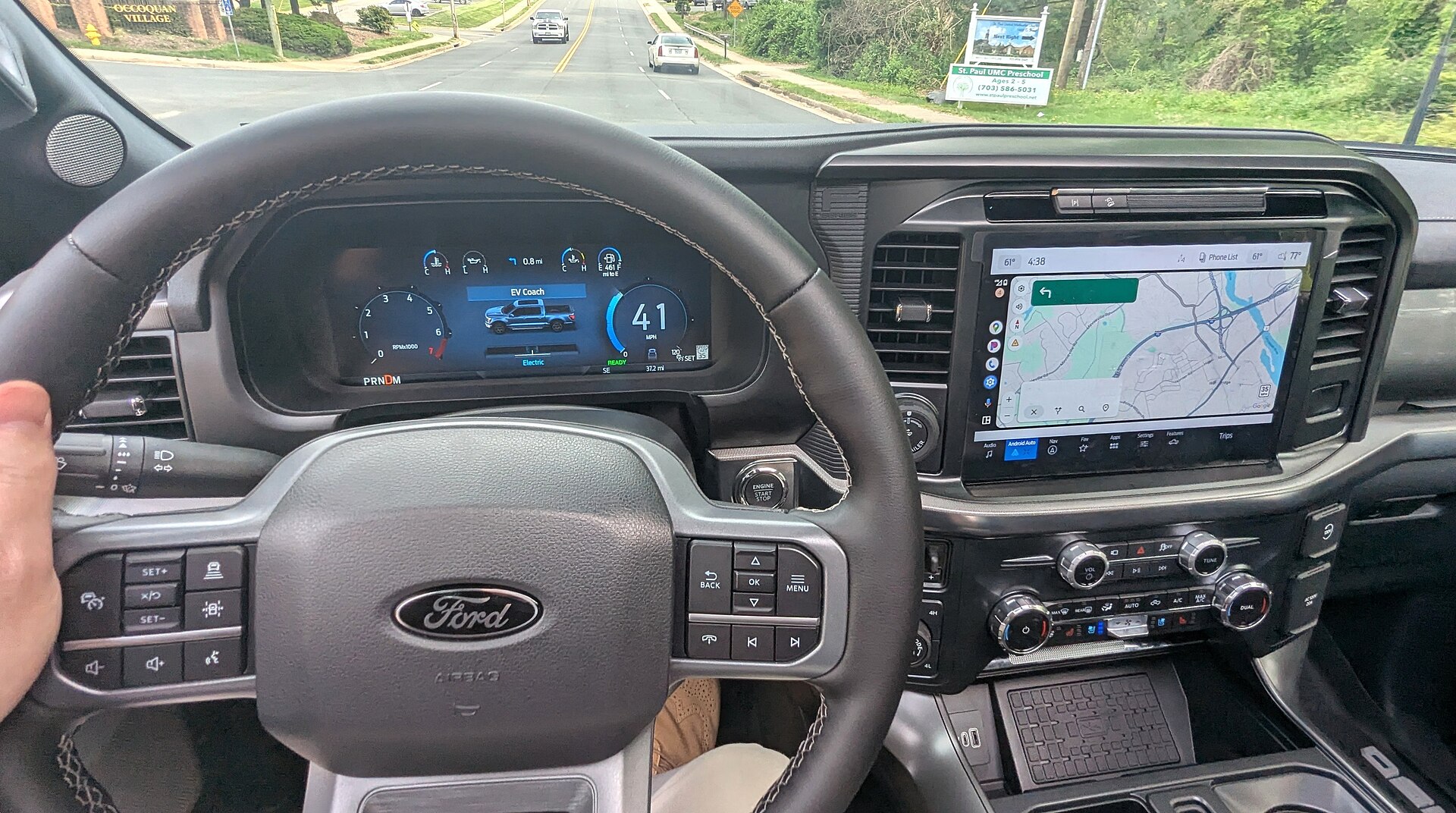
An owner of a 2025 Ford F-150 PowerBoost says he pulled his electric travel trailer 278 miles and pulled into camp with more stored energy than he left with. The camper’s display climbed from 74% to 84% over the run, with the truck’s 7.2-kW Pro Power Onboard system feeding the trailer while both were moving.
The drive ran from Thermal, California, to Prescott, Arizona on September 5, gaining roughly 5,150 feet in elevation along the way. Fuel economy came in at 13.0 mpg. Charging was switched on between Thermal and Blythe, then shut off for the rest of the test.
That last detail matters. The battery in a rig like this has two jobs — helping move the trailer and keeping people comfortable once it is parked — and energy spent on the highway is energy the camper does not have later. Unless, of course, something refills it on the road.
The Math Doesn’t Quite Match the Fine Print
The owner’s summary pegs the charging penalty at about 1 mpg, and that figure does not line up with his own published numbers. His specifications page, built on an added 0.75 gallons per hour atop a 4.5-gallon-per-hour baseline, works out to 13.8 mpg unplugged and 11.8 mpg while charging at 62 mph. That’s closer to 2 mpg.
His technical assessment models an even bigger hit, 14.8 down to 12.6 mpg at the same speed. So the summary understates the penalty implied by the detailed work.
Then there is the fuel bill for the whole run. The assessment logs 9.69 kWh of AC power delivered on the return leg. Using the project’s 7.7 kWh-per-gallon reference, that comes to about 1.26 gallons — roughly $4.40 at an illustrative $3.50 a gallon.
Total fuel for the drive, at 13.0 mpg over 278 miles, was about 21.4 gallons. Charging’s share lands near 5.9%. Both things can be true at once: the mpg drop is real while the charger is running, and that penalty stays small across a long trip if the charger only runs part of the time.
What the owner is really after isn’t a prettier fuel number. In an RVForums post about living with the trailer, he described years of noisy summer air conditioning and hunting for hookups, and said the upgrade he values most is simply sleeping well. “I have never slept like that in one,” he wrote.
Fair enough. A camper is a costly place to spend a rough night.
His projection of roughly four days off a full battery is on shakier ground, though. He reports a 22-point drop over 24 hours with daytime temperatures near 100 degrees Fahrenheit, overnight lows in the 70s and the thermostat at 75. But the readings were whole percentages, solar input wasn’t metered separately, and the window included cooling while driving. Nobody can say how much truck-supplied power, if any, went in during those hours.
A clean parked-only stretch — with battery readings, weather, solar output and outside charging all accounted for — would tell buyers far more than a travel day can.
Why Campground Rules Change the Strategy
Picture a site with no hookup at all. Mather Campground in Grand Canyon National Park, as one official example, lists no electrical hookups and limits generator hours to 7–9 a.m. and 6–8 p.m., with extra restrictions in one loop. Gasoline left in the tank can’t cover every overnight need under those rules. A charged trailer can keep the lights and the fan going after the generator has to stop.
The reverse is also true. A reliable hookup waiting at the other end makes it easier to spend trailer energy helping with the tow, since the pack can refill while everyone is already parked. The destination quietly shapes the smartest driving plan before the truck even leaves the driveway.
One Display Never Tells the Whole Story
A separate Lightship test makes the same point from another angle. On a 196-mile loop in Northern California, the company reported 93 kWh consumed by a Ford F-150 Lightning and 47 kWh by the trailer. The truck alone worked out to 2.11 miles per kWh; counting both packs brought it to 1.40. Same trip, two very different numbers. Both packs finished at 29%, which is the sort of reserve figure a shopper needs next to any efficiency claim.
Powered trailers really need to be judged as a complete package — truck plus camper. A conventional hybrid raises the same accounting question: a PowerBoost driver who logged 29.15 mpg including electric miles still had those miles in the total.
For anyone weighing this setup, three things are worth keeping straight. Separate the running penalty from the trip average, because active charging time decides how much of that mpg loss reaches the final bill. Don’t let a driving day stand in for a parked weekend. And compare rigs at the same arrival reserve, including the cost and time of topping up.
The owner says his trailer came to about $210,000 as configured. At that money, a comfortable night should be part of the deal — and buyers deserve enough hard data to know it will be. His higher arrival reading is a good sign. The question that still needs an answer is simpler: what’s left in the pack once the truck is switched off?
Source: Torque News
Curious how this compares to other EVs? Try our comparison tool →What do you think?