
Kia Unveils Seltos Hybrid Featuring Brand's First Electric All-Wheel Drive
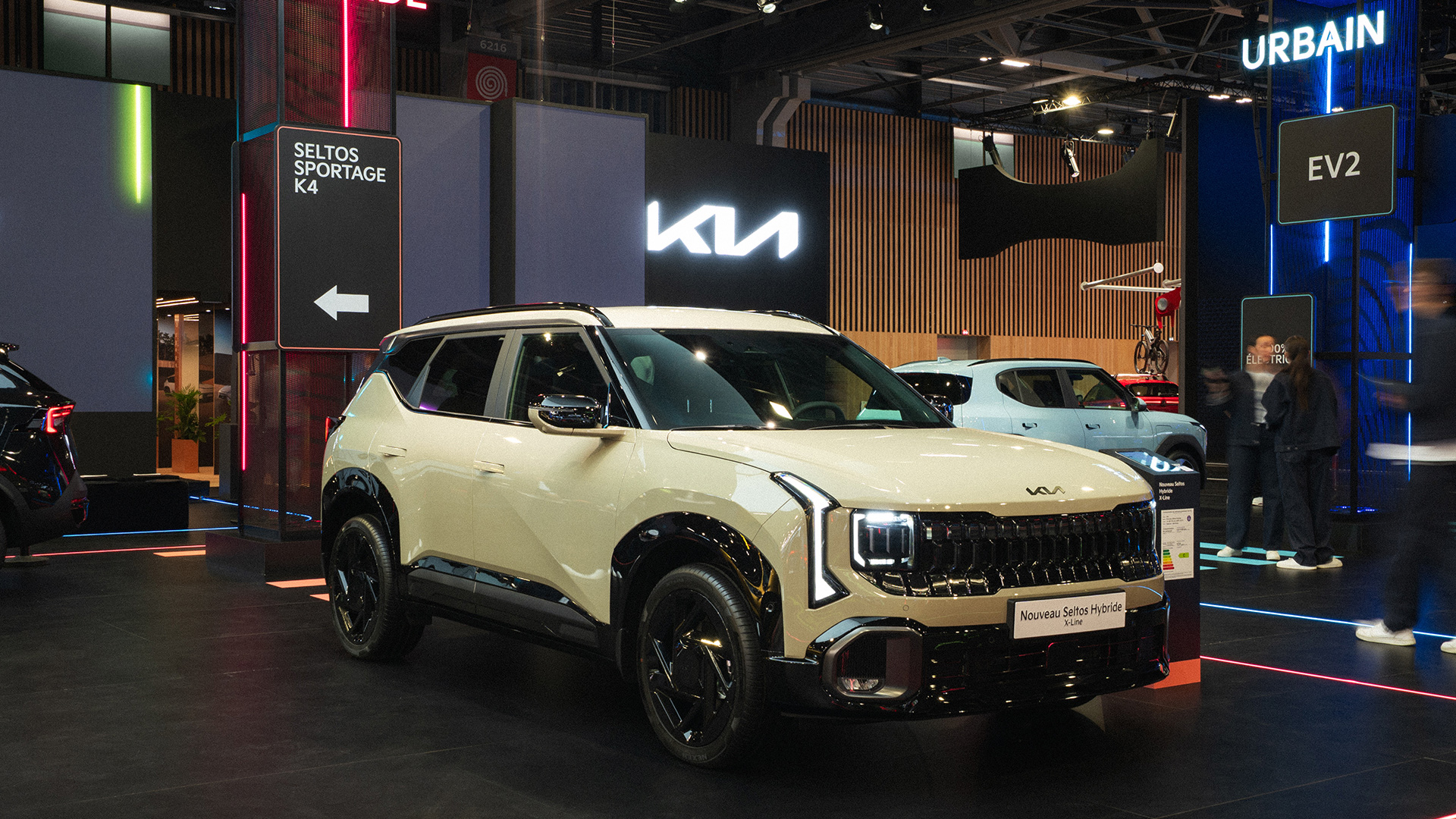
At the Paris Motor Show, Kia pulled the wraps off the second-generation Seltos Hybrid, marking the European debut of a vehicle that carries a notable technical first: an electric all-wheel-drive setup. This hardware splits torque between the front and rear axles to sharpen traction and stability, making it the first such system to appear in Kia’s hybrid lineup.
The broader picture helps explain why Kia is pushing hybrid hardware harder in Europe. The brand’s registrations climbed 9.0% between January and August 2026, lifting its regional market share to 4.1%. According to data Kia attributes to the European Automobile Manufacturers’ Association, it ranked as the fastest-growing name among Europe’s ten largest passenger car brands during that stretch. The Sportage hybrid does much of the heavy lifting in that surge, and the Seltos now lines up beside it, joined by the Niro and K4.
The Seltos is no niche player for Kia — it stands as the company’s second best-selling model globally. Its arrival plants it squarely in the hotly contested C-SUV segment, an arena already thick with rivals. Kia, however, kept several key details under wraps at the premiere: no power figures, no pricing, and no confirmed on-sale date were announced. A separate model, the K4 Hybrid, also got its first European showing in both hatchback and Sportswagon estate body styles, with production scheduled to begin on 15 October 2026.
Alongside the hybrids, Kia displayed its complete five-model electric GT family, which now includes the freshly added EV3 GT, EV4 GT and EV5 GT. The PV5 electric van also appeared in both Cargo and Passenger configurations. The PV5 represents the opening chapter of Kia’s Platform Beyond Vehicle strategy for electric commercial vehicles, a family that expanded recently with the PV7’s reveal at IAA Transportation in Hanover.
Taken together, these moves point to a two-track approach in Europe. Full hybrids led by the Sportage HEV remain Kia’s most effective tool for gaining ground against the likes of Toyota, while the growing BEV range and the emerging van platform target separate battlegrounds. Kia also benefits from duty-free access under the EU-Korea free trade agreement, giving it a pricing edge over Chinese competitors facing tariffs — though momentum behind “Made in Europe” sourcing preferences could gradually erode that advantage for imported models. In the van space, the widening PV5 range and the forthcoming PV7 bring a dedicated electric platform into territory long held by Renault, Stellantis, Ford, Mercedes and Volkswagen.
What do you think?