
EV Power Demand Still Rising Across the US, But the Curve Is Flattening
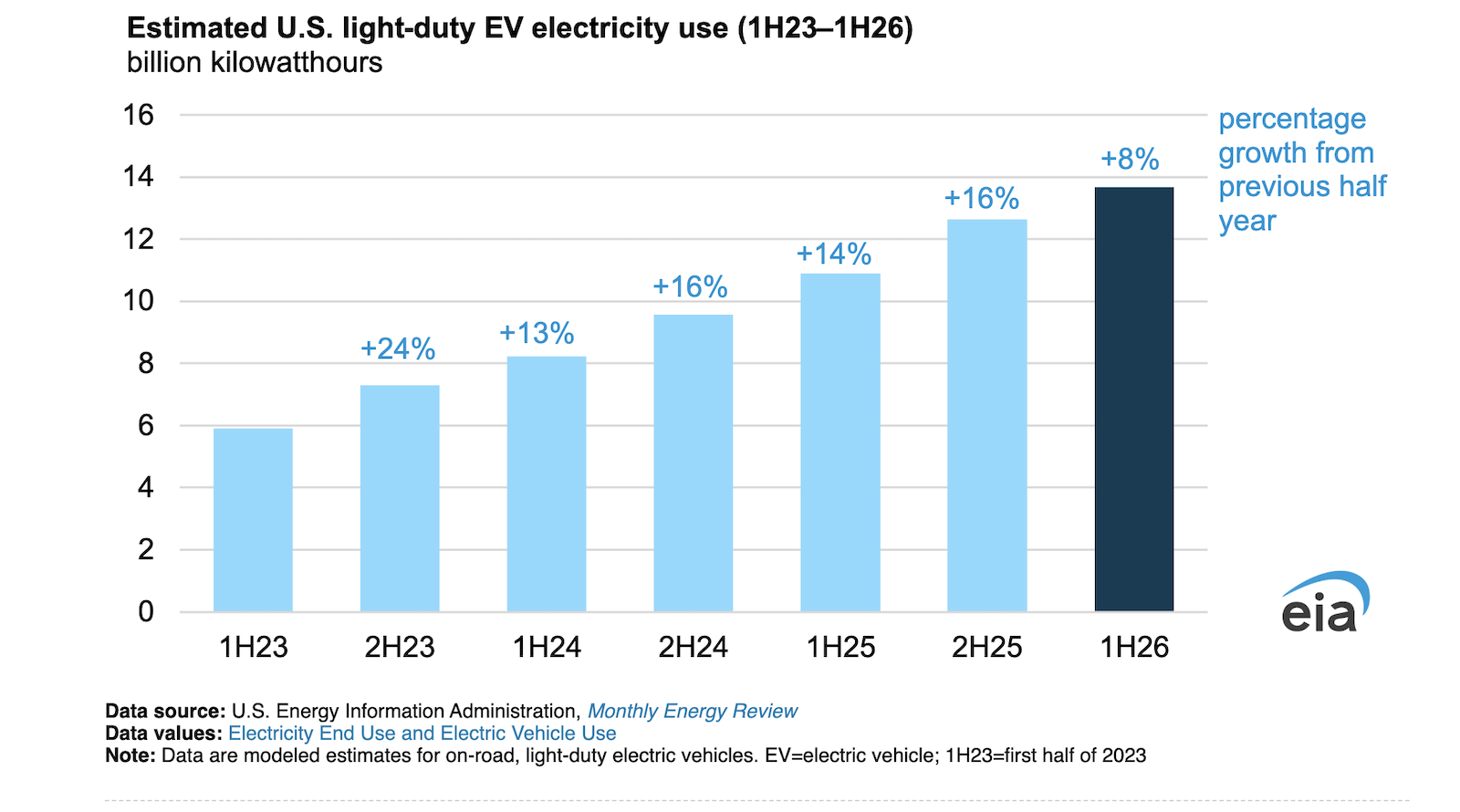
Electricity drawn from the grid by America’s light-duty plug-in vehicles keeps climbing, yet the pace of that climb has cooled noticeably. According to federal energy analysts, consumption by battery-electric and plug-in hybrid cars and trucks rose roughly 8% in the first half of 2026 compared with the preceding six months.
That figure marks a step down from the double-digit surges of recent years, when comparable half-year windows regularly posted gains between 13% and 24%. The softer trend tracks a drop in new EV purchases after federal purchase incentives lapsed at the end of September 2025. Sales of new electric models fell about 19% in the first half of 2026 versus the prior half-year, even as the total electricity attributed to EVs has more than doubled since early 2023, nearing 14 billion kilowatt-hours.
The government’s tally only covers plug-in light-duty vehicles weighing up to 8,500 pounds, meaning conventional hybrids, diesels, gasoline cars and hydrogen fuel-cell models sit outside the dataset. Since these numbers are modeled estimates rather than direct survey readings, officials plan to keep refining them through regular energy reports going forward.
Context matters here: EVs remain a small slice of the national fleet, representing about 2% of registered light-duty vehicles as of 2024. That modest share helps explain why overall grid demand has not shifted as dramatically as headlines might suggest.
What do you think?