
Europe's EV Market Hits New High: BEVs Capture Record 30% Share in August
August is normally a sleepy stretch for Europe’s car business, with factories idling and showrooms half-empty during the holiday break. That made the latest registration figures all the more striking: battery-electric vehicles claimed a record 30% of the European market last month, according to José Pontes’ monthly sales roundup.
Roughly 250,000 pure electric cars were registered across the region in August, a 51% jump compared with the same month a year earlier. That is the fastest year-over-year growth recorded so far in 2026, and it lifted the year-to-date BEV share to 24% — already above the 20% full-year result for 2025. Add plug-in hybrids to the mix and plug-in vehicles accounted for 42% of August sales, with combined year-to-date share sitting at 35%. The wider plug-in category grew 39%, though PHEVs themselves expanded at a more modest 15%, their weakest pace in 18 months.
The contrast with conventional powertrains is stark. Petrol took an 18% share in August, down 24% year over year, while diesel fell 23% to just 6% — both sliding further toward the margins. Plugless hybrids may also be turning a corner: they grew only 3% last month and their 32% share was a point below where they stood 12 months earlier, prompting questions about whether 2026 marks the peak for HEVs. The next question, naturally, is how long PHEVs can hold their ground.
That last point is where trade policy comes in. EU tariffs imposed on Chinese-made BEVs in late 2024 largely parked those models at their previous share of the electric market, even as their absolute volumes kept climbing. PHEVs, however, escaped the same treatment and continued to face only the baseline 10% duty. Chinese manufacturers responded by pouring investment into plug-in hybrids — the BYD Atto 2 PHEV, Geely Starray, Jaecoo 7 PHEV and Omoda 9 among them. The payoff has been dramatic: Made-in-China PHEVs now hold 28% of Europe’s plug-in hybrid market, up from just 10% in 2024, and they are growing 141% this year against 24% for the segment overall. Made-in-Europe PHEVs, by comparison, are up only 3% and have posted declines in three of the past four months. The shift is not drivers abandoning plug-ins — it is drivers switching to Chinese ones.
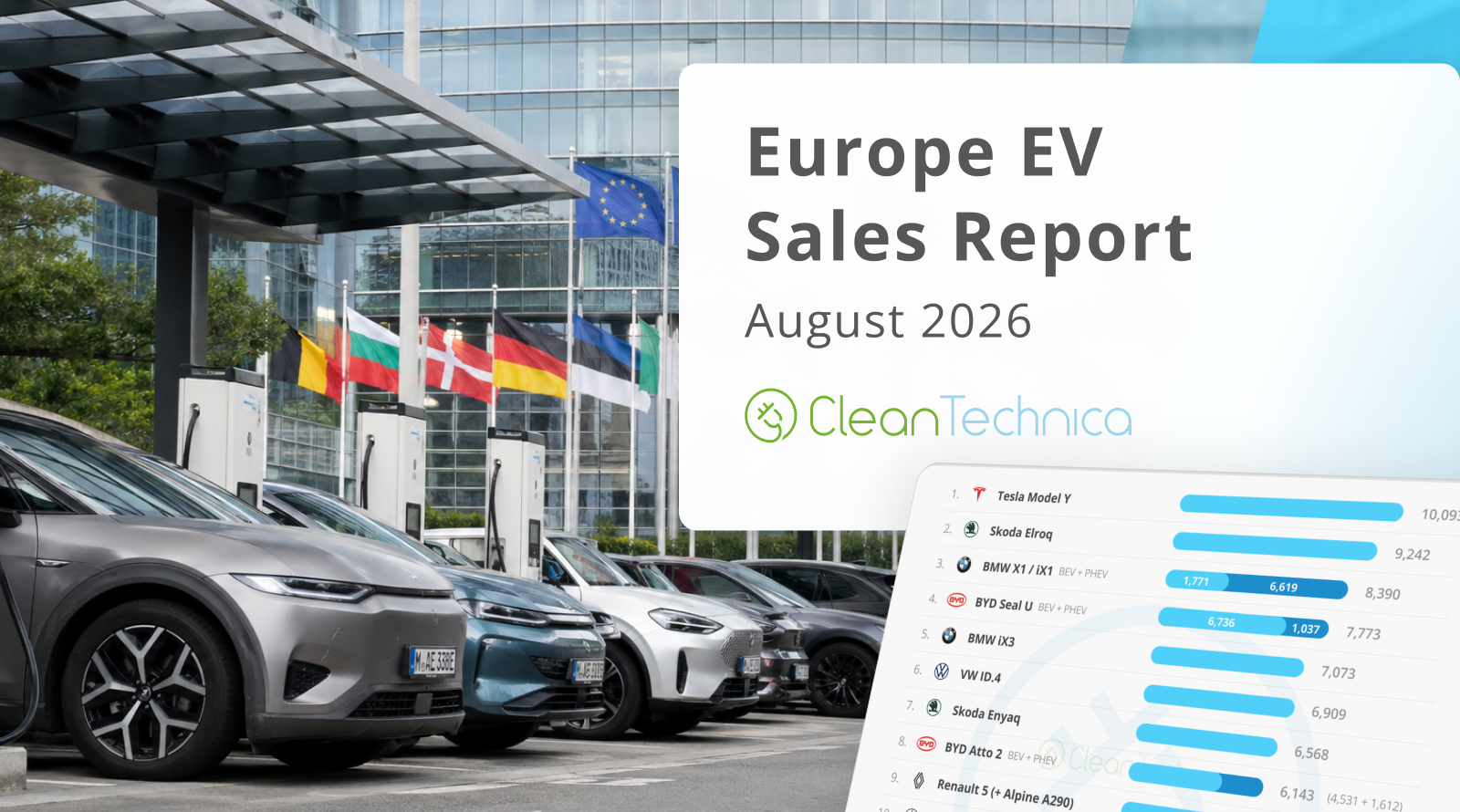
On the model leaderboard, the Tesla Model Y returned to the top spot with 10,093 registrations, a 21% gain, helped by pricing that starts around €40,000 and the model’s enduring appeal to cost-focused buyers. Skoda’s Elroq followed with 9,242 units, up 45%, though it may soon face pressure from the smaller, cheaper Epiq. BMW placed two entries in the top five: the iX1/X1 PHEV pairing in third on 8,390 registrations, and the new iX3 in fifth with 7,073. The iX3, launched with a 108 kWh battery, 400 kW charging and V2X capability, is drawing attention as a benchmark for what a European OEM can deliver. BYD’s Seal U rounded out the top five at 7,773 units, boosted by aggressive discounts as the model’s development costs recede. Further down, Mercedes saw its CLA EV take tenth with 5,398 registrations, while the new GLC EV posted a record 5,326 units in twelfth — a figure worth watching as the midsize SUV finds its footing.
What do you think?