
EU Passenger Package: Rail Ticketing Reform Falls Short of Its Green Potential
The European Union’s proposed Passenger Package marks a significant step forward for rail passenger rights, promising to drag the continent’s fragmented ticketing systems into the digital age and make train travel a more viable alternative to short-haul flights. Yet according to a new position paper from the clean transport group T&E, the proposal’s limited geographic reach threatens to undermine its own climate ambitions.
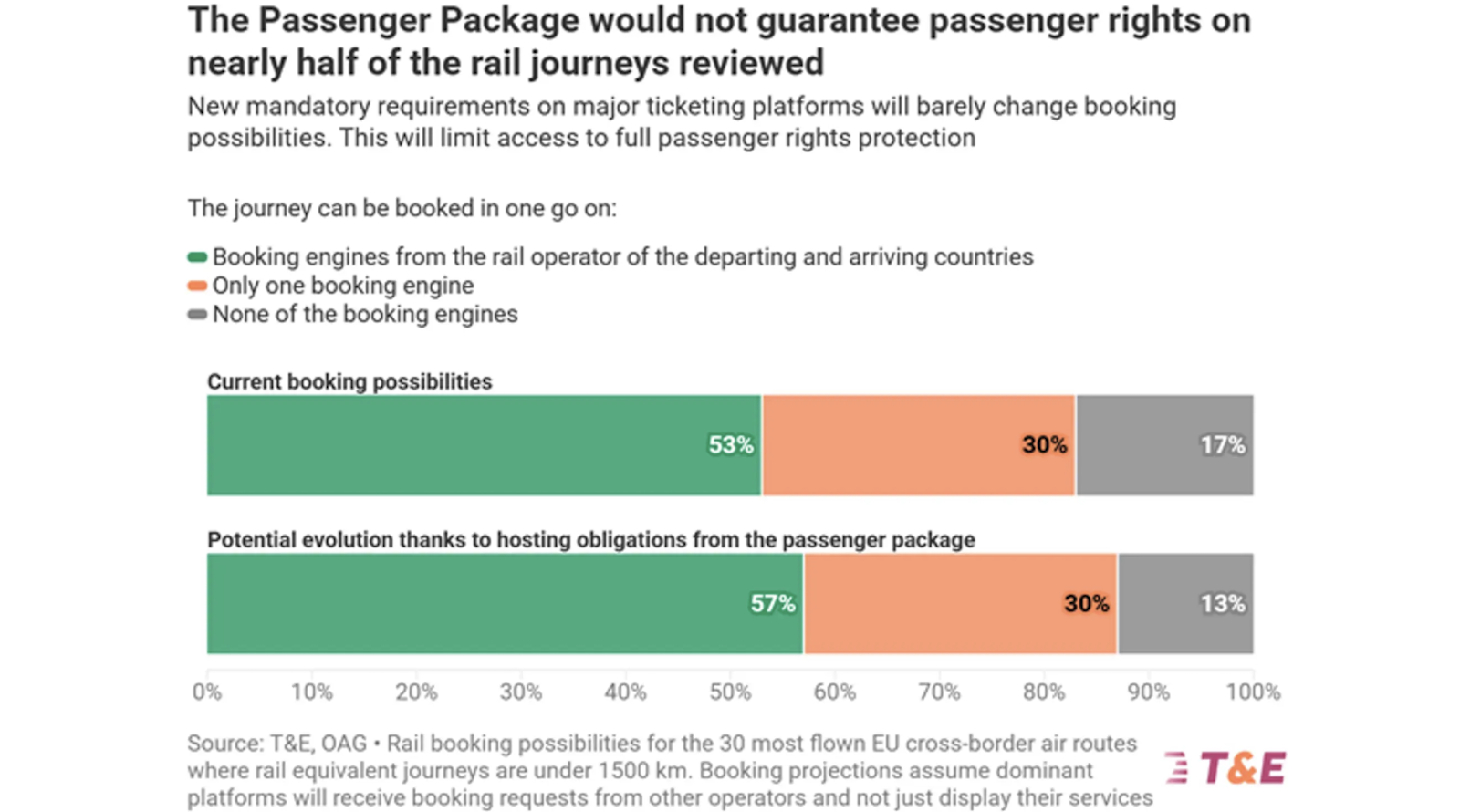
At the heart of the package is a hosting obligation that would compel major rail operator booking platforms to sell tickets for rival operators. This matters enormously because incumbent carriers dominate the market — in France, for instance, SNCF Connect accounts for nine out of ten rail tickets sold. Polling cited by T&E found that 61% of respondents had abandoned at least one long-distance journey because booking was too complicated. But the current proposal confines the hosting obligation to neighbouring countries, meaning many of the busiest flight routes within the EU still will not be bookable as a single rail ticket, leaving passengers without the protections that come with one.
Transport remains the EU’s largest source of greenhouse gas emissions, and unlike other sectors, its emissions have kept climbing since 1990. Aviation is the fastest-growing contributor, while road transport still accounts for the majority. T&E argues that enabling rail — Europe’s greenest mass-market transport mode — is essential, and that the Passenger Package must be harmonised with the EU’s High Speed Rail Plan to unlock its full modal-shift potential.
The group’s central recommendation is to extend the hosting obligation to routes between EU capitals under 1,500 kilometres with a maximum of two changes, wherever a rail alternative exists. Under this model, a journey such as Brussels to Madrid would have to be sold by SNCF, SNCB and Renfe alike. T&E also wants the obligation to cover journeys leaving or arriving in the EU when requested, mirroring the existing sharing obligation.
Two further gaps need closing, the paper contends. First, single tickets should be available on a single platform rather than merely in a single transaction, so travellers can add a leg later — say, a Renfe Barcelona–Madrid connection booked months after an SNCF Paris–Barcelona leg — without losing their passenger rights. Second, if a connection is missed, passengers should be allowed onto the next suitable train regardless of which railway undertaking operates it, an extension of the current Agreement on Journey Continuation. For a traveller delayed between Brussels and Paris en route to Milan, that would mean boarding a Trenitalia France service instead of waiting hours for the next SNCF departure. T&E notes this could also save operators money by reducing accommodation costs when passengers miss the final train of the day.
What do you think?