
Emails Reveal How Tesla Pressured Dutch Regulator to Trim Its FSD Review
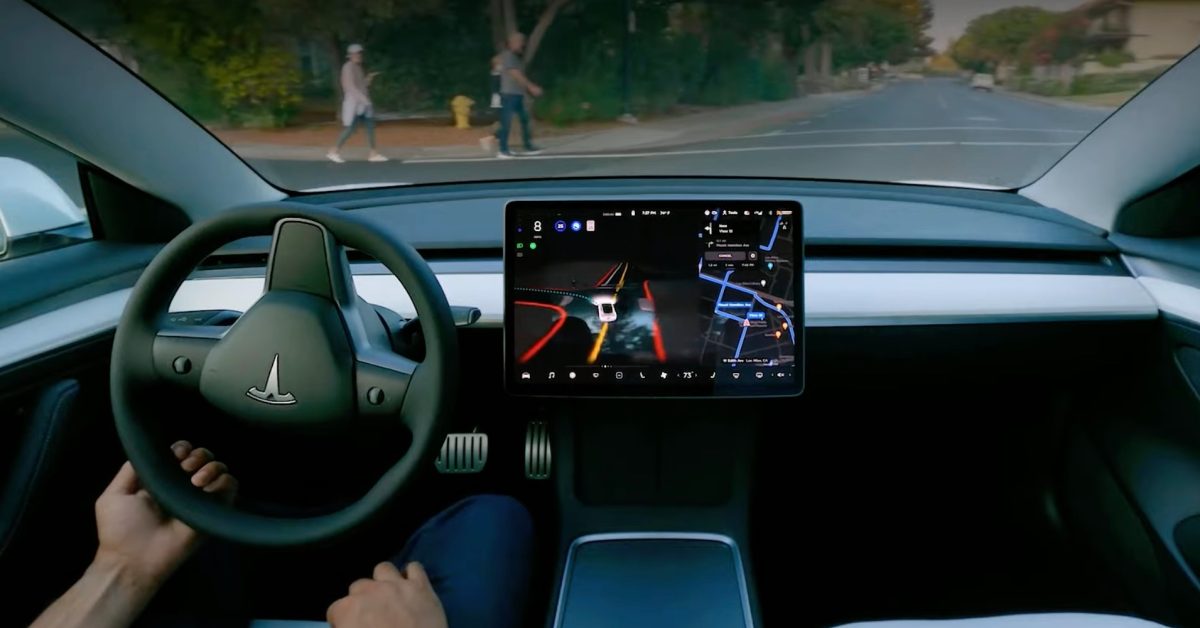
Freshly surfaced correspondence between Tesla and the Netherlands’ vehicle authority suggests the automaker spent months nudging regulators to narrow the scope of their scrutiny of Full Self-Driving (Supervised). Reuters built the account from hundreds of pages of emails gathered through public-records requests across seven European countries, and the Dutch thread is the most revealing of the batch.
According to the documents, a Tesla staffer told the RDW in November 2024 that launching vehicle testing by month’s end was “mission critical” for company leadership, adding that executives would gauge the agency’s goodwill based on whether that deadline was met. The tone shifted to money the following spring. Tesla labeled the RDW’s €365,000 bill for five months of work “extremely high” and withheld payment until it received an hour-by-hour breakdown of every staffer assigned to the project. It also pushed back on footing the bill for five RDW employees traveling to Giga Berlin. Within a week of that complaint, an RDW staffer invited Tesla to propose how the agency “might adjust or reduce the required effort moving forward.”
More accommodations followed, per the records: the regulator offered to monitor part of Tesla’s testing remotely rather than send an inspector in person, declined to “dive too deep in technical details” on over-the-air updates, and agreed to give Tesla advance notice of which tests would be run and who the safety drivers would be. The RDW insists its dealings with manufacturers do not undermine the independence or rigor of its assessments, but it redacted large sections of the emails and still refuses to publish its own FSD test data, citing trade secrets.
Separately, the safety research Tesla has been circulating to European officials drew skepticism from seven traffic-safety researchers who reviewed its methodology for Reuters. They found the FSD sample — tens or hundreds of thousands of miles — far too small to compare against the hundreds of millions of miles Tesla owners have driven manually in Europe. Rather than measuring crashes, the study tracked proxies such as honking, turn-signal use, hard braking and hard cornering, with Tesla’s own professional test drivers behind the wheel instead of ordinary owners. Tesla’s fine print concedes the comparisons cannot be read as causal estimates, yet the company has publicly framed the technology as a way to prevent Europe’s roughly 53 daily road deaths. Marco Benedetti, a former NHTSA statistician now at the University of Michigan Transportation Research Institute, called the leap to “lives saved” nonsensical.
The pressure campaign has extended beyond official channels. Musk has openly courted owner activism, and a Tesla account on X later pointed followers toward the RDW’s contact form. Regulators in Sweden and Norway were flooded with messages from owners, and Norwegian official Stein-Helge Mundal told Reuters that agencies “do not approve systems because they are popular, and we do not reject them because they are controversial.” France’s transport minister, Philippe Tabarot, initially said his country could not back the approval, only to describe a “constructive exchange” with Musk weeks later. Eight EU nations now permit the system, though most are small markets, and the bloc-wide vote that requires 15 member states representing 65% of the population is not expected before December at the earliest.
What do you think?