
Einride Puts Driverless Electric Trucks to Work on Ohio Roads
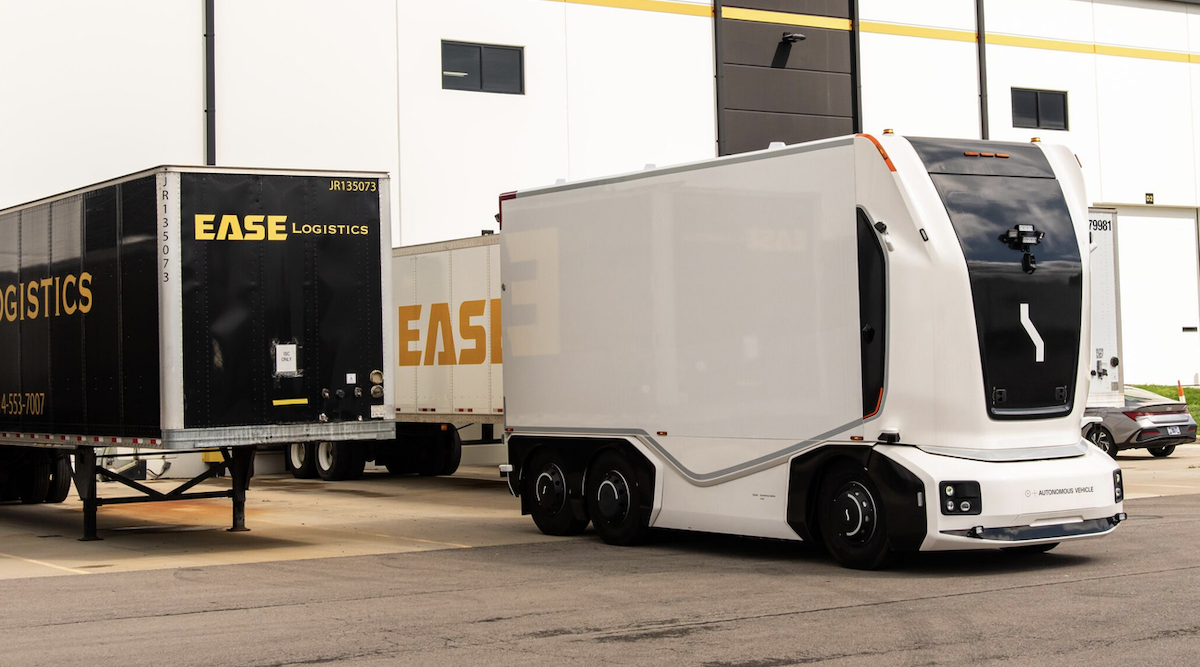
Autonomous freight hauling has quietly moved from the drawing board to daily duty in the American Midwest. Swedish technology firm Einride confirmed on October 6 that two of its cabless, Level 4 autonomous electric trucks are now running regular warehouse-to-warehouse routes in Marysville, Ohio, operating under the banner of US logistics startup EASE Logistics.
The pair of vehicles has already been logging real-world miles since last month, gathering data on mileage, payloads and uptime. That operational experience is intended to pave the way for a larger fleet and more varied routes, according to the company. The deployment is a natural fit for EASE, a Columbus, Ohio-based firm founded in 2014 that has built its identity around pushing freight technology forward — a strategy that earned it the top spot among transportation companies on Fortune’s 2023 “America’s Most Innovative Companies” list.
Einride’s name may not carry the same weight as Tesla’s, but the company has been steadily assembling a portfolio of electric truck systems. Back in 2022, global shipping giant Maersk ordered 300 Class 8 electric trucks from the firm as part of a push to electrify freight operations around the ports of Long Beach and Los Angeles. On the autonomy side, Einride placed one of its Pod autonomous electric trucks at GE’s Louisville, Kentucky headquarters in 2021, and GE followed up with an initial fleet order the next year aimed at electrifying supply chain routes across Kentucky, Georgia and Tennessee. Those trucks reportedly offer around 200 miles of range per charge and were expected to cover roughly 125,000 miles annually. In 2024, Einride and partner Voltera opened a charging station in Lynwood, California, positioned near the LA and Long Beach ports with 65 chargers capable of serving 200 vehicles per day.
The Ohio operation sits within a broader, multi-year effort known as the Truck Automation Corridor, a collaboration linking DriveOhio with the Indiana Department of Transportation and the Ohio DOT. The corridor stretches 166 miles along the busy Interstate 70 freight route between Columbus and Indianapolis, hosting varying levels of truck automation — including platooning — for study and evaluation. Earlier this year, DriveOhio worked with Nussbaum Transportation to put three automation-equipped trucks on the corridor, with the goal of testing performance in real Midwest weather conditions such as rain and snow, something earlier testing in milder climates largely avoided. The agency frames consistent safety and reliability across conditions as essential to broader adoption. Launched in 2021, the corridor project is scheduled to wrap up in January, with findings shared with stakeholders soon after.
Meanwhile, Tesla has begun installing Megachargers for its Semi at existing Pilot travel centers, feeding speculation about a driverless future for that truck as well. The electricity question lingers for all of these efforts — grid connections, on-site power systems and battery storage are among the options, alongside on-site solar or wind where conditions allow. Solar is also finding a niche on diesel trucks: Nussbaum has highlighted Merlin Solar Technologies’ Road Warrior Pro panels, which can extend battery life for auxiliary systems by around 10 hours and keep amenities like air conditioning, lights and refrigeration running for up to 20 hours without idling.
What do you think?