
South Africa's ADAS Boom Leaves a Windscreen Recalibration Blind Spot
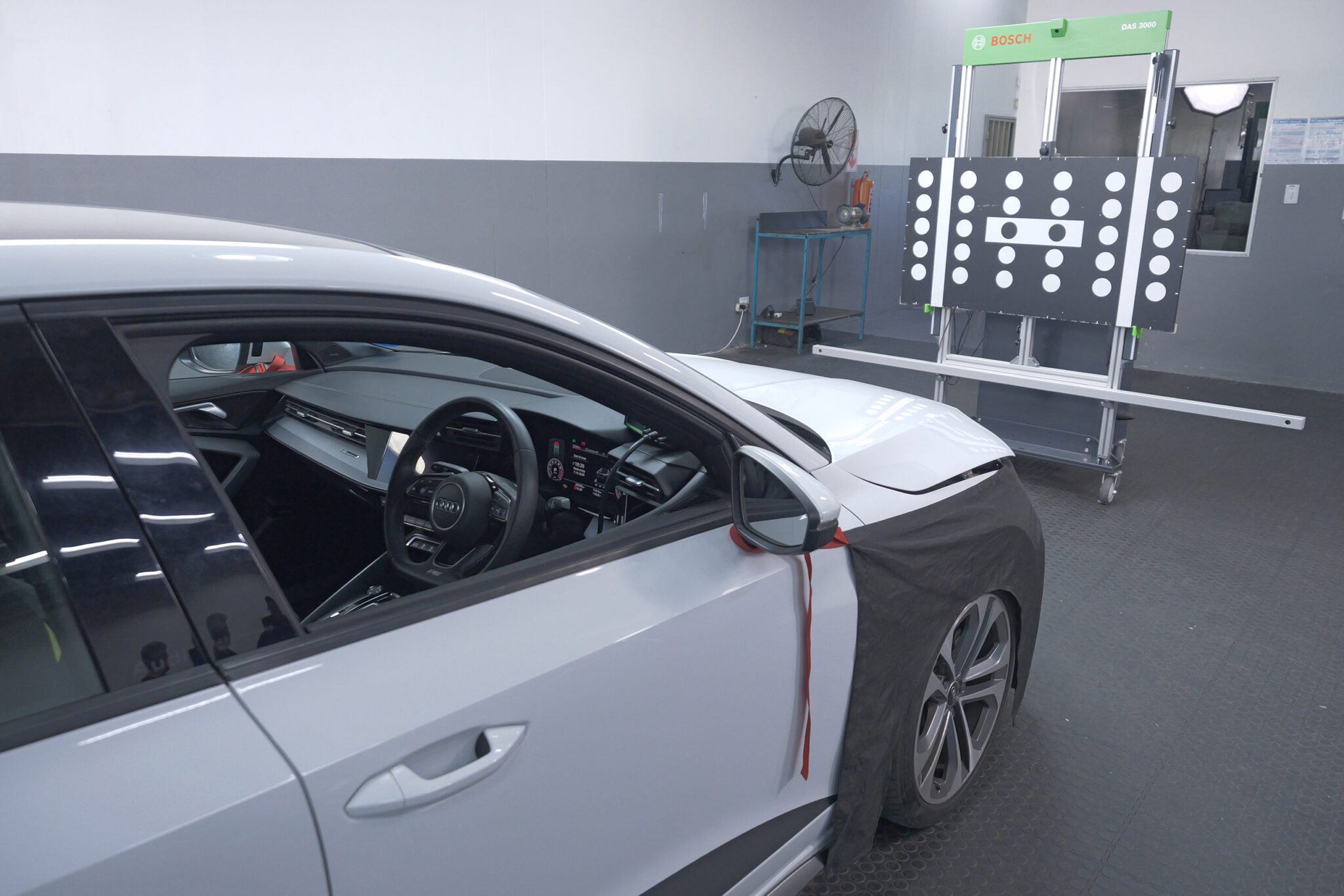
Advanced driver assistance systems are spreading through South Africa’s car parc faster than the repair industry can keep up, and the gap is showing up in an unexpected place: the windscreen. According to the Automobile Association (AA) and glass specialist PG Glass, drivers who have a windscreen replaced can quietly degrade the forward-facing camera that underpins much of their car’s safety technology unless that camera is recalibrated afterward.
The scale of the exposure is growing quickly. Data from Belron, PG Glass’s parent company, indicates that forward cameras were fitted to roughly 17% of South Africa’s vehicle fleet by the end of 2024, a sharp climb from about 2% in 2020. Globally, Belron says more than five million vehicles went through recalibration after a windscreen change during 2025 alone.
The geometry explains why the work matters. These cameras are typically mounted high on the glass, and tiny variations in new windscreens and their mounting brackets mean a refitted unit can end up pointing at a slightly different angle. Even a single degree of misalignment translates into around 2.4 metres of error at 30 metres of distance — enough to blunt automatic emergency braking and lane-keeping functions that drivers assume are operating as designed.
Recalibration itself runs in two phases: a static procedure performed against target boards in a level, properly lit bay and triggered remotely through manufacturer software, followed by a dynamic on-road calibration. A troubling wrinkle, per PG Glass, is that ordinary workshop diagnostic scans cannot confirm whether the recalibration was actually carried out. That makes the documentation and certificate issued after the job the only reliable proof, and insurers may request it.
AA Chief Executive Bobby Ramagwede has urged that every windscreen replacement be paired with certified recalibration. He pointed to a Dutch insurance study covering one million cars, which found accident rates up to 50% lower in vehicles whose forward collision warning was functioning correctly. For South African motorists, the practical takeaway is that a routine glass repair can carry safety consequences that are invisible until something goes wrong.
What do you think?