
Easelink and Luxshare Team Up to Bring Hands-Free Charging to China's EV Market
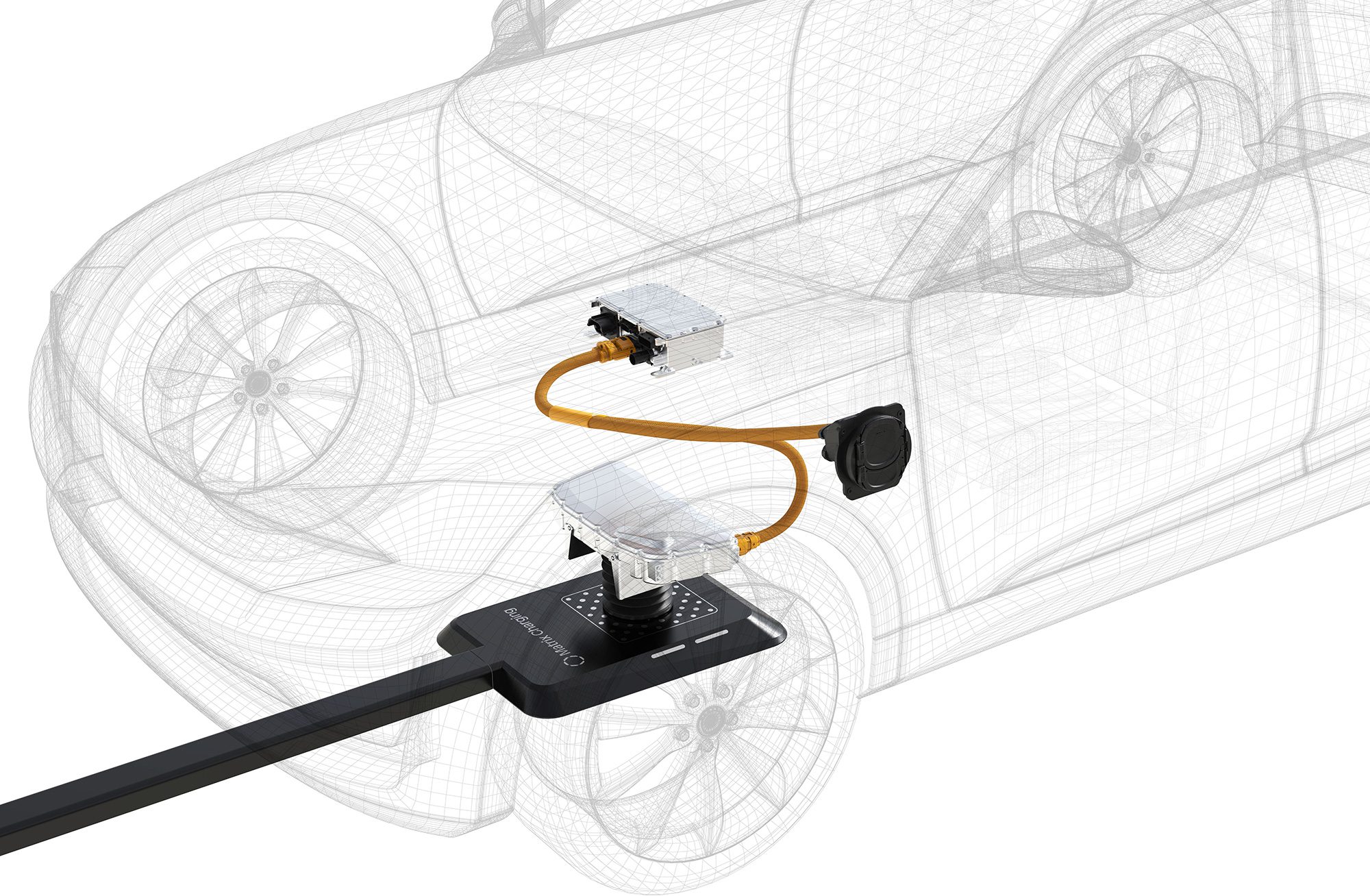
Austria’s Easelink has found a manufacturing partner to scale its automated charging hardware in China. The company is teaming up with Luxshare, a precision manufacturing specialist with operations in 30 countries, to industrialize its Matrix Charging system for Chinese OEMs.
Matrix Charging takes a conductive route to hands-free charging: a connector mounted under the vehicle drops down onto a pad installed in the ground, and the connection is made without the driver touching a cable. The two firms are already working on OEM projects aimed at baking the technology into future vehicle platforms.
Why China, and Why Now
The push lines up with the country’s rapid progress on self-driving vehicles. As driverless fleets move closer to commercial operation, the question of who plugs in the car has become a real engineering problem — and automated charging is emerging as one of the answers.
Easelink isn’t the only one making this bet. Wireless induction charging has its own backers, but conductive systems like Matrix are pitched as more efficient and less fussy in real-world conditions.
Under the deal, Luxshare gains a technology license and will add Matrix Charging to its automotive product lineup, opening the door to its existing OEM customer base. Easelink, meanwhile, plans to grow its on-the-ground team in China to support the technical work with Luxshare and local automakers.
“We see great potential in our collaboration with Easelink, allowing us to tap into new customer segments in the product field of automated charging.” — Harvey Yuan, General Manager at Luxshare
Yuan also stressed that standardizing the new interface matters, and said Luxshare is committed to the work of the Matrix Charging Interest Group to keep systems interoperable across brands.
The Standardization Question
That last point may matter more than any single OEM win. Automated charging only becomes useful at scale if vehicles and infrastructure from different companies can talk to each other. A fragmented market of proprietary pads and connectors would leave fleets locked into one supplier.
- The hardware: an underbody connector paired with a ground-mounted charging pad
- The approach: conductive rather than wireless
- The market: China, with localization support from Easelink’s expanded local team
- The goal: integration into OEM vehicle platforms already in the works
Easelink CEO and founder Hermann Stockinger framed the arrangement as a way to serve Chinese customers directly and slot Matrix Charging into established automotive supply chains. He called the partnership a milestone for the company’s growth in the country and central to its ambition of setting a global standard for automated charging.
For now, no timelines or vehicle programs have been announced. What’s clear is that the race to remove the charging cable from the equation is moving from lab demos toward factory floors — and China is where that transition is being tested first.
Photo: Easelink / Charged EVs · Official Press Kit / Editorial (Editorial / Press Kit)
Source: Charged EVs
Curious how this compares to other EVs? Try our comparison tool →What do you think?