
DOE Lays Out National Battery Blueprint, Opens BattMan Accelerator
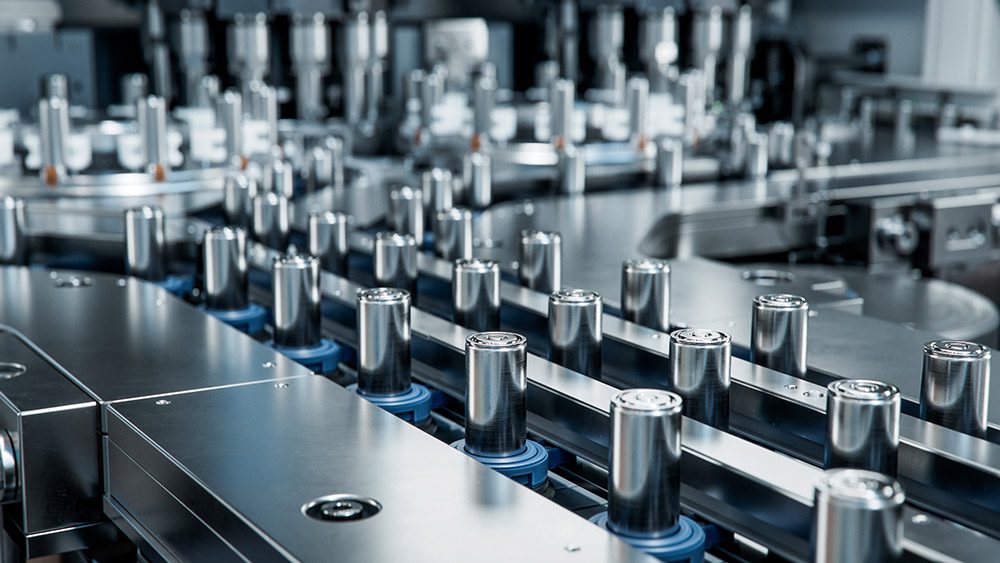
The US Department of Energy has put its battery ambitions on paper and backed them with a new institution. A national battery strategy published this month sets out where Washington wants the domestic industry to be by 2030 and 2035, while a fresh consortium called the Battery Manufacturing Accelerator — BattMan, for short — has been stood up to do the practical work.
The headline numbers explain the urgency. According to DOE projections, US battery demand across vehicles and stationary storage will climb from 179 GWh in 2025 to 707 GWh in 2035 — close to a fourfold jump in a decade.
Two Deadlines, One Supply Chain
The strategy is built around two dates. By 2030, the aim is a fully integrated domestic battery supply chain — mining and refining at one end, cell production and pack assembly at the other. By 2035, the DOE wants the US to be the recognized leader in battery technology and manufacturing, not just a participant.
A third thread runs alongside: getting energy storage technologies out of the lab and into commercial deployment faster.
Six pillars form the skeleton of the plan:
- Upstream and midstream investment targeted at the weakest links in the chain
- Faster commercialization of discoveries currently sitting in laboratory settings
- Manufacturing process innovation, rather than product innovation alone
- Grid modernization, framed as a mission-driven deployment effort
- Coordination with international partners
- Workforce development aimed at American talent
What BattMan Actually Does
The accelerator’s brief is narrower and more operational than the strategy document. It is tasked with pushing down manufacturing costs, shortening the gap between a lab result and a factory line, and developing battery materials from elements that are abundant domestically rather than imported.
DOE says the work will lean on what it calls “Super Intelligence” along with manufacturing capabilities to spot problems earlier in the process and tighten production methods.
Pacific Northwest National Laboratory (PNNL) leads BattMan. The Advanced Materials and Manufacturing Technologies Office, part of DOE’s Office of Critical Minerals and Energy Innovation, provides support. Argonne National Laboratory, Oak Ridge National Laboratory and the National Laboratory of the Rockies are partners, together with five universities. Outside organizations that want in can find collaboration details on the BattMan site.
“Batteries are essential to modern life — from transportation and power grids to medical devices and consumer electronics.” — Audrey Robertson, Assistant Secretary of Energy
Robertson framed the strategy as a commitment to onshoring manufacturing and securing supply chains, tying it to the administration’s broader energy dominance agenda.
The Gap Between Paper and Plant
Strategy documents are cheap; cathode plants are not. The measure of this plan will be whether the 2030 supply-chain target survives contact with permitting timelines, capital costs and the raw-materials market — none of which the DOE controls directly.
Still, the demand curve leaves little room for drift. A near-quadrupling of battery consumption in ten years means the US either builds the capacity at home or imports it. The strategy, and BattMan with it, is the department’s answer to that choice.
Photo: Charged EVs · Official Press Kit / Editorial (Editorial / Press Kit)
Source: Charged EVs
Curious how this compares to other EVs? Try our comparison tool →What do you think?