
dSPACE Targets the BMS Testing Gap for Smaller Battery Programs
Battery management systems are no longer exclusive to full-size electric cars. The same oversight functions now appear in e-bikes, drones, power tools, forklifts, automated guided vehicles, mobile robots and stationary storage. Each of those packs, however modest, still depends on a BMS that monitors cell voltages and temperatures, estimates charge and health, balances cells, switches contactors and reacts to faults. Skipping validation invites availability headaches, accelerated aging or unsafe behaviour.
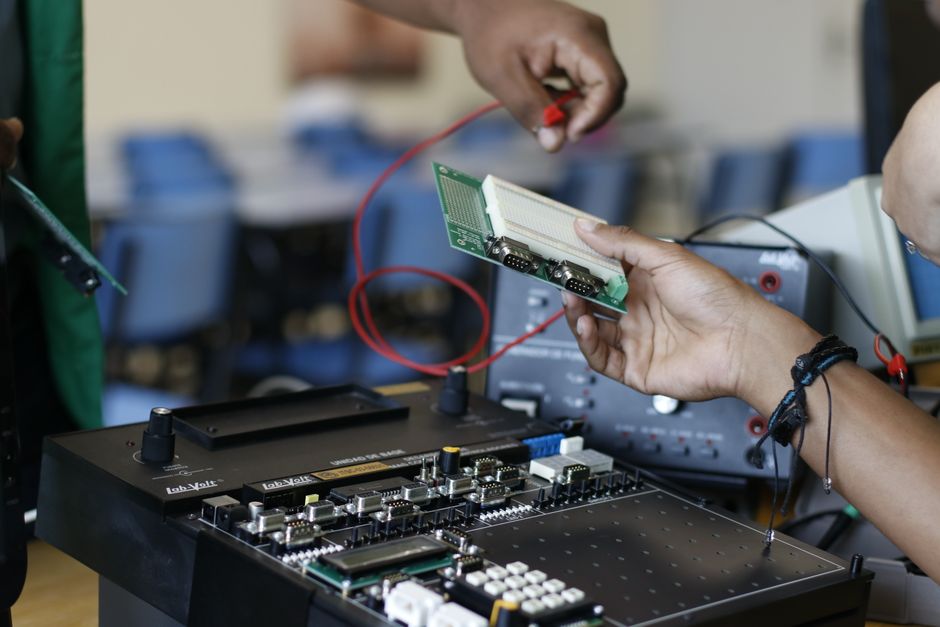
Testing those controllers against a physical pack has limits: packs are costly, slow, and awkward when engineers need repeatable fault injection and regression runs. Hardware-in-the-loop approaches swap the live battery for a real-time simulation while keeping the actual controller in the loop. dSPACE is pitching its SCALEXIO Battery HIL – Essential as an accessible on-ramp for this, aimed at roughly the 200 V class. The starter setup covers up to 64 cell voltage channels, configurable temperature sensor channels and works with an external dSPACE real-time processor, paired with ASM Battery models.
The reasoning is that small teams want to confirm core behaviour first — measurement, state estimation, balancing, relay logic, diagnostics and selected fault reactions — without buying a huge custom rack. As programs mature, dSPACE points to its predefined and customized SCALEXIO Battery HIL systems for higher voltages, more channels, isolation and current interfaces, safety hardware and multi-network communication. Cell Controller Virtualization adds another option: shifting some or all cell controller work into the simulation when that hardware is missing or when the BMS controller itself is the test target.
BMS validation rarely stops at one milestone. Projects tend to move from algorithms to hardware integration, then into fault handling and automation, reusing models, test cases and automation assets along the way. For emerging battery applications, the practical danger is a test environment that is either too thin to be useful or too big to justify — a middle ground is what dSPACE is selling.
What do you think?