
Do EVs Really Need Fake Gears? Our Porsche Taycan Drive Says No
Porsche raised more than a few eyebrows when it pivoted away from its long-held stance and began fitting its electric models with simulated gearshifts. To many observers, it looked like the German marque was simply following a trend rather than staying true to its engineering-first identity. After spending time with the system, it’s clear the company invested serious effort into it, yet the feature never dominates the experience the way it does in a Hyundai Ioniq 5 N or a Mercedes-AMG GT 4-Door EV. AMG in particular has gone to great lengths to make its synthetic V-8 feel convincing, arguably the most realistic imitation currently on the market. Porsche’s take leans closer to Hyundai’s approach, openly telegraphing that what you hear is a digital creation rather than a mechanical reality.
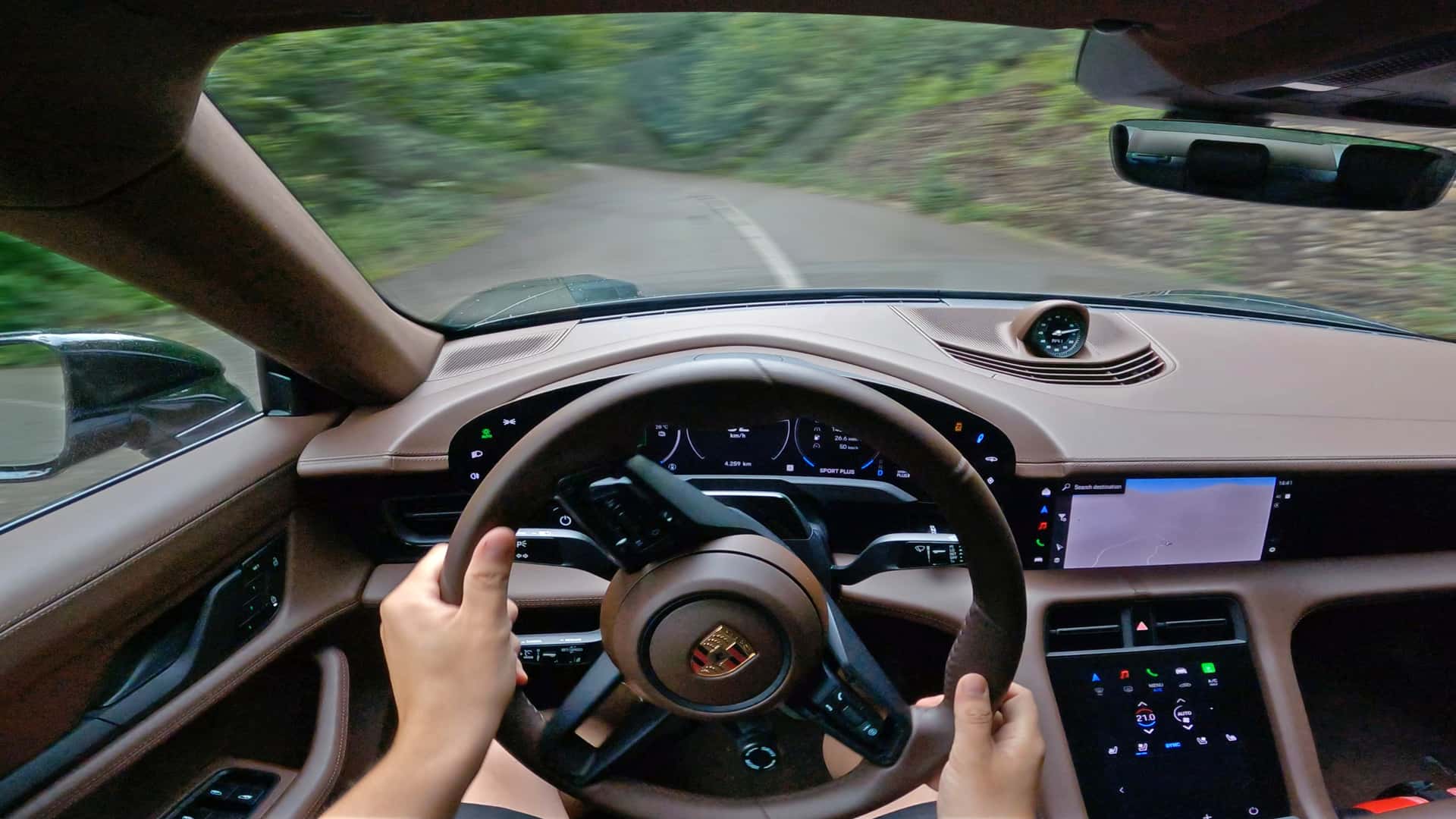
That backdrop made a recent stint behind the wheel of the refreshed 2026 Porsche Taycan especially telling. The test car came without the optional simulated engine and gear-swapping package, and honestly, it wasn’t missed. The Taycan stands out as one of the most complete driver’s cars around, rewarding an engaged driver even in near-total silence. Its chassis is balanced, composed and predictable, letting you settle into a rhythm and build confidence through winding roads faster than you’d expect. Threading a series of corners together, the absence of an engine note or a gearshift never once entered the picture.
The tester did carry Porsche’s more basic spaceship-style acceleration sound, and that detail matters more than it might seem. In any EV, some form of audible feedback helps you gauge speed without constantly glancing at the speedometer, giving you a reference point for when and how hard to brake. A BMW engineer made a similar argument when explaining the acceleration sound developed for the upcoming electric M3, framing it as a tool for judging pace rather than an attempt to mimic a combustion car. That reasoning rings true, especially recalling spirited drives in a Tesla Model 3 Performance, a superb car that nevertheless feels duller for its near-total silence. Without any sound at all, it’s easy to carry too much speed into a corner and only realize it when you check the instruments.
Silence also has an upside. With no engine drone masking everything else, tire noise comes through with unusual clarity, letting you read how close you are to the limit of grip and adjust your line with the accelerator and brakes. Introducing a synthetic engine note can actually work against that, since lifting off doesn’t silence the artificial sound, making the tires harder to hear. A second, subtler challenge is accelerator modulation, judging exactly how much power you’re feeding in mid-corner, where responsive audio feedback could make those small adjustments feel more natural.
The refreshed Cayenne Electric offers the same simulated shifting, though a recent example driven on the Eurocharge by Schaeffler EV road trip through Austria’s Grossglockner pass also skipped it. Instead it used a gearless acceleration sound resembling a futuristic V-8, which proved more than adequate for conveying speed on the descent without forcing pretend shifts that slow the car purely for effect. Ultimately, believably faking combustion in an EV is an impressive technical feat, but it isn’t essential, even in a performance model. The more interesting question is what future enthusiasts will grow nostalgic about. A new driver today might someday remember an early performance EV as fondly as older generations recall a naturally aspirated straight-six. Manufacturers would do well to give that driver something genuinely original to miss, rather than a software replay of a gearbox from decades past.
What do you think?