
Cybertruck Deliveries Stay Flat Even With a Cheaper Trim
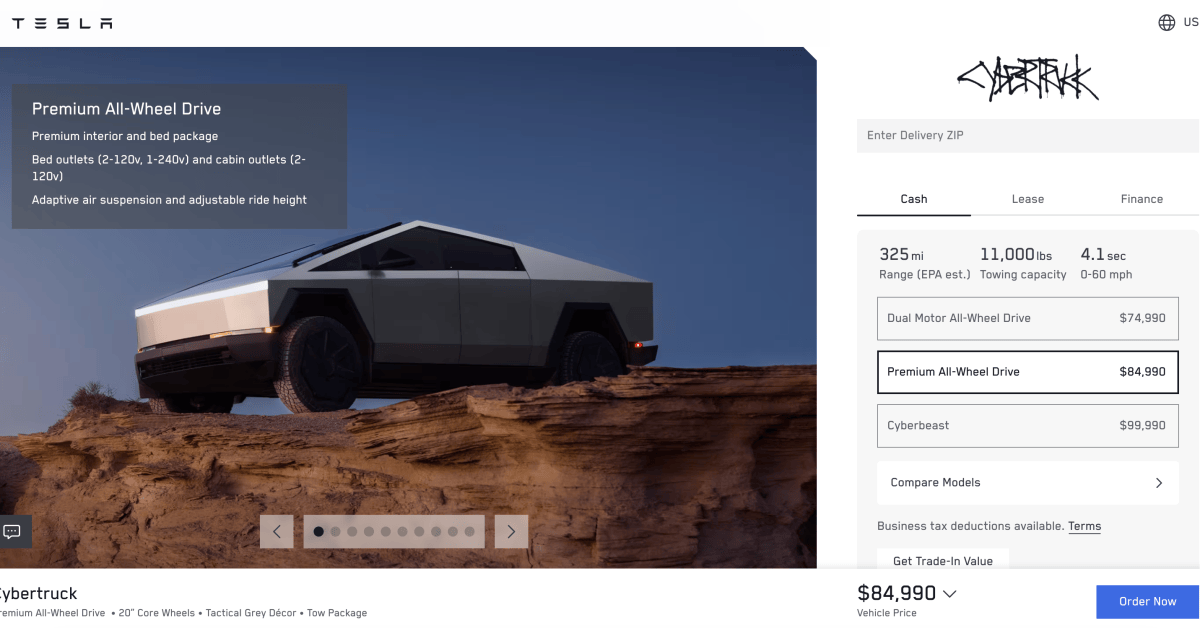
Tesla’s pickup gamble still isn’t paying off the way the company hoped. In the third quarter of 2026, the automaker moved 8,295 vehicles in its catch-all “Other Models” bucket — a 48 percent slide compared with the same period a year earlier and the weakest showing for that grouping since 2021. Because the Model S and Model X were retired from production in April, nearly every one of those units was a Cybertruck.
That gives observers the clearest picture yet of how the angular pickup is actually faring. Analysts estimate Tesla handed over somewhere between 7,000 and 8,000 Cybertrucks during the quarter, which works out to a roughly 30,000-per-year run rate. For context, the assembly line was originally designed to churn out 250,000 trucks annually, and Tesla’s most recent shareholder letter still lists more than 125,000 units of installed capacity — meaning the company is using a small fraction of what it built.
The math also requires some untangling. Leftover Model S and Model X inventory plus a final Signature run account for only a few hundred deliveries. The Semi contributes a few hundred more, since Tesla only announced volume production and the first customer handovers on September 25, days before the quarter closed. The Cybercab is the wild card: Tesla produced some of them at Gigafactory Texas starting in April, but whether any count as customer deliveries remains unclear.
Several factors propped up the Cybertruck’s numbers. A cheaper dual-motor variant began reaching buyers in late June, and elevated gasoline prices lifted EV demand broadly. Tesla also carried a backlog after a legal fight with its casting supplier disrupted production for weeks in the summer, pushing orders into the third quarter. Then, in August, Tesla raised Cybertruck prices by $5,000, with the dual-motor now starting at $74,990.
Even at the high end of estimates, the Cybertruck remains far below its original ambitions. It still holds the title of best-selling electric pickup in the United States — a low bar, given that the Ford F-150 Lightning has been discontinued and rivals like the Chevy Silverado EV and Rivian R1T sell in smaller volumes. The bigger question is what happens next quarter, when the backlog is gone and the Semi begins ramping at a plant Tesla says can build 50,000 trucks a year, muddying the picture once again.
What do you think?