
Porsche Finally Commits: Electric Boxster and Cayman Arrive in 2028, but the 911 Stays Petrol — For Now
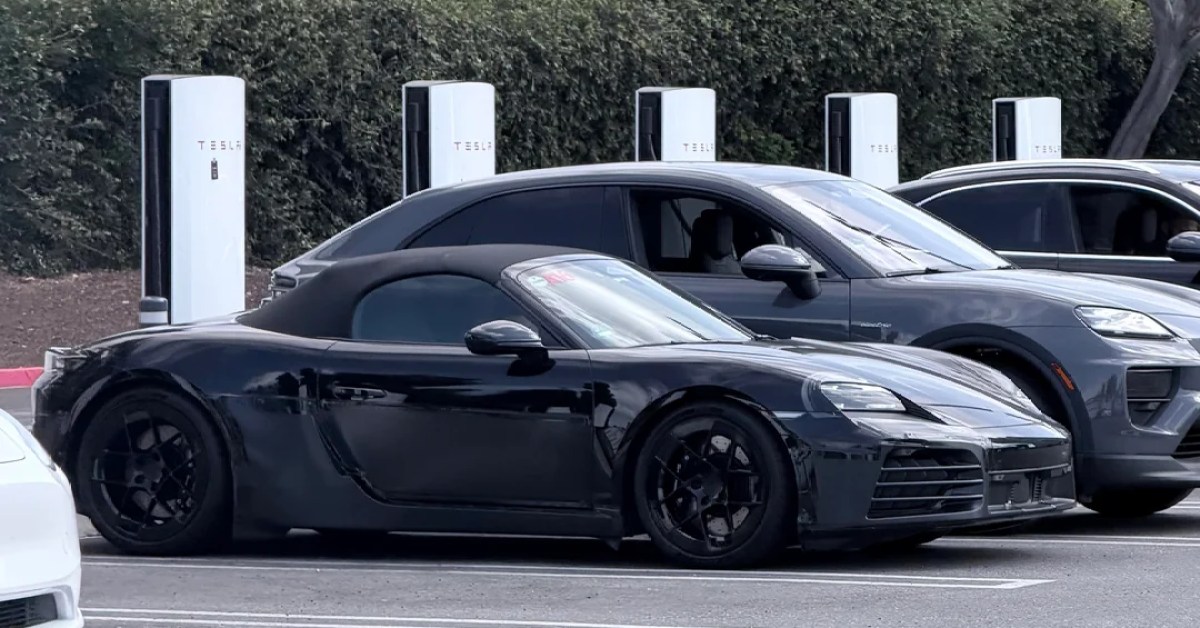
Porsche has ended years of speculation by confirming that its next-generation 718 line, the Boxster convertible and Cayman coupe, will be exclusively battery-electric. According to the company’s latest investor presentation outlining its strategy through 2035, the electric 718 will enter its first full year of production in 2028. The petrol versions ceased production in 2025, and the brand has now ruled out a return to combustion for these mid-engined sports cars. The announcement puts to rest rumors that a gas engine might reappear in the face of slower-than-expected EV adoption.
One engineering detail stands out: the 718’s battery pack is mounted behind the seats rather than under the floor. This unusual layout is designed to preserve the low seating position and mid-engined handling balance that drivers expect from the model. The outgoing gas Boxster carried a 59.8% rear weight bias, while the electric version is close at 55.2%. While some outlets have called the configuration unique, it echoes the original Tesla Roadster, which also placed its battery behind the cabin. In practice, such packaging improves traction under acceleration because more weight sits over the driven wheels.
The commitment to an electric 718 is significant given Porsche’s recent wavering on electrification. The automaker previously recorded a $6 billion loss tied to its EV strategy and had pivoted back toward combustion engines in some segments. That makes the decision to keep the 718 purely electric a notable step, even as Porsche also plans a new SUV that will offer gas and plug-in hybrid powertrains.
Yet the bigger question concerns the iconic 911. During the same investor presentation, CEO Michael Leiters stated that the 911 will “never” go electric. That claim is difficult to accept as a permanent promise. Battery costs are falling, charging infrastructure is expanding, and major markets including Europe, China, and parts of the US are tightening emissions rules. If those trends continue, a petrol-only 911 could become impossible to sell in key regions within the next two decades.
Racing also points in the same direction. Xiaomi, a smartphone maker with no prior car-building experience, built an electric performance car and briefly beat Porsche at its own track game. Porsche has since reclaimed records, but the message is clear: electric powertrains are becoming dominant in performance. If the 911 is meant to be Porsche’s halo model, it will eventually need the best available technology. That likely means an electric 911, no matter how firm today’s denials may sound. The alternative — a 911 that ceases to exist — is not a future any enthusiast should want.
What do you think?