
Citroën Revives The 2CV As An Affordable Electric Car For Europe
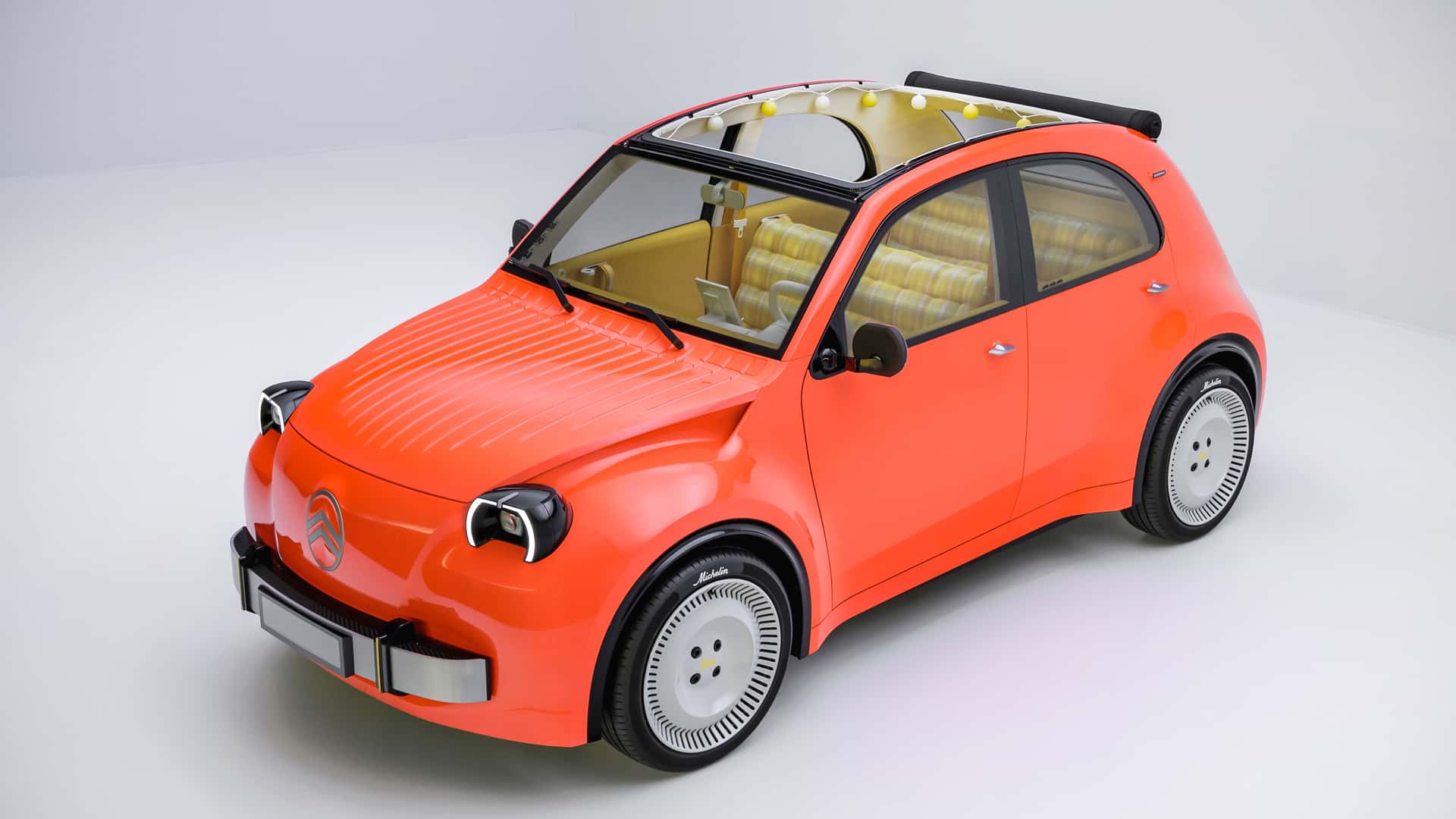
Citroën has pulled the wraps off a concept that resurrects one of the most recognizable shapes in motoring history. The new 2CV Concept trades its ancestor’s air-cooled two-cylinder engine for an electric drivetrain, and it will make its public debut at the 2026 Paris Motor Show before previewing a production model due in 2028.
The headline number is the price. Citroën is targeting a starting figure of roughly €15,000, and it intends to build the car in Europe. That would place it well below the new Renault Twingo E-Tech, which opened at €19,490 in France before incentives — a gap of about €4,500. Citroën has not yet clarified whether its own target includes any subsidies, and French buyers can currently claim up to €5,700 in support, so the real-world gap will depend on how the fine print lands.
Dimensionally, the two are near-twins. The Citroën measures 3.76 meters (148 inches) long, just three centimeters shy of the Twingo, and it slots between the Ami and the C3 in the lineup. It is also shorter than the original 2CV. Citroën wants the production car to weigh around 1,000 kilograms (2,205 pounds); a lighter car needs a smaller battery, which is the core of the affordability strategy. Battery capacity, range, charging speed and power output have not been disclosed.
Styling leans on what people actually remember: separate round headlamp pods, pronounced fenders, an upright windshield and the signature curved roof. The hood draws on the TPV, the project that preceded the original car. Exposed wipers, air inlets under the windshield, slim turn signals set into the rear roof pillars, a contrasting black tailgate and modern LED lighting round out the exterior. One surprise is the concept’s 19-inch steel wheels — steel suits a 2CV, but the diameter will likely shrink for production.
Inside, Citroën has stripped away most of the dashboard to make the cabin feel airy. A cylindrical pod houses the steering wheel, controls and a Smart Vision Display that projects information into the driver’s line of sight, joined by a square eight-inch touchscreen with comic-style graphics and physical buttons. The seats use Citroën’s Advanced Comfort material, the passenger seat extends for stretching out, and the spec list includes a folding fabric roof, removable storage baskets, a removable speaker and fabric door-pull straps. Door pockets are even shaped to carry eggs, a nod to the original design brief.
Bringing the car to market at that price depends partly on regulation. Citroën says the production version will be engineered to meet upcoming European E-Car rules; the European Commission has proposed an M1E category for EVs up to 4.2 meters long, with requirements frozen for a decade to give manufacturers a cheaper, more predictable path to affordable electric cars. With new-car prices having climbed sharply, the reborn 2CV is aimed squarely at buyers who have been priced out — and the familiar face is simply a bonus.
What do you think?