
A $150,000 Minivan With a Brake Pedal That Can't Take an Emergency Stop
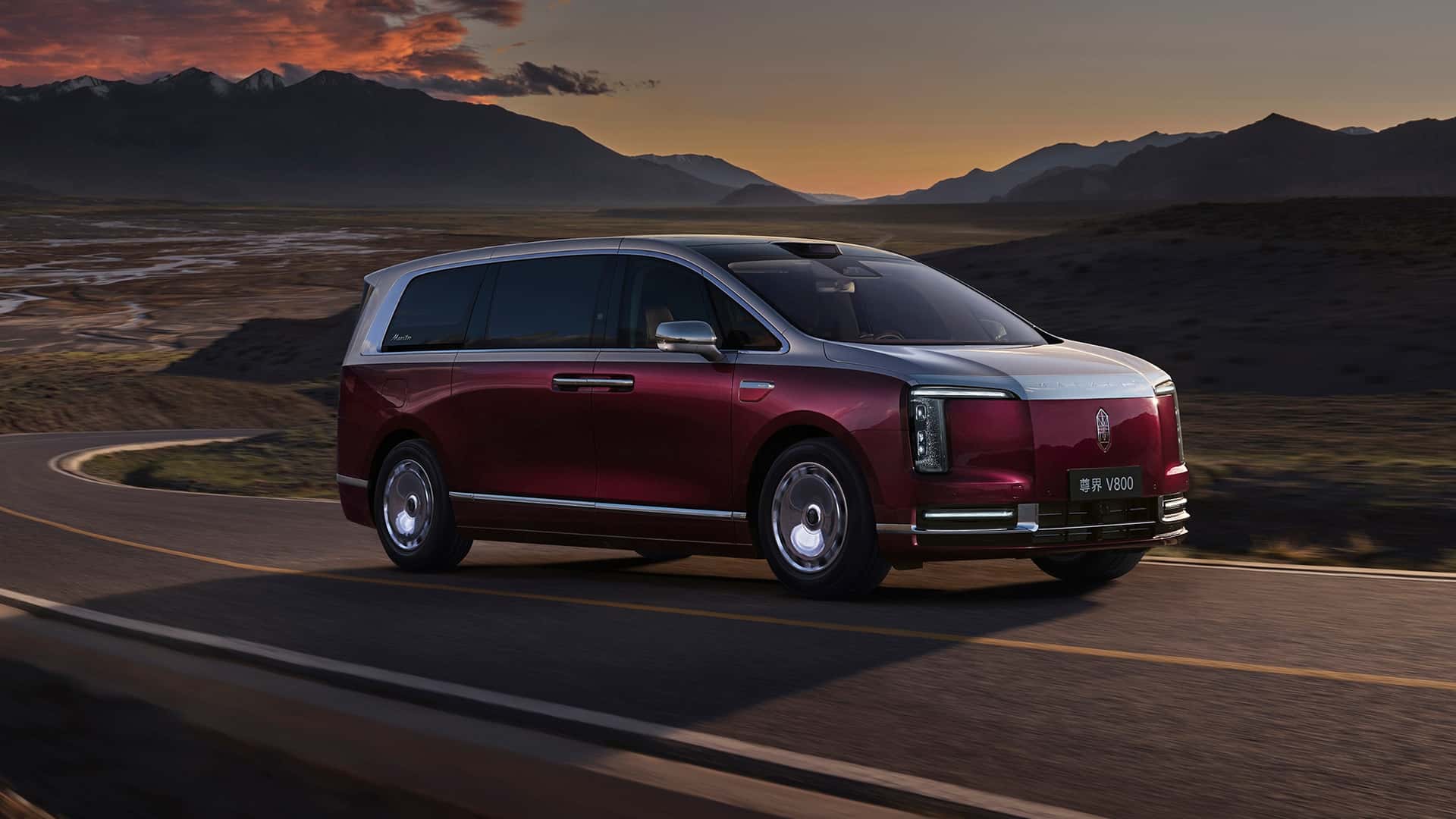
China’s EV market has built its reputation on delivering a lot of car for the money, and buyers have come to expect that a higher price brings not just more screens and leather but also flawless fundamentals. The Maextro V800, a luxury minivan from JAC, tests that assumption in a very uncomfortable way. Priced near $150,000, it sits at the top of the Chinese market — yet independent testing has exposed a brake pedal bracket that simply gives up under hard braking.
The problem showed up during emergency-stop runs from roughly 62 mph (100 km/h). On three separate vehicles, the bracket that the brake pedal pivots on failed, according to testing by the outlet Dongchedi. The pedal itself didn’t snap; the mount did. It’s molded from polypropylene reinforced with 40 percent glass fiber, a material choice that is hardly unusual in the industry. What drew scrutiny was the geometry: the bracket lacks sufficient reinforcement, and the pivot sits a long 5.1 inches (130 millimeters) from the pedal’s center, which puts extra leverage on the part at exactly the moment a driver needs it most.
That kind of load path matters because brake pedals on modern vehicles are expected to absorb full emergency inputs — the hardest stomp a driver can deliver — without any structural compromise. Testers pointed out that a failure under these conditions isn’t an extreme edge case; it’s the scenario every braking system is designed around. For a flagship model, the contrast with the V800’s luxury catalog is stark.
That catalog is long. The V800 offers steer-by-wire, a built-in coffee machine, a 41.6-inch retractable projector screen, a 41-speaker audio system, and windows operated by gesture. Underneath, it’s an extended-range EV: a 65-kilowatt-hour CATL battery feeds a dual-motor setup rated at 523 horsepower (390 kilowatts), while a 1.5-liter gasoline engine works purely as an on-board generator and never drives the wheels.
Maextro’s response has been measured. The company said it isn’t aware of any bracket failures in vehicles that have reached customers, but it will redesign the part and provide a free upgrade to owners. The episode lands at an awkward moment for Chinese manufacturers, whose pitch has increasingly shifted from cheap to genuinely premium. A defect that would raise eyebrows on an entry-level hatchback is far harder to explain on a six-figure flagship — and it’s a reminder that value engineering has limits that price tags don’t automatically erase.
What do you think?