
Chinese Electric Truck Maker Puts 26-Tonne Prime Mover to Work on Victorian Roads
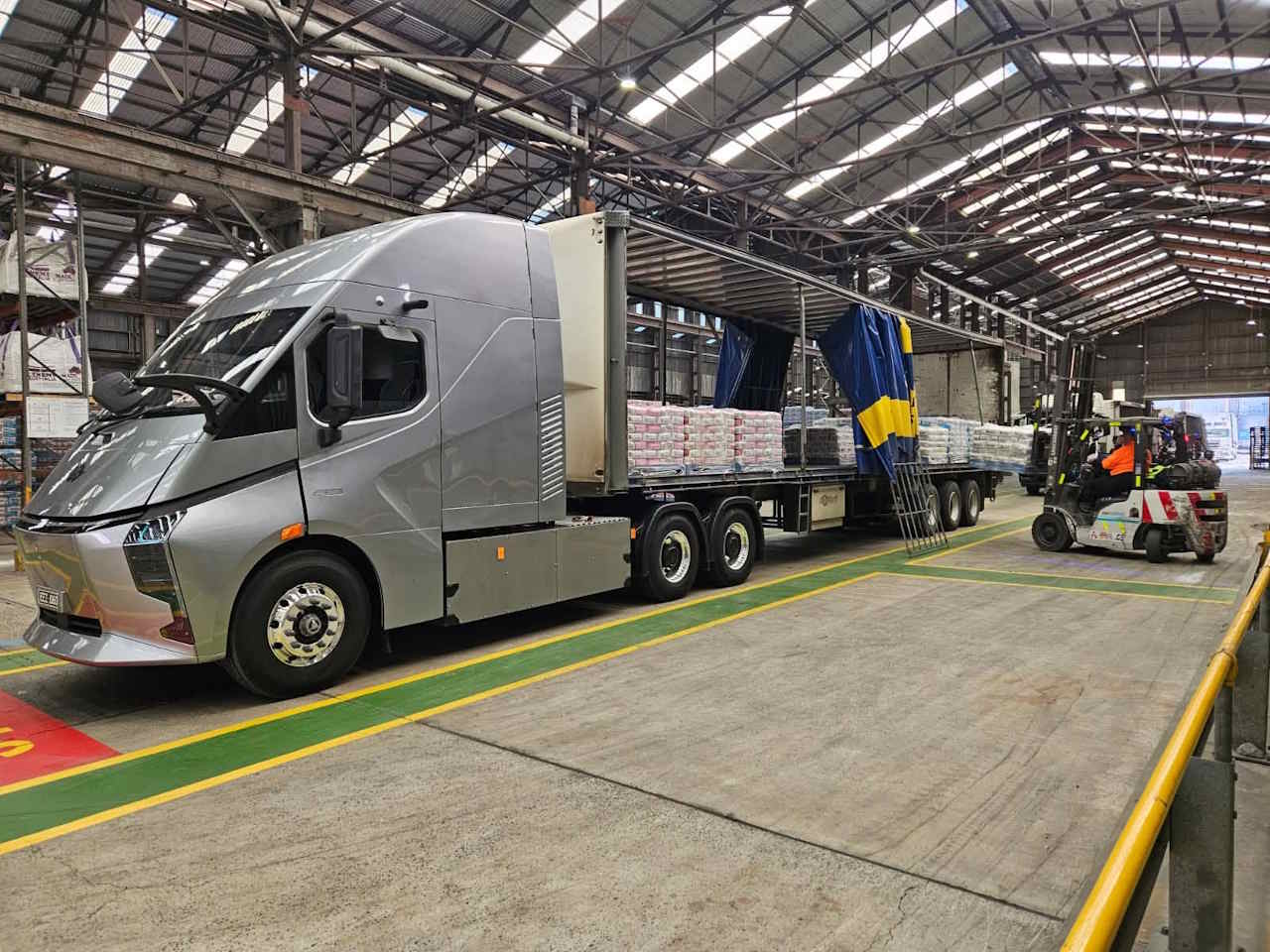
A battery-electric prime mover from the Chinese manufacturer DeepWay has begun hauling real freight across Victoria, marking one of the more concrete signs yet that heavy electric trucking is moving from concept to daily operation in Australia. According to updates shared on social media, the truck has completed a string of deliveries over the past week, carrying loads of up to 26 tonnes of cement between West Footscray and depots in Dandenong South and Wonthaggi.
DeepWay is a joint venture between the Chinese technology giant Baidu and the vehicle financing firm Lionbridge Group, and its stated ambition is to develop autonomous, battery-powered trucks. Its flagship model, the DeepWay Star, is built around a driver-focused cabin that includes a 270-degree surround-view system and a one-metre-wide sleeper berth — a layout that points to long-haul ambitions rather than short urban shunts.
On the energy side, the Star is offered with two battery options: a 600 kWh pack that delivers more than 500 kilometres of range, or a 500 kWh pack rated at up to 419 kilometres. The company says a 0–80 per cent charge takes just 36 minutes, and the truck also supports battery swapping, a feature that could prove decisive for fleet operators worried about downtime. In practice, the Victorian runs suggest those figures are not purely theoretical: a 150-kilometre round trip moving 26 tonnes of cement consumed only 39 per cent of the battery, while two later journeys — one carrying roughly 18 tonnes across 125 kilometres and another hauling 20 tonnes over 152 kilometres — each used between 30 and 40 per cent of capacity.
The early runs were carried out with VCF Transport, a small freight and courier business serving the Gippsland, Bass Coast and south-east Melbourne regions. Its managing director, Mark Blackburn, indicated the DeepWay Star cost the company around $350,000, a figure well below what several battery-electric trucks currently command on the market. That pricing gap matters, because electric trucks have so far struggled to gain traction in the commercial segment even as passenger EV sales hit record levels. Incumbent efforts such as those from New Energy Transport and Janus Electric, alongside the arrival of models from Volvo and Windrose, have begun to open the door — but cost and range anxiety remain the two most stubborn barriers.
DeepWay’s quiet arrival in Victoria does not by itself settle those questions. Fleet-wide adoption will depend on how the trucks hold up over years of heavy loads, how quickly charging and battery-swap infrastructure spreads along freight corridors, and whether the vehicles can deliver on maintenance and resale costs. Even so, the fact that a Chinese-built electric prime mover is now running regular freight routes in regional Australia is a notable step, and one worth watching as more operators weigh whether to make the switch.
What do you think?