
Chery Pitches a Detroit Partnership to Crack the U.S. Market
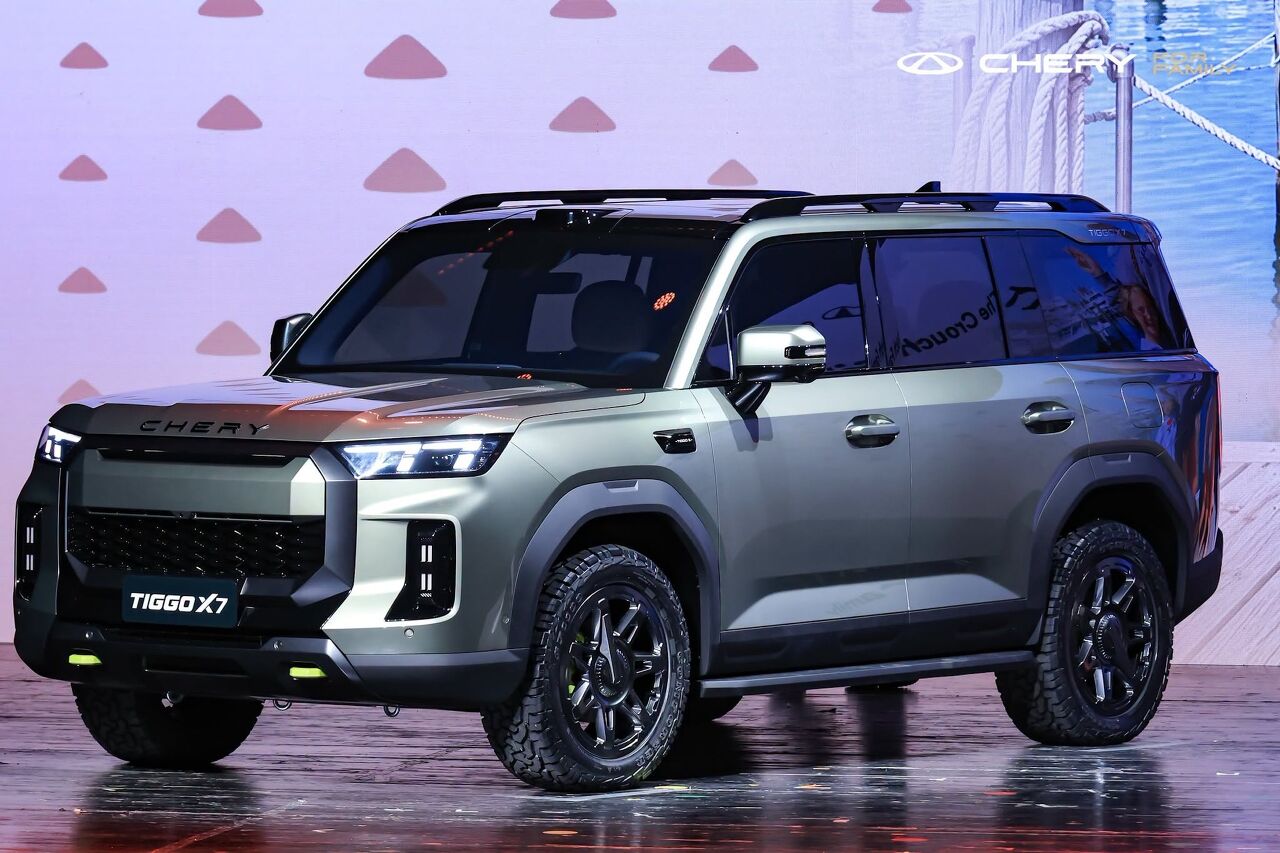
Chery has become the first major Chinese automaker to say openly what its rivals have mostly kept behind closed doors: it wants into the United States, and it is prepared to share the work with an American partner. The trouble is that almost nobody in Detroit — or Washington — seems willing to take the call.
The backdrop is brutal. China’s home market has degenerated into a price war that has gutted margins across the board, and the world’s richest car market looks like the way out. Former General Motors executive Michael Dunne compared U.S. access to “a giant tank of life-saving oxygen.” Without it, Chinese brands keep bleeding at home.
The legal wall, though, is tall. Washington slaps a 100-percent tariff on Chinese-built vehicles and has banned Chinese vehicle software outright. So what Chery is floating is less a growth strategy than an attempt to engineer its way around the barrier.
The pitch: build it here, code it elsewhere
Chery Vice President Charlie Zhang laid out the opening in comments to Reuters, saying the company is open to a range of structures — including teaming up with an existing U.S. automaker. His technical claim is the bold part: Chery believes it can deliver hardware and software entirely free of Chinese origin. In plain terms, Ford or GM could assemble Chery vehicles on American soil and the arrangement would, on paper, satisfy both the tariff and the software rules.
Chery is not arriving empty-handed. It is one of China’s biggest exporters, with strong sales and profits across Europe, the Middle East, Latin America and Southeast Asia, and it sells under its own badge plus the export-focused Omoda and Jaecoo names. The Jaecoo 7 even topped the U.K. sales charts — a first for a Chinese model — though British outlets nicknamed it a “Temu Range Rover” for its Velar-like lines.
Why the door stays locked
The decisive obstacle is the Connected Vehicle Rule. From the 2027 model year, it blocks sales and imports of connected vehicles and software tied to China or Russia, policed by the Bureau of Industry and Security at the Commerce Department. The rule already has a casualty: Geely-owned Polestar is being pushed out of the U.S. market.
Rebadging, hiring U.S. distributors, or routing shipments through Mexico or Canada won’t magically solve it, according to Sun Kuo-hsiang, who teaches international relations and commerce at Taiwan’s Nanhua University. Deals involving acquisitions, certain investments or real estate can also land before the Committee on Foreign Investment in the United States. Whether anything gets done, he argues, hinges on whether an American partner will absorb the commercial and political heat — and whether regulators sign off.
The only precedent: Volvo, owned by Geely, holds the sole written Commerce Department exemption for connected-vehicle technology — the “Volvo model” of buying a foreign brand, keeping it at arm’s length, and selling its European- and U.S.-built cars into America.
Analyst Wang He points out that Volvo kept independent brand operations and that Geely-derived architecture makes up only a sliver of its U.S.-bound vehicles, backed by firm commitments on governance, technical architecture and data security.
Detroit’s answer is a hard no
The resistance is remarkably united. Six major U.S. auto industry groups have jointly asked the federal government to keep blocking Chinese automakers, whether via imports or American factories. A separate coalition of manufacturers, dealers and suppliers has pushed back on any softening, and the United Auto Workers is unlikely to hand out welcoming gifts.
Lawmakers are aligned too. More than two dozen Democrats have signed a letter urging the restrictions stay, and bipartisan bills to ban Chinese automakers are advancing in Congress. Sen. Elissa Slotkin cast it as a question of whether the country wants to keep building cars at home and maintain a manufacturing base that can pivot in a crisis.
Industry leaders put it more bluntly. Nissan Americas chairman Christian Meunier told CNBC that Chinese rivals build decent products but are dumping them, and that the real fight is with their governments. Dunne expects Chinese automakers would “quickly overwhelm America’s auto industry” the way they are now squeezing Europe — where their market share jumped from nearly zero in 2020 to about 12%, meaning roughly one in ten new cars sold carries a Chinese badge.
And yet the same executives admit the arrival is a question of when. Ford CEO Jim Farley has warned that U.S. automakers can’t count on the border staying shut forever, telling a conference to expect it breached within five to 10 years. Meunier agreed: “We need to get ready for the day when they come to the U.S.”
The White House has occasionally left the door ajar — President Trump has said he might be fine with Chinese automakers if they build domestically and create American jobs.
Chery, for its part, is working the perimeter. It already sells in Mexico and targets a Canadian launch in early 2027. Wang reads the sequence plainly: once established in Canada, whose emissions and safety rules closely mirror America’s, the U.S. becomes the obvious next stop.
The near-term question is whether any U.S. automaker breaks ranks. Stellantis is the cautionary tale — it took a 21% stake in Leapmotor inside a venture it controls, then shelved plans to build Leapmotor vehicles at its idled Brampton, Ontario plant. Partnering with the Chinese threat has proven easier to announce than to execute.
Keep an eye on the 2027 enforcement date, the bipartisan ban bills, and whether Chery’s promised China-free engineering can clear Commerce the way Volvo did. One side of the table is hungry. Whether Detroit pulls up a chair is the story.
Source: The Truth About Cars
What do you think?