
CATL Brings 9-MWh Tener+ Storage Container to Melbourne, Signs Three Australian Deals
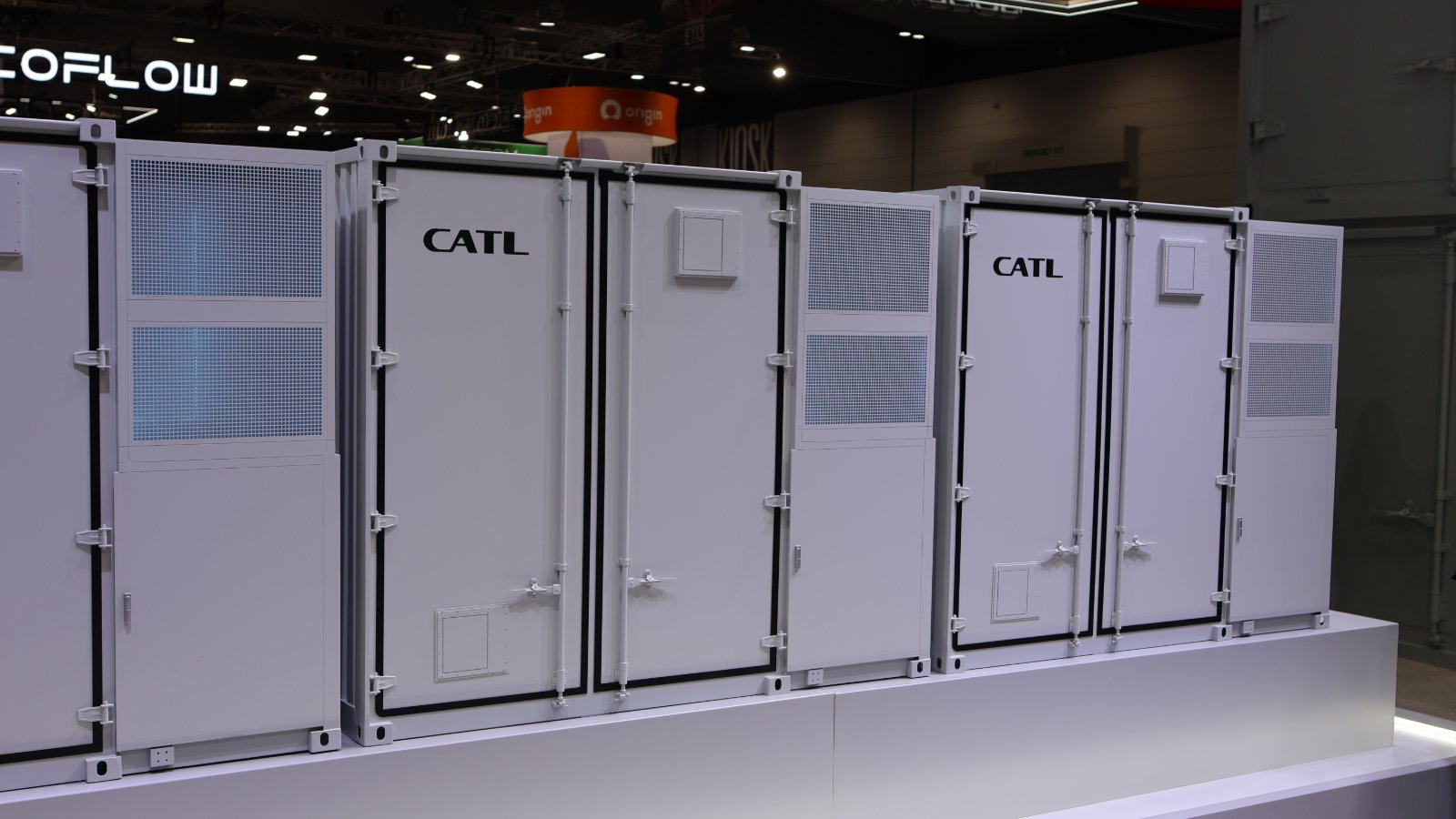
CATL used this week’s All Energy Australia show in Melbourne to roll out its largest containerized storage unit yet — a 9-MWh system called Tener+ — and to put pen to paper with three local partners. The message is simple: the Chinese battery giant is no longer just shipping boxes to Australia, it wants a stake in how those projects get built and connected.
At the heart of the announcement is density. CATL says Tener+ packs enough capacity per container to cut the number of units a developer needs by as much as 40%, while trimming the physical footprint of a project by 12%. For grid-scale, long-duration storage — the segment this product is aimed at — land and interconnection are often the two biggest cost headaches, so both numbers matter more than they might look on a spec sheet.
Key Specs: 9 MWh per container · 25-year design life · up to 40% fewer containers · 12% smaller project footprint · single-click multi-unit commissioning
Two Flavors of Durability
CATL is offering buyers a choice of cell configurations. One is tuned for high-temperature climates; the other promises three years of zero degradation. Not every configuration gets the zero-degradation option, and the company frames the split as a response to differing local weather and revenue models rather than a one-size-fits-all pitch.
The thermal design deserves a mention too. Tener+ vents hot air upward instead of sideways, which keeps heat away from neighboring equipment. CATL claims this lets power conversion systems hold their full rated output even through a brutal Australian summer — a detail operators in the Northern Territory or Queensland will appreciate.
Alongside Tener+, the company gave its sodium-ion storage system, Tener Sodium, its first Australian showing. The modular cabinet design can scale past 30 MWh at system level, runs at ambient temperatures up to 55°C, and is rated for more than 10,000 cycles at 45°C. It launched in June and is now being pushed into overseas markets — a German deal with Intilion for 3 GWh over five years was announced the same day.
From Hardware Vendor to Project Partner
The three memorandums signed in Melbourne sketch out where CATL wants to sit in the value chain:
- Hitachi Energy: pairs CATL’s DC-side battery products with Hitachi’s power conversion systems, setting up integrated offerings across Australia and Asia-Pacific.
- EPEC Group: covers grid connection, engineering delivery and system validation, leaning on CATL’s Xiamen-based Energy Storage Validation Research Institute.
- UNSW Sydney: a planned renewable energy training and innovation center in Western Sydney, aimed at building the local workforce the energy transition needs.
Zane Zhou, who heads CATL’s operations across Australia, New Zealand and Oceania, argued that battery value should be judged across a project’s whole life — whether the cells can keep meeting charge and discharge expectations, and whether owners can keep participating in the National Electricity Market. That framing is telling. Australian storage economics lean heavily on market participation, not just capacity.
CATL says it has more than 3,000 storage projects running worldwide, with over 17 GWh installed across Australia alone. Globally, its lithium-ion storage battery shipments hit 125.0 GWh in the first half of 2026, up 81% year on year, good for a 27.1% share of the market, according to SNE Research. Eve Energy followed at 10.4%, with Hithium at 10.0% and BYD at 7.7%.
The Tener family has grown quickly — a 6.25-MWh unit arrived in April 2024, the 9-MWh Tener Stack in May 2025, and now Tener+. Whether Australian developers bite will depend less on headline capacity and more on how smoothly those grid connections actually go.
Photo: CATL / CnEVPost - Battery · Official Press Kit / Editorial (Editorial / Press Kit)
Source: CnEVPost - Battery
Curious how this compares to other EVs? Try our comparison tool →What do you think?