
California Closes the Montana License Plate Loophole for Good
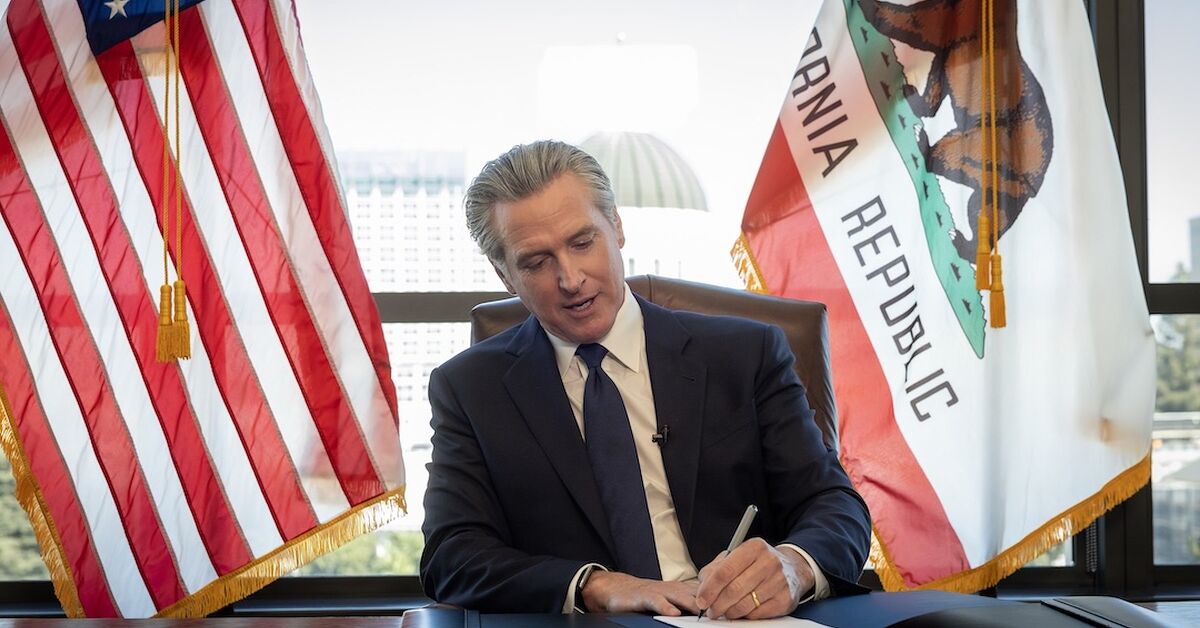
For years, California’s wealthiest car owners relied on a well-known trick to shrink their tax bills: register the vehicle through a limited liability company in Montana, attach a Montana plate, and keep driving it up and down the Pacific Coast. That playbook is now effectively over after Governor Gavin Newsom signed Senate Bill 1406 into law.
Montana earned its reputation as a favorite paper home because it asks for very little. The state does not levy a sales tax on vehicle purchases, charges no statewide sales tax, collects no registration fees, and does not require inspections or smog checks. Non-residents can also title vehicles there even if those cars spend nearly all their time elsewhere. Under the old California rules, a business could avoid the state’s Use Tax as long as most of its ownership sat outside California — a 50-percent threshold that was simple to clear with a fake out-of-state entity.
SB 1406 removes that threshold entirely and expands the definition of a resident to capture shell companies. If even one shareholder, partner, member, or beneficial owner lives in California, the company and any vehicle it holds are treated as Californian for tax purposes. The new definition also covers partnerships, limited partnerships, and limited liability partnerships, closing the restructuring routes that might have otherwise survived the change. The law spells out what makes a company a shell: no real business activity, no physical location outside California, no W-2 employees, and no federal or out-of-state tax returns.
Crucially, the bill allows the California Department of Tax and Fee Administration to pursue individual members, officers, managers, partners, and beneficial owners personally for unpaid taxes, interest, and penalties. Nonpayment tied to a shell company’s vehicle purchase may even rise to a criminal matter. CDTFA estimates the loophole drained roughly $20 million a year from state coffers, with at least 2,500 vehicle sales tied to California residents since 2023. A separate criminal investigation has already targeted 14 Californians accused of dodging more than $1.8 million in taxes and failing to report over $20 million in luxury vehicle purchases.
State Senator Jerry McNerney, a Pleasanton Democrat who chairs the Senate Revenue and Taxation Committee, framed the measure as a way to recover funds for road repairs and essential programs. For anyone who still holds a Montana-titled vehicle, the practical message is blunt: the vehicle is now a liability rather than a position to defend, and California’s use tax should be priced into the next exotic purchase instead of assumed away.
What do you think?