
Big Oil's Quiet Pivot: Shell, Total and BP Are Selling Electricity Now
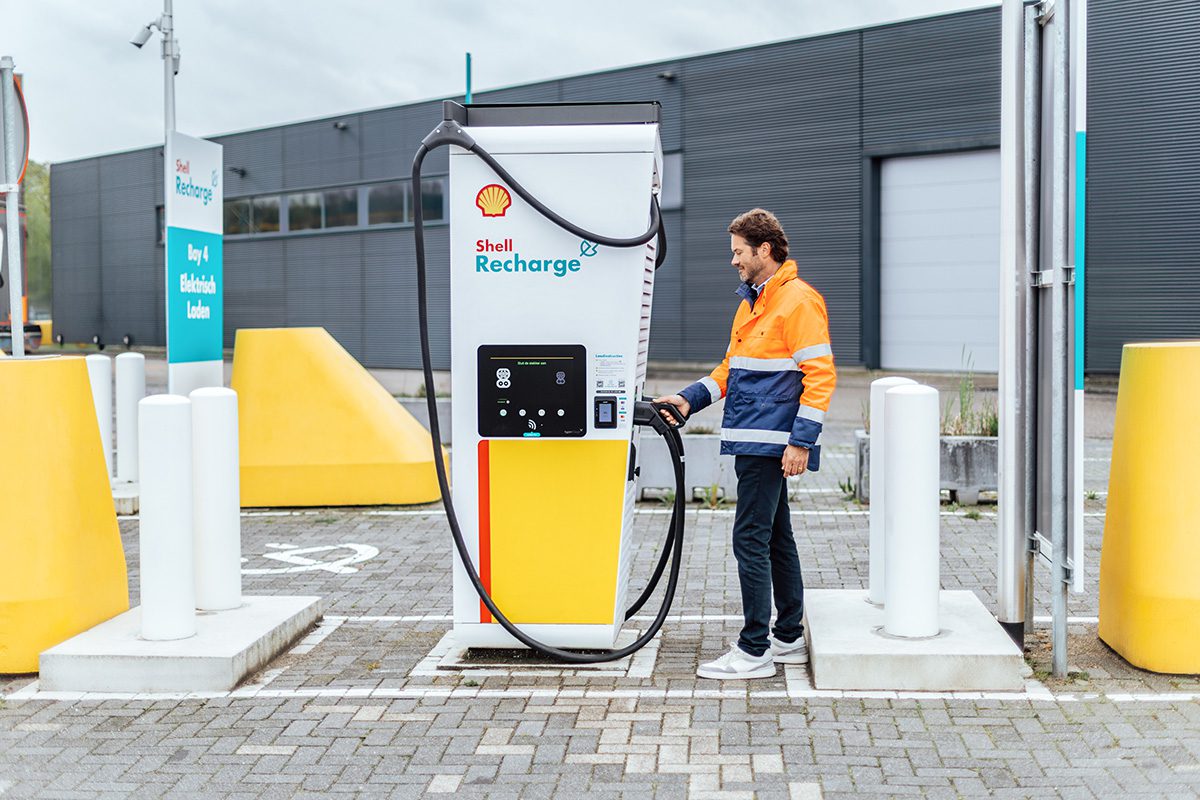
When drivers plug into a public fast charger, they rarely pause to ask who owns the outlet. Increasingly, the answer turns out to be an oil major. Three of the world’s largest petroleum companies — Shell, TotalEnergies and bp — have built substantial electric vehicle charging operations that thousands of motorists rely on every day.
The scale is larger than many EV advocates might assume. Shell Recharge reports roughly 85,000 public charging points spread across multiple countries, including the United States. TotalEnergies counts more than 60,000 charging points across Europe. bp pulse runs thousands of public chargers on both sides of the Atlantic. Curiously, bp even hosts a section on its own website encouraging visitors to consider buying an electric car — a message that would have seemed unthinkable from an oil company a decade ago.
The groundwork was laid through acquisitions. Shell picked up Dutch charging operator NewMotion in 2017 and followed with US-based Greenlots in 2019, part of a broader wave of network consolidation. Some observers initially suspected a darker motive: that the oil giants were buying up charging firms to smother a rival industry or to make plugging in pricier than filling a tank. That theory has not held up. By most accounts, the oil-owned networks perform competitively, and their pricing sits roughly in line with other providers. With new stations appearing from so many different operators, no single player appears close to cornering the market.
The more plausible explanation is that these companies are quietly reinventing themselves as energy providers rather than mere oil producers. Notably, the three firms with charging networks all trace their roots to Europe, and all have expanded into electricity supply and generation. Shell, through its Shell Energy arm, sells power directly to businesses and households and is assembling an integrated power business spanning generation, trading, power purchase agreements and retail. TotalEnergies has set a target of controlling 100 to 120 TWh of annual power generation by 2030. bp pulse was operating more than 40,000 charge points in 2025 and aims for 100,000 by 2030, while selling around 1 TWh of electricity annually through its charging business.
For multinationals of this size, those power volumes are modest. Yet the growth trajectory matters, and that potential offers a hard-nosed financial reason — not merely a public-relations one — for the oil giants to keep investing in charging. Meanwhile, ExxonMobil and Chevron have largely stayed out of the charging business. Analysts describe Shell, Total and bp as hybrid utilities rather than fossil dinosaurs: companies that combine commodity trading expertise, global networks and access to cheap capital. Whether that transformation accelerates or stalls will shape who powers the next generation of vehicles.
What do you think?