
Emaldo Opens Solar-Backed Fast Charging Hub on Sweden's E22 Corridor
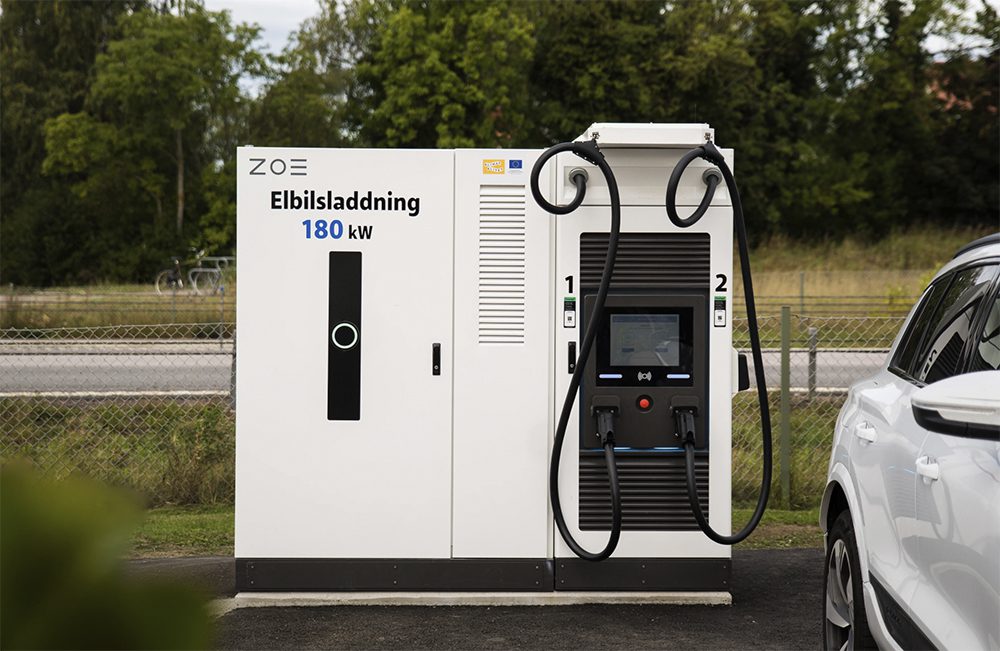
Charging infrastructure specialist Emaldo has cut the ribbon on a new DC fast charging facility in Rockneby, Sweden, positioned directly along the E22 highway. The station is built around ZOE Energy Storage’s Z BOX-EV concept, an architecture that bundles battery storage and EV charging into a single integrated system rather than relying solely on the grid for instantaneous power delivery.
Two ZOE fast chargers from the Z Box-EV lineup anchor the site. Each unit can push up to 180 kW, and together with 218 kWh of onboard battery storage, the pair can deliver a combined 360 kW of DC charging capacity. The striking part of the equation is the site’s grid connection, which amounts to only 63 amps—far too modest to supply that kind of power directly under conventional designs.
On-site solar generation feeds the storage system, and Emaldo’s energy management layer juggles the flow between panels, batteries and vehicles. Because electricity is banked in the batteries rather than pulled from the grid in real time, the chargers can draw on stored solar energy and release it when drivers plug in. This setup effectively decouples the charging speed drivers experience from the limitations of the local distribution network.
That decoupling is central to Emaldo’s pitch. Rolling out high-power charging away from major population centers often runs into two hard walls: constrained grid capacity and the steep cost of upgrading a connection. By combining fast chargers with localized batteries and dynamic power management, Emaldo says it can sidestep both problems. The company handled the entire energy architecture for the Rockneby location, from orchestrating the energy assets to the final installation and commissioning work.
The broader message is about geography and access. “Electrification cannot stop at the major cities,” said Henri Stendalen, Sales Manager at Emaldo. “The energy solutions of the future must work everywhere, even where conditions are different. Rural communities should not have to wait for the future.” The Rockneby site stands as a working example of that argument—a highway charging stop that leans on solar and batteries to overcome the grid constraints that would otherwise hold back fast charging in less populated areas.
What do you think?