
Beyond DC: How Three-Phase AC Charging Can Power Commercial EV Fleets for Less
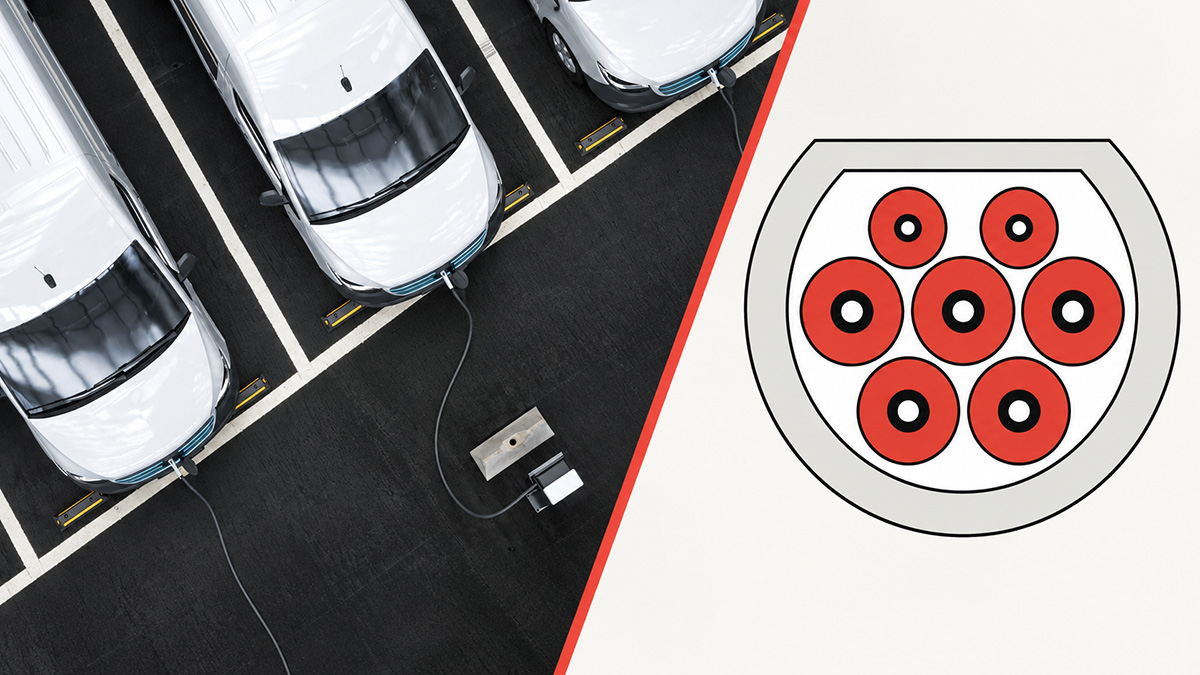
Commercial fleets often assume that high-power charging means installing DC fast chargers, but that assumption may be costing them money. For trucks and buses that sit in a depot overnight, charging speed matters far less than total cost and infrastructure simplicity. According to EVSE engineer Ned Funnell, a lesser-known standard called SAE J3068 offers a practical middle path: three-phase AC charging that can deliver around 50 kW without the expense and complexity of a DC setup.
The core problem is that North American AC charging, based on the J1772 and J3400/NACS standards, typically tops out at 10-15 kW. That is plenty for a passenger car plugged in overnight, but it forces fleet operators to choose between slow charging and a costly jump to DC hardware. DC stations are significantly more expensive, and depending on a site’s existing electrical service, they may also require transformers that add cost, consume space, and involve long installation waits. J3068 sidesteps much of that by using three-phase power, which is already common at many industrial properties in the form of 480-volt service.
Funnell, who previously worked as a charging solution architect at Electrada and later at Lincoln Electric, now serves as a product manager at Norwegian charger maker Zaptec. He has become a vocal advocate for J3068, arguing that fleets do not have to accept the power limits of J1772 forever. The physics behind the standard is straightforward: three-phase power adds a third conductor, increasing available power by roughly 73% at the same current and voltage. A typical 480-volt, 63-amp J3068 implementation delivers about 52 kW, and with LIN-CP communication and active cooling, the specification’s 160-amp ceiling could allow charging at up to 131 kW.
In practice, this means a depot with 100 electric delivery vehicles does not need 100 DC chargers. Overnight dwell time of eight hours or more is more than enough to replenish batteries at medium power levels, and three-phase AC avoids the heat and connector wear that plague single-phase setups running continuously at high amperage. Funnell also points to a regulatory origin story: in 2009, the California Air Resources Board selected a charging standard built around the needs of suburban families rather than commercial fleets. That decision, shaped in part by connector work from the Japanese supplier Yazaki, resulted in J1772, which remains limiting for depot charging. Europe and Asia took a different route, adopting the three-phase-capable Type 2 connector and building mature supply chains around it. In North America, three-phase distribution reaches fewer sites, but industrial properties are an exception. For fleets evaluating their next charging investment, J3068 may be the option that has been hiding in plain sight.
What do you think?