
Antwerp's New Electric Harbour Cranes Are Built for Cargo That Hasn't Arrived Yet
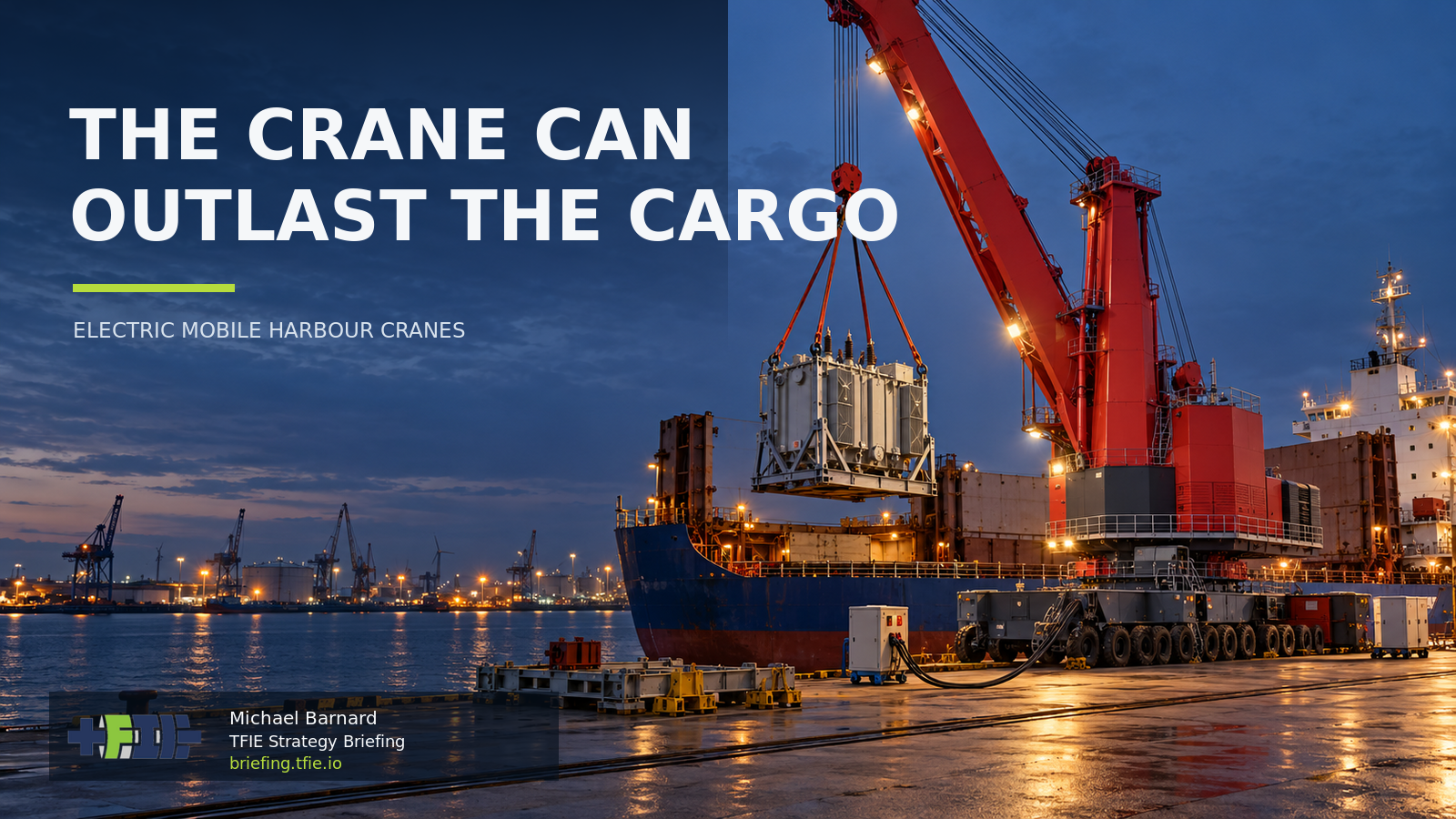
Katoen Natie has quietly flipped the switch on two all-electric mobile harbour cranes at the Port of Antwerp, and four more are on the way. When the full fleet is in place, the terminal operator will run four 200-tonne units and two 150-tonne machines, with paired lifts capable of heaving 400 tonnes.
The diesel savings alone are hard to ignore. Once all six are working, Katoen Natie expects them to displace up to 500,000 litres of diesel a year. That is not a pilot project tucked away in a corner of the quay — it is heavy lifting equipment doing real commercial work.
Why Mobile Cranes Were the Hard Part
Fixed container cranes were always the easy candidates for electrification. They sit still, repeat the same motion thousands of times a day, and can be wired into a fat electrical supply without much fuss.
Mobile harbour cranes are a different animal. They trundle along the quay, shift between assignments, and the cargo in the hook can change completely from one ship to the next. For decades the onboard diesel generator was the simple answer — no need to build power connections wherever the machine might end up.
Konecranes split the problem in two. Grid electricity feeds the heavy lifting loads, while rechargeable batteries handle movement between operating positions. No giant battery pack is dragged around just to do work that a cable could power directly. It also means no diesel fumes at the equipment and noticeably less noise on the waterfront.
One Machine, Many Cargoes
The real value sits in flexibility. A mobile harbour crane can pick up steel, industrial machinery, large transformers, wind components, scrap, project cargo, conventional bulk or containers — often within the same shift pattern.
That matters more than it used to. Ports built their berths, channels and inland links around coal, oil and gas, and those cargoes are now on a long, slow slide. The replacement business is scattered across containers, renewable-energy equipment, industrial goods and alternative fuels — and no single stream will fill the gap tonne for tonne.
The Numbers: Six electric mobile harbour cranes · four at 200 tonnes, two at 150 tonnes · 400 tonnes paired lifting capacity · up to 500,000 litres of diesel displaced per year
A crane that can hoist a transformer this morning and scrap steel tomorrow is a hedge against that uncertainty. The same grid connection can later serve yard equipment, trucks, shore power and harbour craft.
No Blank Cheque
None of this makes every crane order or every new cable worthwhile. A terminal still needs steady, durable activity, the right electrical infrastructure and a business case that holds up.
But a flexible electric machine leans far less on guessing which cargo wins. Compare that with a dedicated fossil-fuel or single-commodity alternative-fuel facility, and the bet looks considerably safer.
Katoen Natie’s fleet cuts diesel today and keeps the door open for whatever freight shows up next. For a port staring down the decline of fossil cargoes, that optionality may be the most valuable thing the cranes lift.
Photo: Katoen Natie / CleanTechnica · Official Press Kit / Editorial (Editorial / Press Kit)
Source: CleanTechnica
What do you think?