
Volkswagen's Zwickau Plant Now Strips EVs Down Instead of Building Them
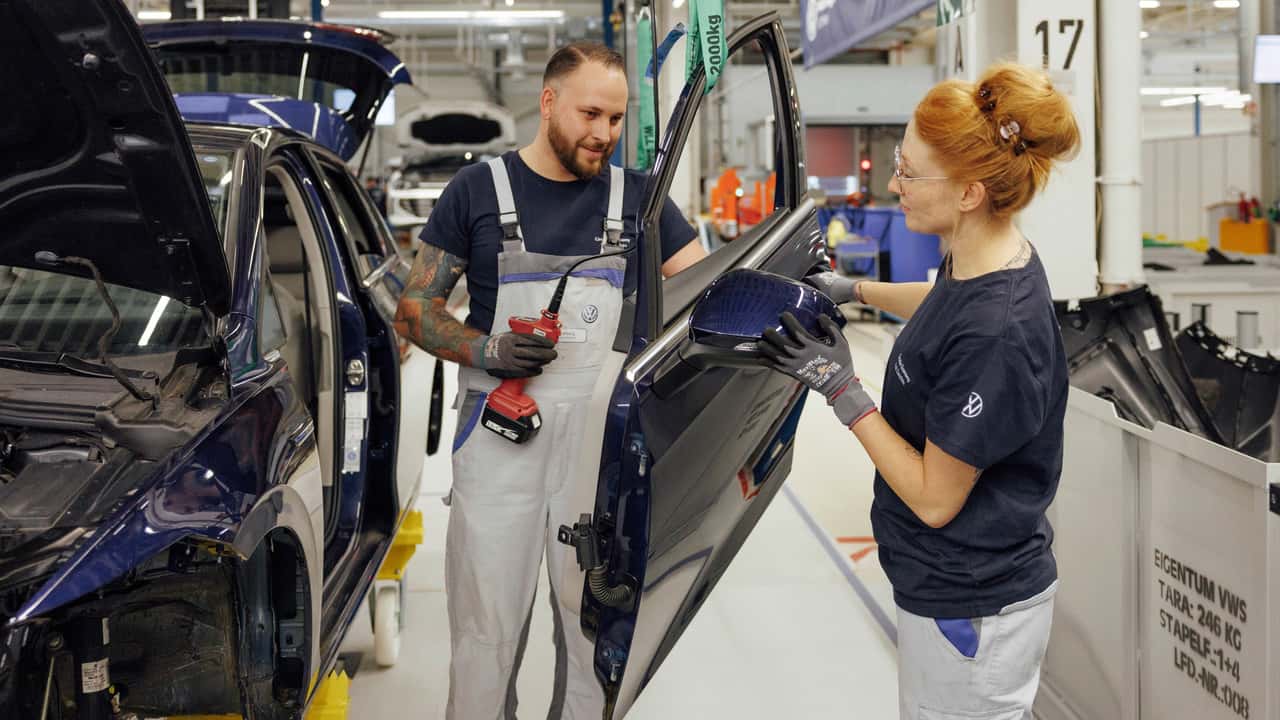
Volkswagen’s Zwickau site spent years being rebuilt into an all-electric production hub. Now the same halls have a second job: an eight-stage dismantling line that pulls cars apart and feeds a factory-backed trade in recovered original parts.
From 2027, the plant intends to break down 4,100 vehicles a year across two shifts, with around 100 staff who were retrained for the work. VW says construction and approvals took nine months and wrapped three months ahead of schedule, and that existing manufacturing equipment can be repurposed to hold costs down.
The business case is simple enough: parts that still work are worth money, and cheap genuine parts keep older cars on the road.
Why a wrecking yard inside an EV factory makes sense
Volkswagen has been selling usable original components harvested at Zwickau since July. Doors, bumpers, electric motors and transmission parts are reportedly the fastest movers. Buyers can order them through the dealer and service network, independent workshops and parts retailers.
That channel matters. A realistic repair bill is often the difference between a car being fixed and being written off, particularly for models that have dropped in value. Factory-approved used parts give owners a cheaper option than new stock without pushing them toward unknown third-party scrap.
What VW has not said is also notable. There is no word on pricing, volumes already sold, warranty coverage, or how each component is inspected before it goes back on sale. Nor has the company named which vehicles supplied the parts sold so far — the line starts with pre-production cars.
Materials, money and a factory with no plan past 2031
Recovered material is the second revenue stream. Pulling plastics out before recycling keeps them usable in new components, and VW claims the plastic from a single vehicle can feed recycled content into three new cars, though not in full.
The automaker wants to grow the operation and has earmarked up to €90 million in investment, with the state of Saxony putting in €10.7 million. At full tilt the recycling business could support 1,000 jobs.
By the numbers: 4,100 vehicles dismantled per year from 2027 · 100 retrained workers · up to €90M planned investment · €10.7M from Saxony · potential 1,000 jobs
The catch sits downstream. Zwickau has no vehicle production scheduled after 2031, so a dismantling line that may one day employ a thousand people does not exactly settle the site’s future.
And there is commercial pressure behind all of this. Volkswagen’s EV sales are rising, but those cars still earn thinner margins than its combustion models. The squeeze has already forced the company to pause development of the upcoming electric Golf until the investment adds up.
The part that doesn’t quite fit the EV story
Zwickau only builds electric cars these days, and VW has not said the dismantling operation will stay electric-only. Published photos show at least one dark blue car that looks like a Golf. Captions don’t identify the models.
So the used-parts business seems aimed at a wider customer base than the plant’s own output — which, from a revenue standpoint, is the sensible move. The harder question is whether stripping cars can ever be profitable at scale. Until VW shares prices, volumes and inspection standards, that stays an open tab.
Photo: Volkswagen / InsideEVs · Official Press Kit / Editorial (Editorial / Press Kit)
Source: InsideEVs
What do you think?