
America's Public Fast Charging Network Crosses 80,000 Ports For The First Time
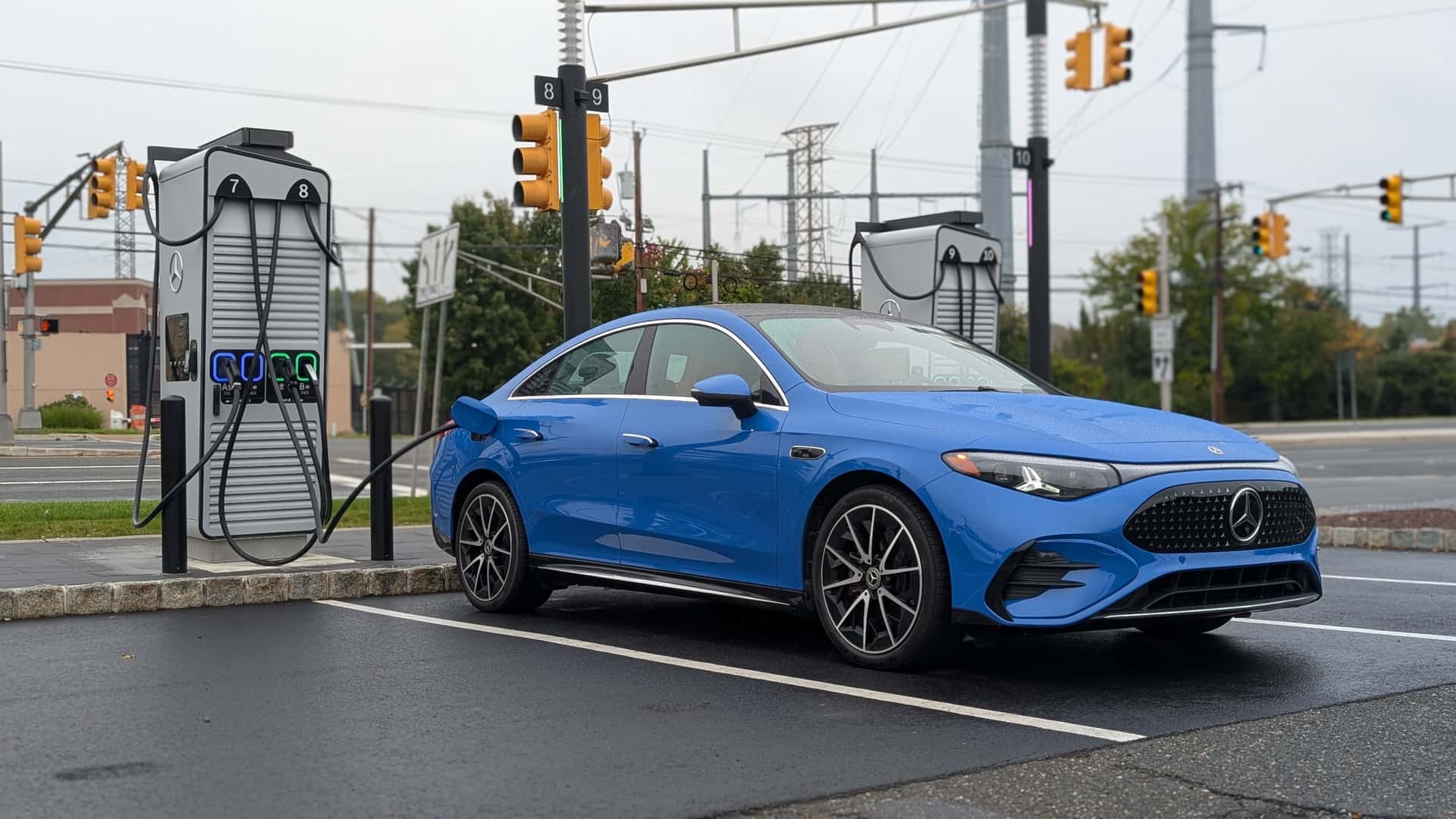
The United States has pushed its public DC fast charging network past the 80,000-port threshold for the first time, even as the pace of new installations cooled during the third quarter. According to charging data platform Paren, operators brought 4,106 new fast-charging ports online across 664 stations between July and September. That marks a 12% dip in ports and a 20% drop in stations compared with the same stretch a year earlier, a slowdown that followed the federal government’s rollback of EV-friendly incentives and the resulting chill in electric vehicle sales.
The quarterly pullback doesn’t tell the whole story, though. Networks kept pouring money into the ground, and the chargers going in today are more capable and better placed than the ones they replace. Roughly 73% of the ports added last quarter can deliver at least 250 kilowatts, up from 60% a year ago, and 400-kW hardware has become the default choice for new builds. Tesla is also scaling its V4 cabinets, which top out at 500 kW; the company now counts 42 locations and 487 ports capable of that peak output.
Who is doing the building matters too. Tesla remained the single largest contributor, adding 1,287 ports over the quarter, though that figure is 533 lower than the prior-year period. A growing slice of that total came from Superchargers sold to third-party businesses, a newer revenue line for the automaker. Ionna, the automaker-backed consortium targeting 30,000 fast chargers in North America by the end of the decade, finished second after nearly tripling its rollout to 378 new ports. Walmart placed third with 344.
Geographically, California stayed on top with 87 new stations, trailed by Texas at 66, then North Carolina and Georgia at 26 apiece. Five states, California, Texas, Florida, Illinois and New York, accounted for 42% of all new openings, while rural areas captured just 10% of added ports. At the metro level, Dallas-Fort Worth and Houston saw the biggest gains, followed by Oklahoma City and Kansas City. That lopsided distribution underscores how much ground remains to be covered in sparsely populated regions, where long gaps between stops can make EV ownership a tougher sell.
Higher-powered infrastructure stands to benefit more than just luxury models. Premium EVs like the Lucid Gravity, Porsche Cayenne Electric and BMW iX3 can peak around 400 kW, while the Mercedes-Benz GLC and Volvo EX60 sit near 370 kW. Yet the Rivian R2, Hyundai Ioniq 5 and Kia EV6, all 800-volt designs, can also exploit faster stalls. Real-world speeds still hinge on battery temperature and state of charge, so peak ratings are only part of the picture. Drivers are clearly using what’s available: July alone saw a record 17.6 million public fast-charging sessions nationwide, and Paren expects an even stronger fourth quarter.
What do you think?