
A Privateer Legend: 1977 Holden Torana A9X Group C Heads to Auction
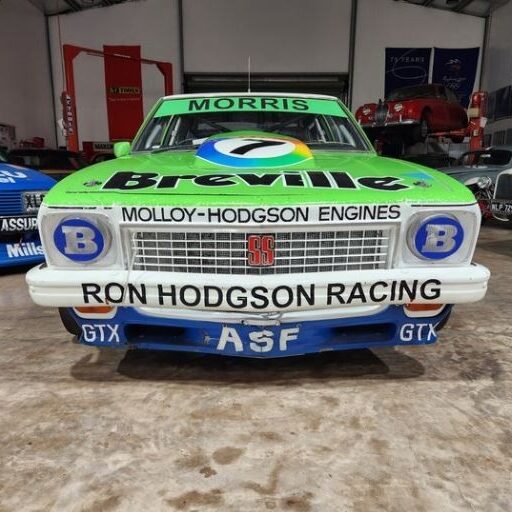
Few chapters in Australian touring car racing are as beloved as the story of a small privateer outfit toppling the factory giants. That tale is embodied in this 1977 Holden Torana A9X Group C, a car that helped driver Bob Morris capture the 1979 Australian Touring Car Championship without any factory support behind him. Now, after changing hands in 2023, the machine has resurfaced at Donington Auctions in Melbourne, Victoria, with bidding currently sitting at A$302,000 against a reserve that has yet to be met. Auction estimates place its value between A$580,000 and A$680,000, a reminder of how far prices for significant Australian racers have climbed. For context, the car reportedly sold for A$715,000 back in 2017.
Morris was a talented wheelman who spent much of his career on the outer edges of the sport, rarely enjoying manufacturer backing. His breakthrough came in 1976 when he and co-driver John Fitzpatrick scored a shock Bathurst 1000 win over the works Holden and Ford teams, with Fitzpatrick nursing a failing car to the line at barely walking pace. Morris then joined Ron Hodgson Racing, a Holden dealership owner operating as a privateer. The partnership’s first season in 1977 was forgettable, as the Moffat Ford Dealer Team dominated, but the arrival of the A9X Torana changed everything. The model swept the ATCC in 1978 and 1979 before rule changes rendered it obsolete for 1980. Morris took three wins in 1978, then claimed his only title the following year using this car and its sister machine.
The A9X itself was a meaningful step forward from the L34 it replaced. While the engine and gearbox carried over, the rear end was completely reworked, swapping the fragile “banjo” axle and drum brakes for an upgraded Salisbury assembly with rear discs. The original setup was so delicate under racing loads that drivers had to treat their cars gently just to reach the finish. Once the A9X’s early teething issues were resolved, it became nearly untouchable on track.
This particular example began life as one of just 33 GMP&A bodyshells, built for competition rather than showroom duty. These shells carried no VIN, skipped sound-deadening material, and received extra welding plus captive nuts positioned for roll cage mounting. Under the bonnet sits a 308ci V8 paired with a four-speed manual. Production output was 220hp, but legendary engine builder Peter Molloy extracted around 400hp for Morris. Curiously, Group C regulations barred capacity increases yet permitted upgraded internals, while forcing racers to keep the factory intake manifold, a component never designed for competition airflow. Many believe a better manifold could have unlocked 500hp.
The car’s presentation reflects its racing history rather than a concours restoration. Its green, white, and blue livery was reportedly sketched by Morris himself on a sheet of paper, and it retains correct signage, decals, fender flares, spoilers, and the distinctive reverse hood scoop. Surfaces show the chips and scratches of battle, yet there are no dents or rust, helped by more than three decades of climate-controlled museum storage. A mechanical refresh was handled by former driver and race engineer John Walker, who is based in Tasmania, leaving the car described as race-ready. The interior is trimmed as it raced, complete with roll cage, harness, and auxiliary gauges, though the original driver’s seat is missing. That seat once accommodated names including Derek Bell, Dieter Quester, Janet Guthrie, and Johnny Rutherford, making its absence a genuine loss for historians of the sport.
What do you think?