
A 1983 Holden Commodore SL That Looks Like It Just Left the Showroom
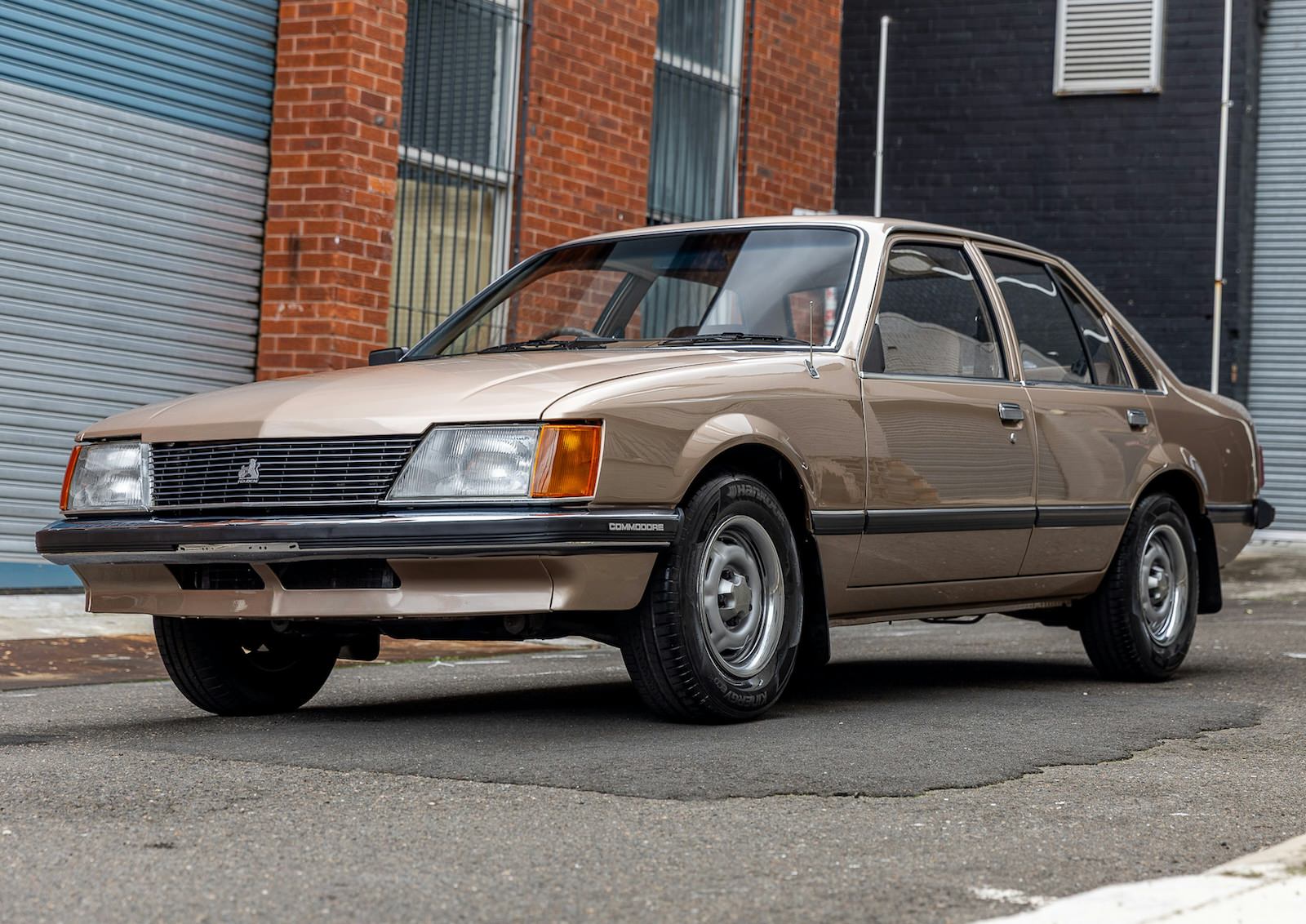
Few cars define the Australian driveway quite like the Holden Commodore, and this 1983 VH Commodore SL is about as close to a factory-fresh example as buyers are likely to encounter. The odometer shows a believed-genuine 103,356 km, and the car has clearly been looked after rather than merely stored.
Finished in Oyster Metallic over Light Oyster vinyl, the sedan pairs its original character with a fresh respray and renewed chrome, moldings, body seals, locks and window channels. It also comes with air conditioning, the factory spare tyre, original tools, manuals and several keys.
Under the bonnet sits the 3.3-litre Blue inline-six — good for 111 bhp when new — mated to a three-speed automatic.
Key Specs: 3.3-litre Blue inline-six · 111 bhp · three-speed automatic · believed-genuine 103,356 km · Oyster Metallic over Light Oyster vinyl
Why the VH Matters
The VH was the third evolution of the Commodore and arrived in 1981. It sat on an Opel-derived architecture — Rekord body, Senator nose — that Holden had substantially reengineered for local conditions. The result was a sharper front end, revised suspension tuning, rack-and-pinion steering and a spread of four-, six- and eight-cylinder engines.
Trim levels were reshuffled into SL, SL/X and SL/E, with the range-topping SL/E offered as a sedan only and fitted with a trip computer that reported average speed and fuel economy. The SS appeared in 1982 with V8 power, and Peter Brock’s HDT operation built the Group One, Group Two and Group Three derivatives that Australian collectors chase today.
- Motorsport pedigree: Brock and Larry Perkins won Bathurst in 1982, then repeated the feat in 1983 alongside John Harvey after swapping cars mid-race.
- Production run: more than 141,000 VH Commodores were built before the VK took over in 1984.
- Design flourish: Leo Pruneau’s team specified a Shadowtone two-tone option, a quiet nod to the Rolls-Royce Silver Shadow.
A Car Built for Rough Roads
The Commodore’s development story is worth retelling. Early Rekord prototypes sent to Holden’s Lang Lang proving ground were destroyed within 1,500 km of testing, and one reportedly split at the firewall in the Flinders Ranges. Strain gauges recorded loads roughly 300% above anything Opel had measured — German engineers initially suspected the Australian equipment was faulty.
Holden reinforced the body and kept the Rekord’s live rear axle rather than adopting the Senator’s independent setup. Sophistication was traded for durability, a decision that suited the market perfectly.
For anyone chasing a usable slice of 1980s Australian motoring, this SL looks like a very tidy place to start.
Source: Silodrome
What do you think?