
A 1971 Ford Econoline Turned Shasta Camper, Wings and All
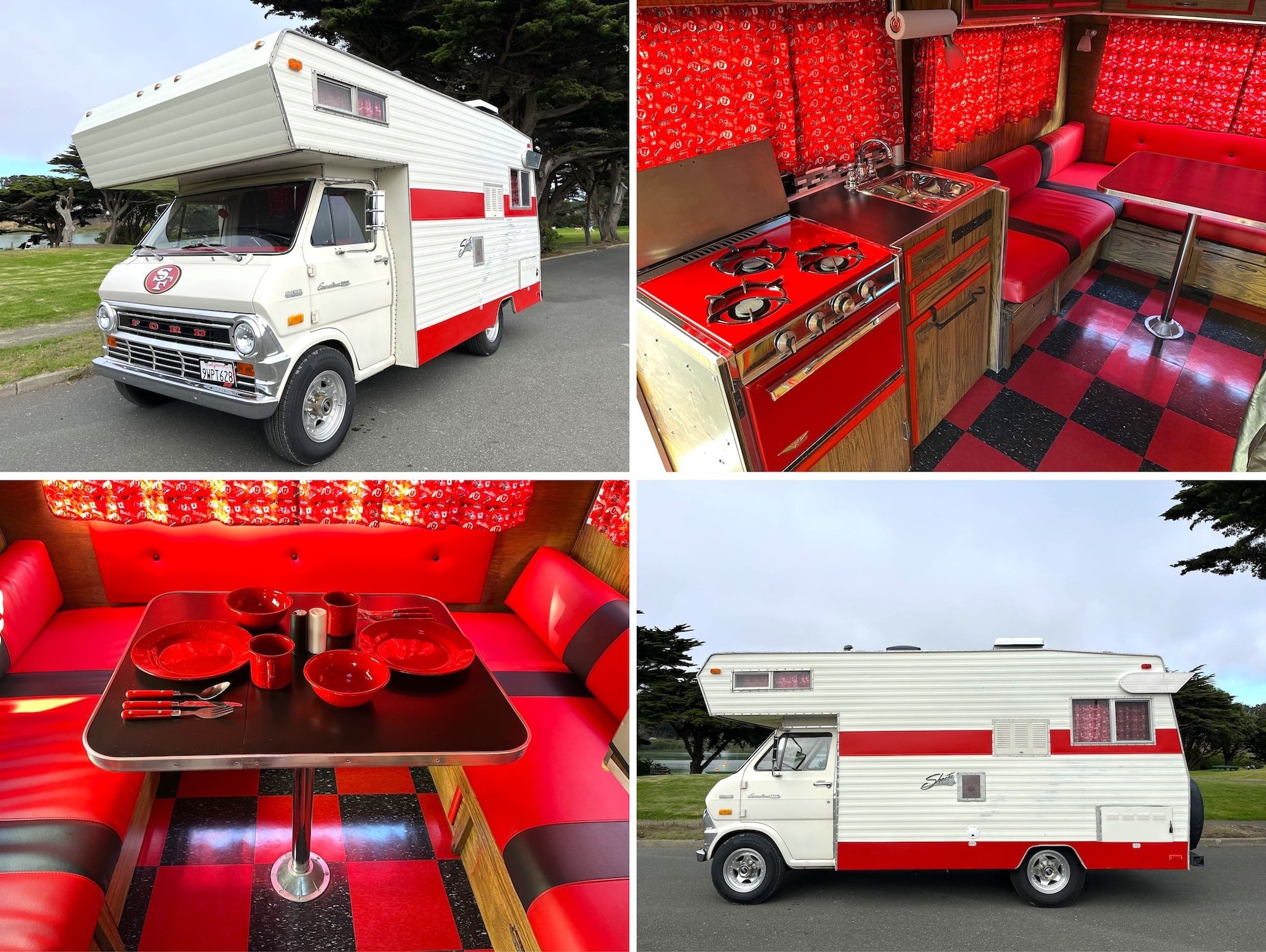
A white-and-red 1971 Ford Econoline E-300 with gleaming metal wings bolted to its flanks is heading to auction at no reserve. It isn’t a factory special — it’s a period camper conversion by Shasta Trailers of Simi, California, and it may be one of the more charming ways to spend a weekend off the grid.
The recipe is simple: Ford shipped a bare chassis cab out of Lorain, Ohio, Shasta bolted a full camper body on the back, and somebody drove off with a house that happened to have a 302 cubic inch V8 under the hood.
What’s Actually Inside
The layout sleeps four. Up front there’s a two-seat cab; behind it, a dinette that folds flat into a double bed, plus a second double bunk tucked over the cab.
- Galley: sink with running water, three-burner stove, oven, fridge/freezer and a water heater
- Washroom: a separate enclosed bathroom with a toilet
- Comfort: air conditioning, refreshed upholstery, new flooring and updated appliances
- Rolling stock: American Racing wheels, power-assisted front disc brakes
The odometer reads 77,000 miles. Power comes from the familiar Ford 5.0-liter (302 ci) V8 mated to a three-speed automatic — the same combo that made these vans the default choice for fleets, ambulances and camper builders through the 1970s.
Quick Specs: 1971 Ford Econoline E-300 · 302 ci (5.0L) V8 · 3-speed automatic · sleeps 4 · 77,000 miles · offered at no reserve
Paperwork includes a clean California title, the original build sheet, period brochures and records stretching back to 1973. The van reportedly spent time in Colorado and Utah before the current owner picked it up in 2025.
Why the Econoline Became the Default Camper Base
Ford launched the Econoline in September 1960 as a 1961 model, openly answering the Volkswagen Type 2’s surprising American sales. The first-generation van borrowed Falcon running gear, sat the driver over the front axle and hid the engine under a hatch between the seats.
The second generation landed for 1969 after a UAW strike pushed it back a year. It brought F-Series hardware, Twin I-Beam front suspension, longer wheelbases and — crucially for a camper — an optional 302 V8 and factory air conditioning. The third generation, from 1975, moved to a full-length separate chassis, which is exactly why conversion companies flocked to it.
By 1995 Ford claimed the Econoline underpinned roughly 90 percent of America’s ambulances and Class C motorhomes. The nameplate ran four generations before cargo and passenger vans bowed out after 2014, replaced by the Transit; cutaway and stripped-chassis versions are still built in Ohio.
The Buying Angle
Period camper conversions are a strange little corner of the collector market. They’re too slow and too thirsty for most purists, and too bulky for a normal garage. But the Shasta-branded Econolines have a cult following, and the wings are a big part of it.
No reserve means someone is going to get a usable, road-trip-ready slice of 1970s Americana for whatever the room decides it’s worth. Bring a fuel card.
Source: Silodrome
What do you think?