
A 1924 Nash Victoria That One Family Kept for Fifty Years Hits the Market
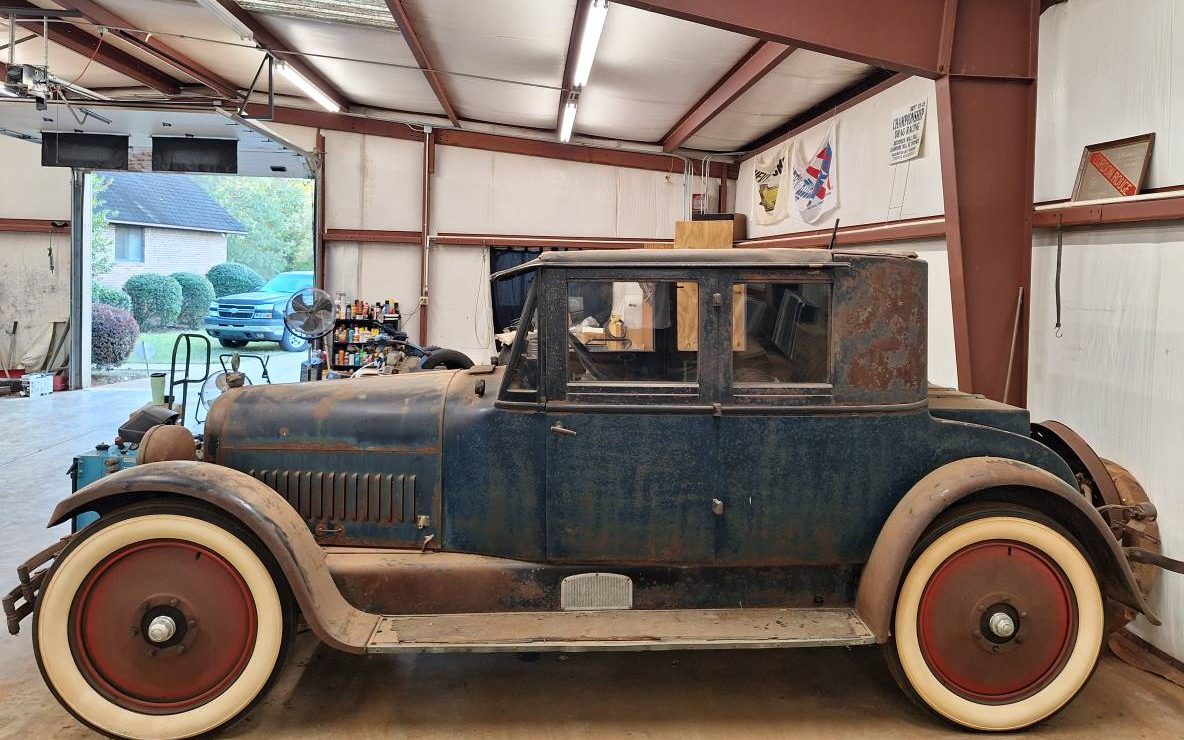
Early American cars that have stayed with a single family for half a century are rare enough, and this 1924 Nash Victoria is one of them. The car is currently listed for sale in Columbia, South Carolina, at an asking price of $13,000. It isn't the first time this Nash has surfaced publicly either. It appeared on the market years ago with an asking price around $29,000, then resurfaced later at roughly $23,000. The steady slide in price suggests a seller who has gradually adjusted expectations, though the vehicle remains a project rather than a turnkey antique.
The real story here isn’t the paint or the bodywork, it’s what sits under the hood. This Nash carries an overhead-valve six-cylinder engine at a time when most of its contemporaries, including the all-conquering Ford Model T, were still relying on flathead fours. Nash’s engineering edge came largely from Nils Erik Wahlberg, who was brought over from General Motors not long after the company was founded in 1916. A single updraft carburetor fed the intake, the crankshaft spun on seven main bearings, and the resulting output was somewhere around 55 horsepower, enough for a cruising speed near 40 mph. The gearbox was a three-speed non-synchronized unit, and braking was handled mechanically at the rear, both thoroughly conventional for the era. One caution for anyone considering a restoration: Nash changed specifications almost year by year in this period, so working out which parts interchange is genuinely difficult.
The seller makes a vague suggestion that this Victoria is some kind of one-off custom build, but there’s no real documentation behind the claim. The interior layout is unusual, with a fold-away passenger seat beside a dedicated driver’s chair, though that arrangement appears to have been standard production rather than bespoke. Other period details include a substantial floor vent for heat and roller shades on the glass. Nash positioned itself as an upscale brand, so buyers of enclosed models could expect extras like a clock along with nickel-plated trim and door handles. Wheel choice is also worth noting: wood-spoked artillery wheels were the norm, but the tall steel wheels seen here were an extra-cost option. These stand 32 inches tall, which makes sourcing tires a specialized task.
As for the name, “Victoria” denoted a specific body configuration rather than a marketing flourish. It described a two-door sedan with a shortened wheelbase and a rounded rear, effectively a blend of coupe and saloon proportions. The car is described as remarkably complete, which counts for a lot with a machine this old, though it needs attention in essentially every area. For context on values, a nicely restored and running Nash Six roadster changed hands recently for around $16,000, only slightly more than what this unrestored Victoria is asking. That gap is likely to make finding a new owner a slow process, family ownership history notwithstanding.
What do you think?