
Rare Rotary Wagon: A 1972/73 Mazda RX-3 Heads to Market in Chicago
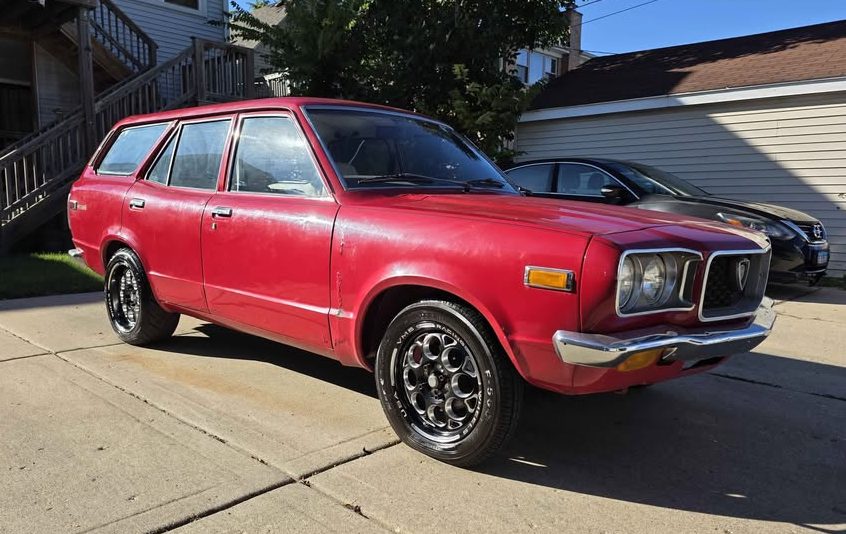
Long before crossovers ruled suburban driveways, Mazda was busy stuffing its unconventional rotary engine into just about everything it built — including a humble station wagon. One such machine, an early-1970s RX-3 wagon, has resurfaced for sale in Chicago, Illinois, carrying an asking price of $18,000 through a Facebook Marketplace listing.
The RX-3 sat below the larger RX-4 in Mazda’s rotary hierarchy, yet it was positioned as a sportier, more compact alternative to the RX-2. Underneath, it shared much of its basic architecture with the conventionally powered Mazda 808, a steady seller for the brand. Depending on the model year, Mazda fitted various displacements of its Wankel rotary; the engine currently sitting in this wagon is a 13B, which the seller believes may have been swapped in from a 1990s-era RX-7 at some point in the car’s life.
According to the listing, the car runs and drives but needs a tune-up before it could be considered road-ready. The odometer shows 73,000 miles. The body is described as sound, though the red paint has faded enough that the seller suggests a respray down the road — the photos, they note, flatter the finish somewhat. A small amount of rust is present but characterized as repairable. Inside, the white cabin remains stock and holds up reasonably well for a vehicle that is now more than half a century old, especially given how uncommon these wagons have become.
One noteworthy detail is the presence of air conditioning, which the seller speculates was likely a dealer-installed option when the car was new. The wheels are aftermarket pieces that give the wagon a more distinctive stance. The seller is firm on the price and is not entertaining trades, so cash offers only.
Context matters here: the RX-3 was a genuinely rare sight on American roads. While roughly 280,000 examples found homes worldwide, only around 2,300 were sold in the United States during its production run, which stretched from 1972 through 1978. In its home market the car was marketed as the Savanna, and Japanese buyers enjoyed a road-tax advantage tied to the rotary’s displacement — a benefit that never translated to U.S. customers. For collectors chasing rotary-powered oddities, the combination of rarity, a factory wagon body, and a period-correct 13B makes this one worth a closer inspection before any money changes hands.
What do you think?