
1987 Nissan Be-1: The Lottery-Win City Car That Still Turns Heads
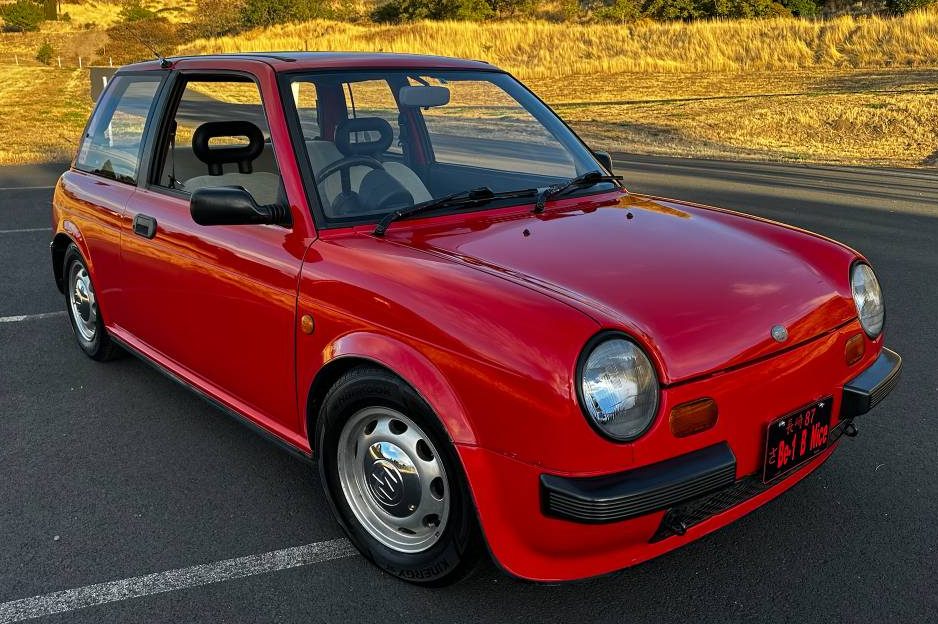
Long before retro-styled EVs became a thing, Nissan was already mining its own past for inspiration. The result was a family of small, deliberately oddball machines built by the company’s Pike Factory, and the very first of them was the Be-1, which arrived for 1987. Nissan capped production at roughly 10,000 units over two years, and interest ran so hot that buyers had to enter a lottery just for the chance to purchase one.
The Be-1 was the opening act for what enthusiasts now call the “Pike cars,” a group that later grew to include the Figaro, the S-Cargo and the Pao. Penned by designer Naoki Sakai, it took its name from a design proposal number rather than any conventional model convention. Nissan sold it through its Cherry store network, and notably the car wore no Nissan badge anywhere. Underneath, it leaned on the existing Micra platform, which means mechanical parts are shared rather than bespoke, a real plus for anyone worried about keeping one running.
Paint choices were limited to four shades, and the example currently up for sale in The Dalles, Oregon, is finished in Tomato Red. It has been altered from stock: HIRO Performance coil-overs drop the ride height, and it rides on 13-inch Michelotti wheels borrowed from a later Figaro, giving the little city car a noticeably more aggressive stance. The seller has it listed at $9,500, and the presentation is described as strong, with glossy paint, clean glass and no visible rust.
Inside, the quirkiness carries over through the gauge cluster and a lower console with an almost industrial feel. Gray cloth and vinyl upholstery appears intact, with no rips or meaningful wear, and equipment includes air conditioning, a working heater, white-faced instruments with a factory tachometer, and a double-DIN Pioneer stereo with Bluetooth and Apple CarPlay. Power comes from a 1.0-liter four-cylinder making 51 horsepower and 56 ft-lbs of torque, sent to the front wheels through a three-speed automatic. A five-speed manual was also offered and is generally the more desirable choice. Straight-line speed is beside the point here; the Be-1 was engineered for stop-and-go city duty, not long-distance touring. The seller notes a recent timing belt and water pump replacement along with a fresh service and tune-up.
Right-hand drive may put off some shoppers, though adapting tends to happen quickly. North American sightings are genuinely rare given the low build count, making this one of only a handful to surface publicly. That scarcity also makes pricing hard to benchmark, and its long-term investment potential is anyone’s guess. For buyers who value character over convention, though, it is a compelling little piece of Japanese design history.
What do you think?