
Xponential and SiCAM Join Forces on a US-Made Silicon-Sulfur Battery Platform
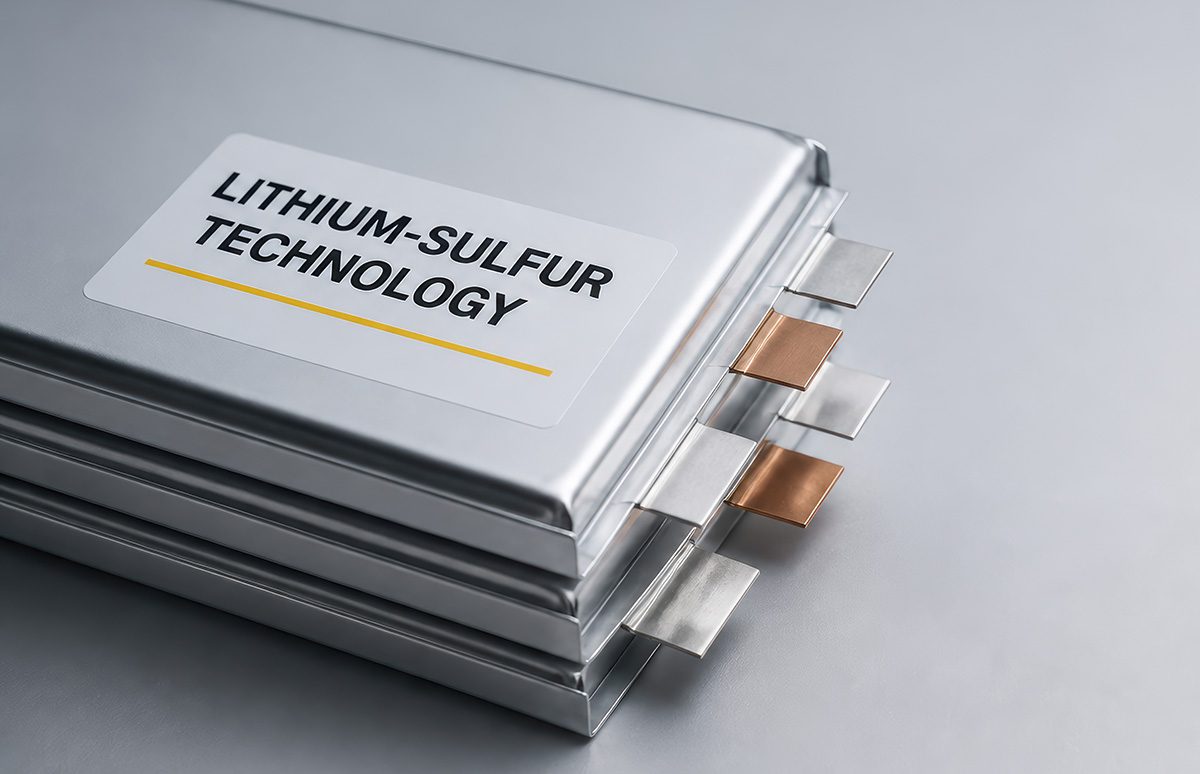
Two American materials specialists are pooling their expertise to build a battery chemistry that sidesteps the mined, import-dependent ingredients that dominate today’s lithium-ion supply chains. Xponential Battery Materials (XBM), which develops lithium-sulfur cathodes, and SiCAM Technologies, an anode developer focused on silicon-carbon, have launched a technology collaboration aimed at creating a silicon-sulfur materials platform for battery manufacturers operating in the United States.
The division of labor is straightforward. SiCAM contributes its silicon-carbon (Si-C) anode powder, while XBM brings its lithium-sulfur (Li-S) cathode formulations and cell know-how. According to both firms, pairing these two electrodes opens the door to energy densities well beyond what conventional lithium-ion cells can theoretically reach. The appeal also lies in sourcing: silicon ranks as the second most plentiful element in the Earth’s crust, and sulfur is recovered as a byproduct of petroleum refining carried out on US soil.
SiCAM’s manufacturing route differs from that of most competing Si-C anode producers, which rely on silane in a chemical vapor deposition process. Instead, SiCAM feeds trichlorosilane into a fluidized-bed CVD reactor, an approach engineered to yield a bonded silicon-composite primary structure. That structure is meant to temper the roughly 300% expansion silicon undergoes as cells charge and discharge—swelling that has historically undermined anode durability. SiCAM holds an exclusive license to the patented anode material and is pursuing commercialization along with US-based production capacity.
On the cathode side, XBM’s CarbonX active material starts with lignin, a leftover from American paper pulping. A proprietary sol-gel method produces porous carbon that is then loaded with sulfur and catalysts. The design targets better sulfur utilization, longer cycle life and higher cell-level energy density. Phillip Roberts, co-founder of both SiCAM and XBM, framed the effort as a logical next step for a US-focused “Sustainable Battery” strategy that avoids chemistries reliant on mined, costlier and foreign-controlled inputs. Jon Shan, XBM’s Chief Technology Officer, said the immediate goal is to tune the high-capacity Li-S cathode alongside SiCAM’s Si-C anode in a first-of-its-kind silicon-sulfur platform, with early attention on lightweight, high-energy applications such as eVTOL aircraft and drones.
For battery OEMs, the collaboration represents an early bet on a chemistry that could reduce exposure to imported raw materials while pushing energy density upward. Whether the platform can deliver those gains at commercial scale—and how quickly US production lines come online—will determine how much of the promise translates into real cells.
What do you think?