
VW's ID. Buzz Has a Pricing Problem, But Cutting the Sticker Won't Fix It
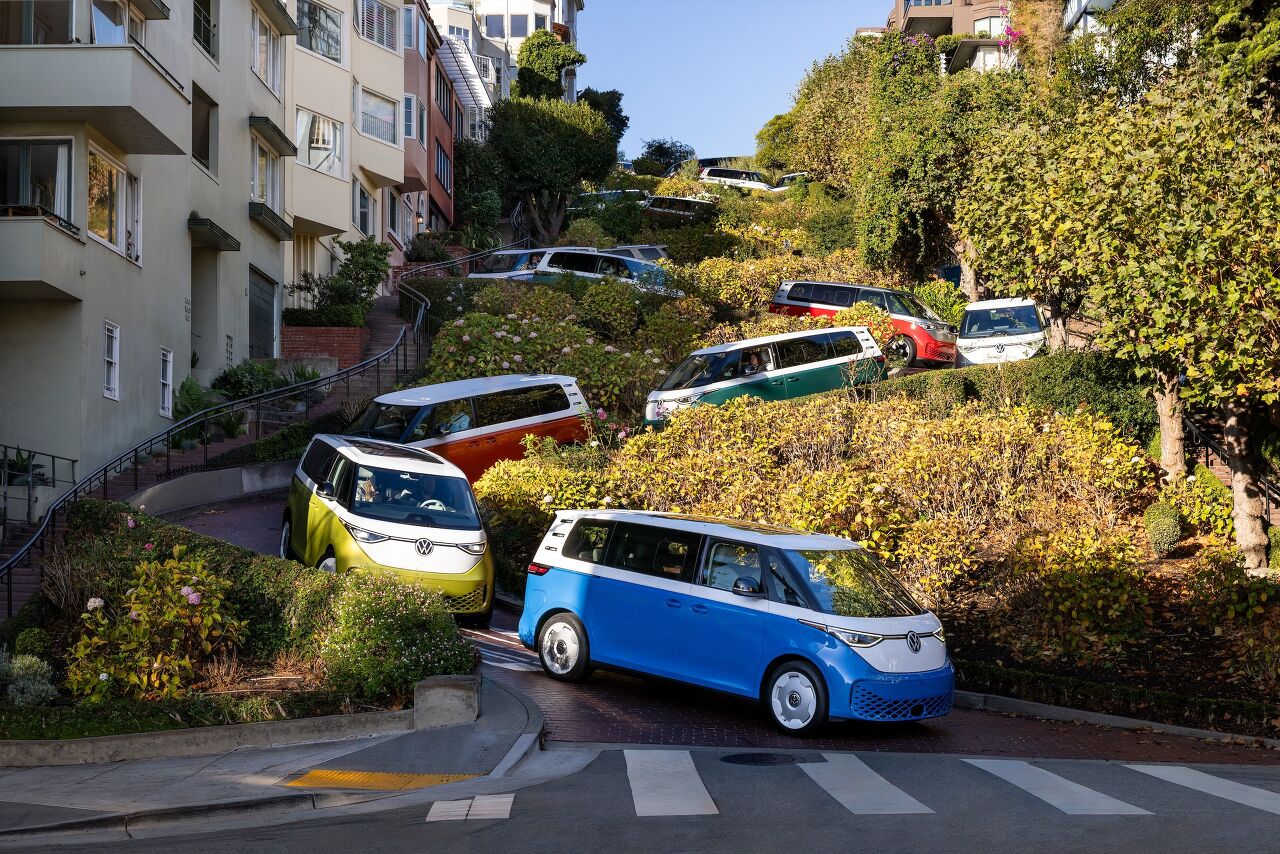
Volkswagen boss Thomas Schäfer has confirmed the ID. Buzz will come back with a smaller price tag and fresher tech. Good news on paper. But anyone who watched the electric van stumble through its first American outing knows the money issue is only one item on a fairly long list.
The Buzz has already been benched in the U.S. After slow showroom traffic, with expectations pointing to a second-generation model arriving around 2028. When the van first landed, it opened at roughly $61,500 once destination charges were folded in — steep territory for a people mover, and something VW says it intends to correct.
The Numbers Behind the Retreat
The North American tally tells the story quickly. VW moved around 6,000 units in the U.S. During 2025, its best year, plus another 1,100 in Canada. Europe did roughly ten times that volume, and close to half of those sales were the commercial cargo version that never made it to this side of the Atlantic.
Part of the gap comes down to how the two continents drive. Europeans tend to cover about half the annual distance of North American motorists, so a 230-mile range figure reads very differently depending on which ocean you’re sitting beside. On the Prairies or through the Mountain West, that number shrinks fast.
Yet the Buzz hasn’t exactly set the old continent ablaze either. Schäfer has been candid with the press, describing the van as sitting on the wrong cost base and arguing that volume success has been out of reach as a result. He also stressed that heritage alone can’t carry a product — VW won’t be dusting off every famous badge from its back catalogue just because rivals are doing it.
Nostalgia Is Not a Business Model
Here’s the awkward part. Volkswagen builds genuinely good mainstream cars. The Golf and Jetta are comfortable, sensible, well-proportioned machines that drive better than their stickers suggest. They earn their place in the lineup through competence, not through a slideshow of old photographs.
The Buzz works the opposite way. It leans hard on affection for a van that went on sale more than seventy years ago, and it has almost nothing mechanically or practically in common with that machine. The original Type 2 was small, slow, cheap, easy to fix and powered by gasoline. The modern one is mid-sized, quick, expensive, tricky to service and electric.
The closest parallel is the New Beetle of 1997 — a car built to echo a classic shape without sharing its substance.
There’s also a timing problem nobody at VW seems keen to discuss. Concepts started appearing in 2001, electric design studies showed up at trade events from 2012 onward, and the final show car landed in 2017. The production van didn’t reach dealers until 2023. Two decades is a long time to ask a nostalgic buyer to wait.
By now, the people with genuine Microbus memories and the financial room for a $60,000-plus EV are mostly retired. They aren't hauling small kids around town, and if they still travel, they've likely already bought a motorhome that goes considerably farther than 230 miles between stops. Younger families, meanwhile, will look at a conventional gasoline minivan that costs roughly $20,000 less and can run three-plus hours at highway speed without a charging break.
Who Was This Actually For?
The cabin seems set up for long-distance comfort, yet the range quietly discourages exactly that kind of use. The price points toward a premium positioning, while the interior leans into stripped-back minimalism. Those signals don’t line up.
A lower MSRP on the next Buzz will help. It won’t answer the bigger question — what job this van is supposed to do that a cheaper, more practical rival can’t do better.
Source: The Truth About Cars
Curious how this compares to other EVs? Try our comparison tool →What do you think?