
US Fast Charging Passes 80,000 Ports as Tesla Extends Its Lead — and Its Prices
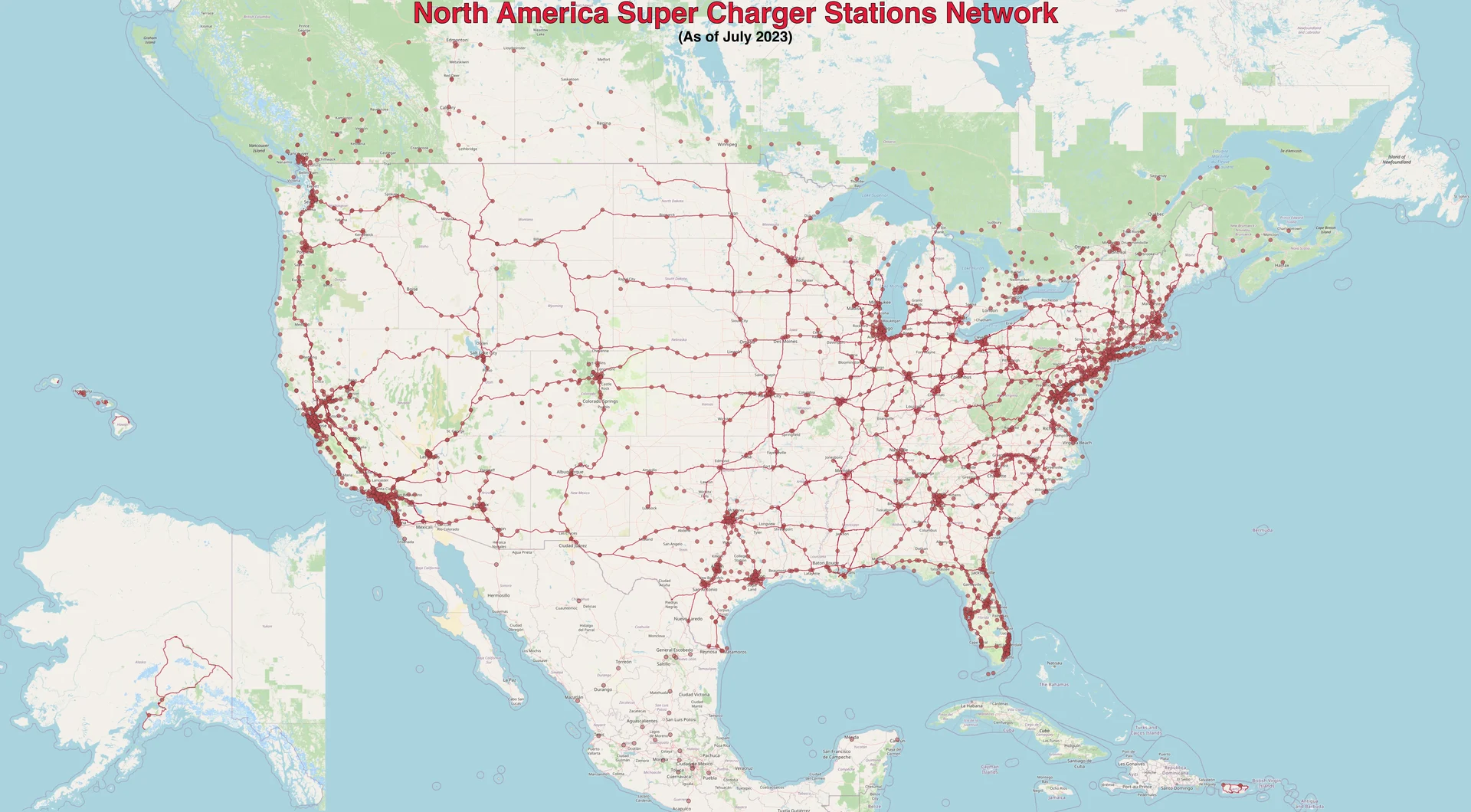
America’s public DC fast-charging network has crossed a symbolic threshold. According to the Q3 2026 State of the US Fast EV Charging Industry report from data platform Paren, the country now counts 80,964 fast-charging ports spread across 14,614 locations, after operators brought 4,106 new ports online at 664 stations between July and September.
The pace of that buildout, however, has cooled. Q2 saw 4,618 ports added, and measured against the same stretch a year earlier, port additions are down roughly 9% while new station openings have fallen about 20%. What is changing is the shape of the sites themselves: new non-Tesla locations averaged five ports apiece, up from 4.1 a year ago, and small stops with only one or two plugs made up less than a third of fresh non-Tesla sites, compared with almost half previously. In practical terms, arriving at a charging stop and actually finding a free stall is becoming less of a gamble.
Tesla remains the dominant builder. The company installed 1,287 ports during the quarter, plus another 124 through its Supercharger for Business program, and its new sites averaged 13.1 ports — including eleven locations with at least 24 stalls and a 48-stall hub in Fort Lauderdale, Florida. IONNA claimed second place with 378 ports, more than double its Q2 figure, helped along by taking over former Circle K charging locations, including 44 stations in the quarter. Walmart followed in third with 344 ports. Paren counts replacement chargers as new infrastructure when a different operator swaps out the equipment, which inflates turnover figures somewhat.
Hardware is getting faster as well. Some 73% of newly added ports are rated at 250 kW or higher, up from 60% a year earlier, and outside Tesla’s network, ports capable of 400 kW or more accounted for 35% of additions versus just 10% twelve months prior. Drivers are clearly using the expanded network: Paren logged 50.4 million fast-charging sessions in Q3, a 26% year-over-year increase, with July setting a monthly record of 17.6 million. National utilization edged up to 15.9% from 15.8%, although the top 30 charging markets averaged 21.1% and Los Angeles reached 31.8% — twice the national figure. Reliability held at a score of 93.9, and fifty of the 52 states and territories assessed scored at least 90, with only Oklahoma and Vermont below that line.
Pricing is where the picture sours. The national average fast-charging rate hit 54 cents per kWh in Q3, up 2.7% year over year, an increase Paren attributes entirely to Tesla. Tesla’s average non-member Supercharger price climbed 15% to 56.9 cents per kWh, while its member rate rose 9% to 39.6 cents. Non-Tesla networks, by contrast, stayed near 53.3 cents per kWh for a fifth straight quarter. Time-of-use pricing widens the gap further: peak rates averaged 63.7 cents per kWh against 43.8 cents off-peak, nearly a 20-cent spread for the same electricity. Geography matters too — urban markets captured 90% of Q3’s new stations, while rural areas received just 68 of the 664 additions, leaving long-distance drivers outside metro corridors with fewer options.
What do you think?